

In the world of telesales and outbound calling, every missed call, delayed follow-up, or misplaced lead can cost you revenue. That’s where telemarketing CRM software comes in. It helps streamline calls, track conversations, automate follow-ups, and improve agent productivity while giving sales leaders full visibility into performance.
Whether you run a call center, telecalling agency, or sales-focused business, choosing the best CRM for telemarketing can instantly improve conversions, reduce manual work, and increase team efficiency. In this guide, we compare the six top CRM telemarketing software solutions, including pricing, features, and real-world use cases, to help you make the right choice.

Overview of the Best CRM for Telemarketing
| CRM Tool | Best For | Starting Price |
| Runo | SIM-based calling, auto-dialing, and agent tracking | ₹599/user/month |
| HubSpot CRM | Automated workflows, multichannel sales tracking | ₹3,753/month |
| Salesforce | Enterprise-grade call centers, AI, and automation | $25/user/month |
| Zoho CRM | Cloud contact center, live call monitoring | $34/user/month |
| Pipedrive | Pipeline visibility and call management | $19/user/month |
| EngageBay | Small-business-friendly call center automation | Free, Paid: $14.99/user/month |
What is a CRM for Telemarketing?
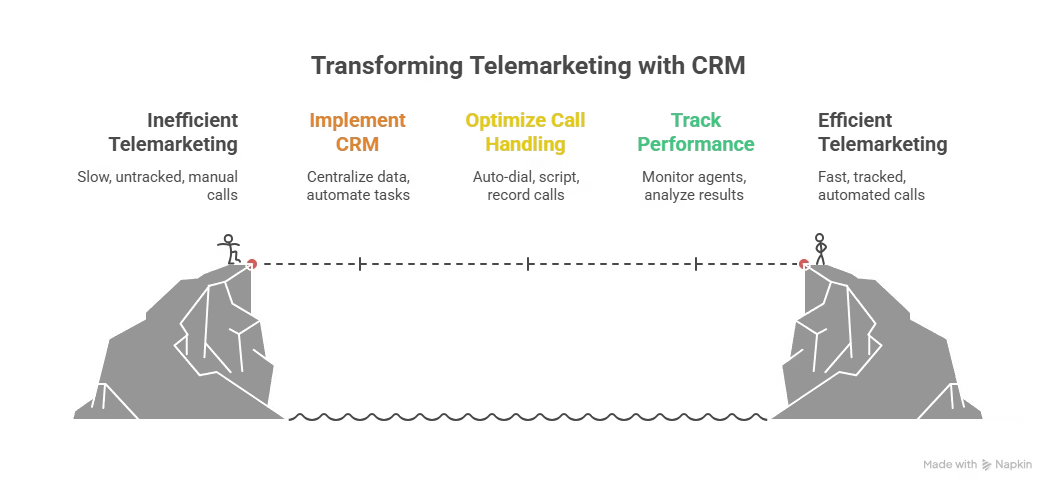
A CRM for telemarketing is a software solution that blends call management with lead tracking, conversation logging, auto-dialing, follow-up reminders, and performance analytics. It helps telesales teams call prospects faster, track conversations accurately, and convert leads more efficiently, all from one centralized dashboard.
Unlike regular CRMs, CRM calling software focuses on call handling features like:
- Auto dialing and call routing
- Call scripts, call recording, and disposition tracking
- Real-time agent monitoring
- WhatsApp and SMS follow-up instantly after calls
It improves both call handling quality and conversion outcomes, making it vital for telesales, real estate, insurance, banking, and call centers.
Lead Source Integrations to Check Before You Buy
A calling crm software is only as good as the leads flowing into it. Most telesales teams get leads from multiple channels at once: Facebook and Instagram ads, WhatsApp inquiries, website forms, and portals like IndiaMart, Justdial, or 99Acres, depending on the industry. If your CRM calling software cannot pull leads from these sources automatically, agents end up copy-pasting numbers from spreadsheets before they can even start dialing.Before shortlisting a telesales crm software, check whether it offers:
- Native Facebook and Instagram lead capture
- Website form integration in real time
- WhatsApp lead capture from incoming messages
- Portal integrations relevant to your industry (IndiaMart, Justdial, 99Acres, MagicBricks, Housing.com)
- One-click CSV import for existing lead databases
A telemarketing CRM software that centralises lead capture removes the manual data entry step entirely, so agents spend their day calling, not importing.
Why Telemarketing Needs Smart CRM Software
Manual calling alone cannot sustain a high-performing sales team. You lose leads between shifts. Agents repeat the same pitch without knowing the call history. Managers guess at performance rather than measure it.
According to Salesforce research, businesses using CRM see a 29% increase in sales revenue and a 34% improvement in sales productivity. For telesales teams, those numbers come from eliminating the friction that slows every outbound call.
Here is why a smart telemarketing CRM software is not optional for calling teams:
- Agents waste time on admin, not calls. Without a CRM, agents manually dial, log calls, write notes, and set follow-up reminders. Most businesses find that CRMs save employees 5 to 10 hours
- Lead response speed determines conversion. The longer a lead waits after expressing interest, the lower your chance of conversion. The best crm for telemarketing auto-assigns leads and triggers immediate follow-up without human delay.
- Missed follow-ups kill the pipeline. Agents manage dozens of leads simultaneously. Without automated reminders, hot leads go cold. A CRM closes that gap with rule-based follow-up alerts and call scheduling.
- Managers cannot coach what they cannot see. Call recording, live dashboards, and AI call summaries give managers evidence to coach with. Without them, performance reviews are based on impressions rather than data.
- Compliance requires a paper trail. In India, TRAI regulations require documented consent, DND compliance, and call logs. The best telemarketing software maintains this automatically with every call.
- Siloed tools create duplicate work. When your dialer, lead database, and follow-up system are separate, agents update three tools per call. One integrated telemarketing crm software eliminates that entirely.
The Benefits of CRMs for Telemarketing
-
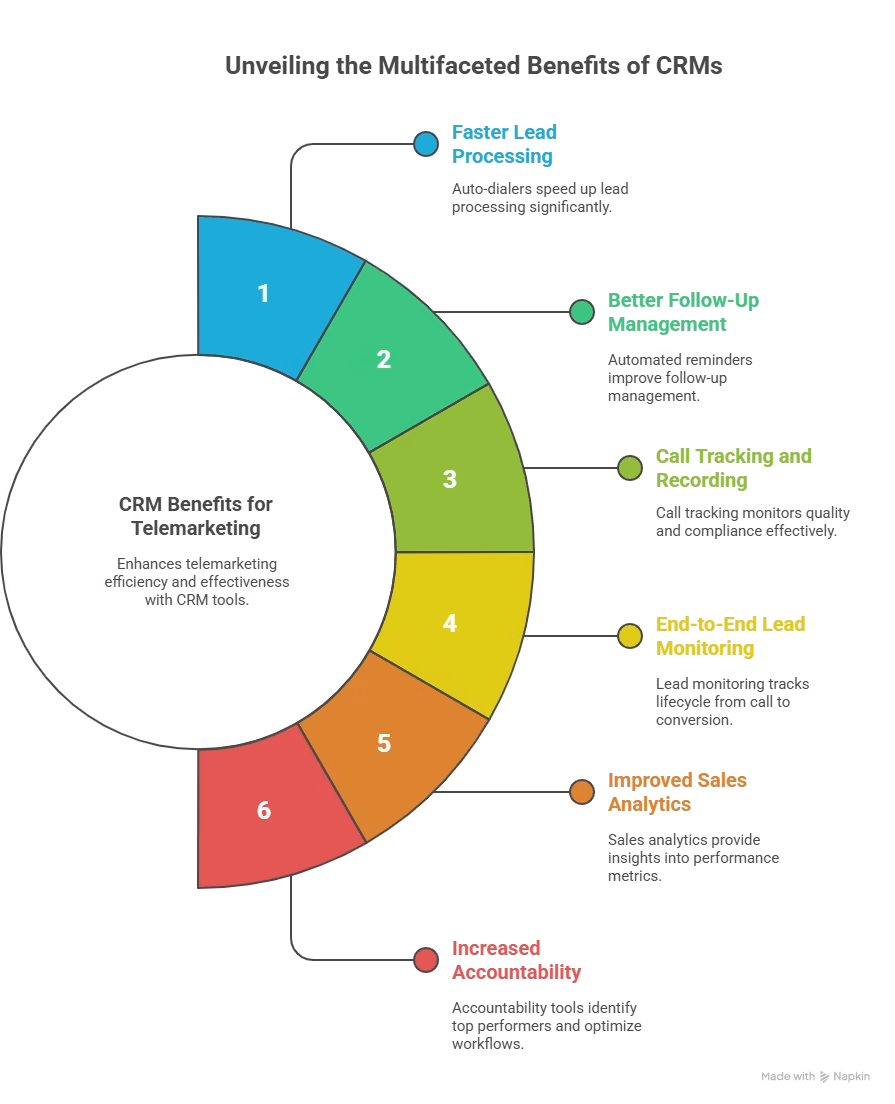
Faster Lead Processing
Auto-dialers, click-to-call, and bulk calling help agents reach more prospects in less time. -
Better Follow-Up Management
Automated reminders and call logs ensure no hot leads slip through the cracks. -
Call Tracking and Recording
You can monitor call quality, compliance, and agent performance using recordings and live dashboards. -
End-to-End Lead Monitoring
Track each lead’s lifecycle, from the first call to conversion, along with notes, recordings, and timelines. -
Improved Sales Analytics
CRMs offer insights into call volume, conversion rates, talk time, and agent productivity. -
Increased Accountability
Live agent tracking, dashboards, and scorecards help identify top performers and optimize workflows.
For a deeper look at how call and lead management impact business efficiency and customer relations, check out Why Call Management Matters for Every Business .
Key Features to Look for in a CRM for Telemarketing
| Key Feature | Why It Matters |
| Auto/Power Dialer | A CRM for telemarketing with auto dialer saves time by eliminating manual number dialing and increasing call volume |
| Call Recording & Notes | Enhances quality, training, and compliance |
| Lead Assignment | Ensures equal and efficient distribution of leads |
| WhatsApp/SMS Follow-ups | Enables instant post-call outreach |
| Real-time Agent Tracking | Helps monitor performance and improve accountability |
| Reporting & Analytics | For conversions, talk-time, and follow-up tracking |
| Integration with SIM/VoIP | Centralizes all communication and sales data |
| Lead Source Integrations (Facebook, WhatsApp, IndiaMart, Website) | Captures leads automatically so no manual entry delays the first call |
Using a CRM designed for telecalling becomes even more powerful when combined with proven outreach tactics as outlined in Guide 10 Telesales Tips and Strategies That Actually Work in 2025.
The 6 Best CRM for Telemarketing Software
1. Runo – Best SIM-Based Telemarketing CRM Software
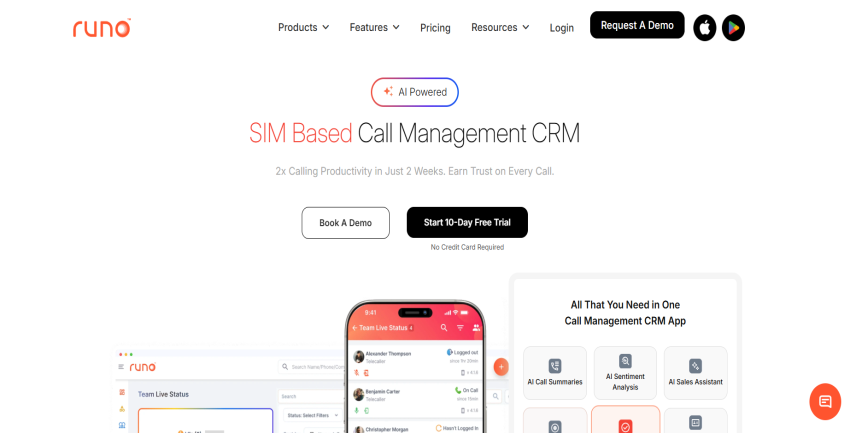
Best for: SIM-based outbound calling, auto-dialing, and real-time agent tracking
Runo stands out as a purpose-built calling CRM that turns smartphones into powerful telecalling devices. Agents can make and receive calls using personal or company SIM cards, while every call gets auto-logged with duration, notes, and recording. It offers auto-dialing, WhatsApp follow-ups, live agent monitoring, AI call summaries, and performance scorecards.
Key Features:
- Auto dialer for back-to-back calls
- Call recording, notes, and AI call summary
- Lead management and follow-up alerts
- Real-time agent tracking dashboard
- WhatsApp messaging and call disposition logging
Pricing:
Starts at ₹599/user/month billed annually.
Runo's Lead Source and Integration Coverage
Beyond SIM-based calling, Runo also connects directly to the lead sources Indian telesales teams already use: Facebook and Instagram ad forms, website contact forms, WhatsApp inquiries, and portals like IndiaMart. Leads flow into Runo automatically and get auto-assigned to agents the moment they arrive, so there is no manual export-import cycle between your ad platform and your calling crm software.
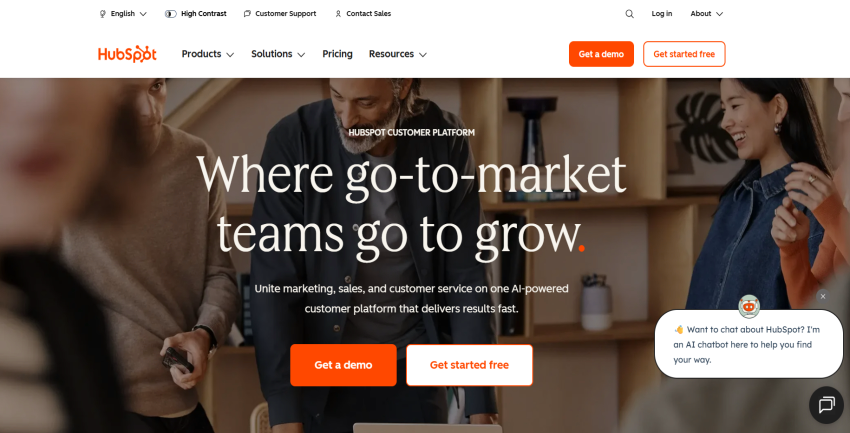
2. HubSpot CRM – Best Telecalling Software for Lead Nurturing
Best for: Contact management, email+call engagement, and workflow automation
HubSpot doesn’t have built-in calling, but it integrates seamlessly with VoIP tools. It is excellent for tracking every interaction: calls, emails, meeting notes, WhatsApp chats, all in one place. Its workflow automation and pipeline management tools help teams follow up consistently and close deals faster.
Key Features:
- Automatic logging of calls, chats, and emails
- 1,000+ free contact records (15M with paid plan)
- Centralized sales dashboard
- Custom reporting and call reminders
- Integrates with Google, Outlook, WhatsApp, and VoIP
Pricing: Starts at ₹3,753/month.
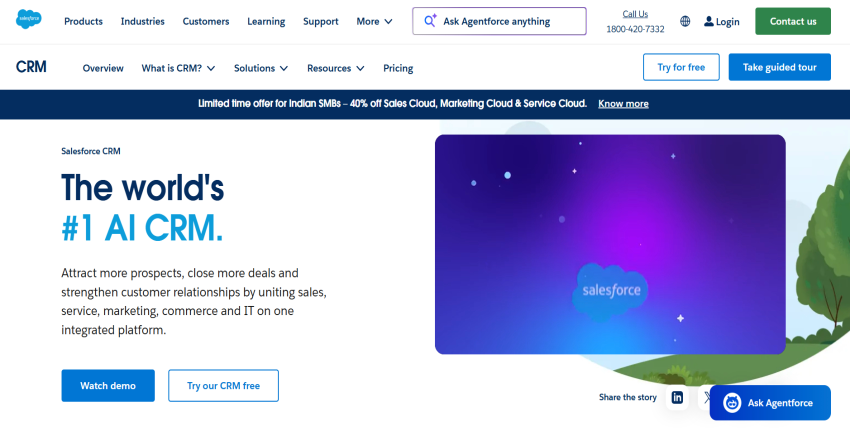
3. Salesforce – Best CRM for Call Centers with AI & Automation
Best for: Enterprises, AI-powered telemarketing, omnichannel call centers
Salesforce offers a robust contact center solution with AI-powered chatbots, CRM calling software, call routing, and powerful integration with telephony systems like Amazon Connect. It’s ideal for large-scale teams managing multi-channel interactions like SMS, WhatsApp, email, voice, and chat.
Key Features:
- AI-powered call classification and agent assistance via Einstein AI (auto-scores calls, suggests next actions, predicts lead conversion)
- Omnichannel communication (SMS, phone, WhatsApp) with unified customer timeline
- Real-time call monitoring, voice analytics, and sentiment analysis
- Built-in customer feedback and CSAT tracking with automated post-call surveys
Pricing: Starts at $25/user/month.
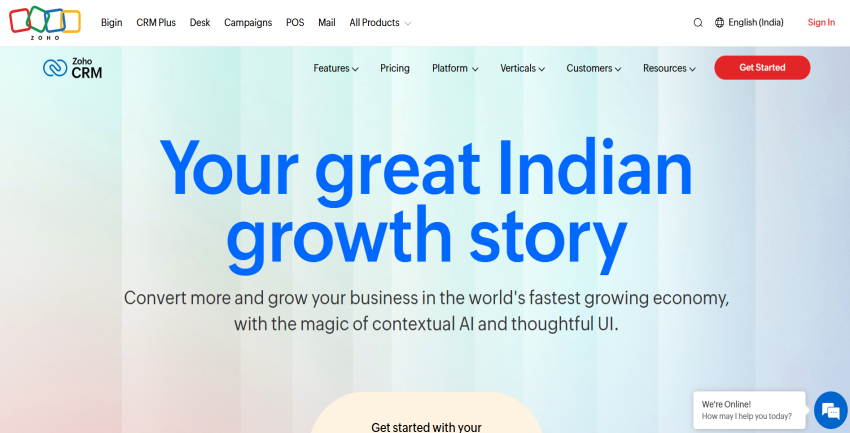
4. Zoho CRM – Best for Cloud Contact Center and Live Call Monitoring
Best for: Hybrid calling teams, SMBs, and live call coaching
Zoho Voice integrates call center features directly into Zoho CRM. It supports virtual numbers, live call monitoring, whisper-coaching, IVR, agent tracking, and Power Dialer.
Key Features:
- Multi-level IVR & call routing
- Live call monitoring and coaching with whisper mode
- Click-to-call & screen pop-ups with automatic call logging
- Zia AI assistant for call sentiment analysis, lead scoring, and workflow suggestions
- Detailed reporting and analytics with customizable dashboards
- Power Dialer for outbound campaigns
Pricing: Starts at $34/user/month, billed annually.
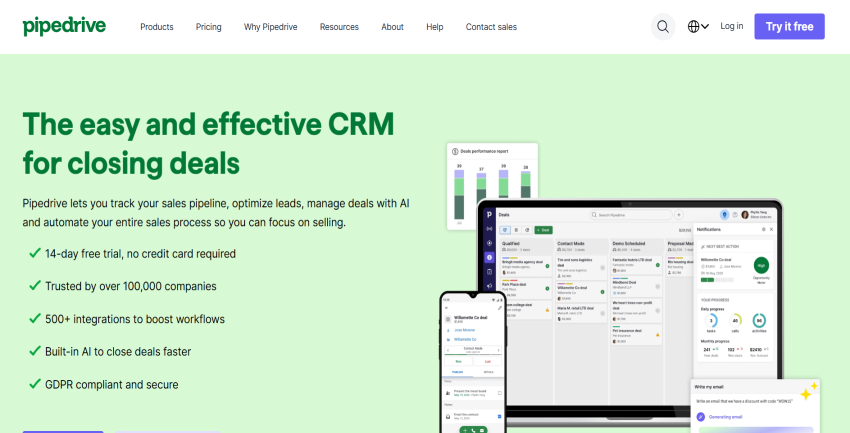
5. Pipedrive – Best CRM for Pipeline Visibility and Call Management
Best for: Visual pipeline tracking and coordinated calling
Pipedrive integrates with VoIP providers to enable call logging, recording, and automated follow-ups. It helps teams maintain a clear visual sales pipeline, manage deals, and monitor conversion stages.
Key Features:
- Click-to-call with built-in calling
- Lead routing and call scheduling
- Deal tracking with resource allocation
- Call recording and timeline tracking
- Email automation with follow-up alerts
Pricing: Starting at $19/user/month.
6. EngageBay – Best CRM for Small Business Telemarketing
Best for: Startups and small telesales teams needing call automation
EngageBay offers handy telephony tools, including call broadcasting, call scripts, automatic call recordings, note logging, and integrations with Twilio, Exotel, and SIP. Ideal for small telecalling teams looking for an affordable all-in-one CRM.
Key Features:
- One-click calling from CRM
- Call scripts for guided selling
- Automatic call logging and notes
- Call Broadcast for mass dialing
- WhatsApp, email, SMS integration
Pricing: Free plan available, Paid plans start at $14.99/user/month.
Which Type of CRM Should Your Team Actually Use?
Not every business needs the same kind of crm telemarketing software. Before comparing individual tools, it helps to know which category your team falls into:
- SIM-based telecalling CRM: Best if your agents call from mobile phones using personal or company SIM cards. SIM-based calling uses mobile networks (no internet required), making it ideal for field sales, remote teams, and regions with unstable internet. Runo fits here. Common in Indian real estate, education, and BFSI telesales.
- VoIP-based calling CRM: Best if your team works from a desk with a stable internet connection and needs international calling, virtual numbers, or call center features like IVR and call queuing. VoIP calling uses internet bandwidth and integrates with cloud telephony providers. Zoho CRM, Salesforce, and HubSpot fit here.
- Full-suite CRM: Best if calling is just one part of a broader sales and marketing workflow that also includes email campaigns, ticketing, and multi-department reporting. HubSpot and Salesforce fit here.
- Lightweight/affordable CRM: Best for small telesales teams of 2 to 10 agents that need core calling and follow-up features without enterprise pricing. EngageBay fits here.
So, which type of CRM should a company use to improve communication between its sales, marketing, and customer support teams? If these three teams need to see the same customer record and call history, a full-suite CRM (HubSpot, Salesforce, Zoho) is the better fit. If your priority is pure outbound calling volume and agent tracking, a dedicated telecalling CRM like Runo will outperform a full-suite tool on connect rates and ease of use for agents.
How to Choose a CRM for Telemarketing: The Checklist
Picking the right telecalling CRM for your team isn’t just about feature comparisons. It depends on how your agents make calls, how your leads arrive, and what your managers need to see every day.
Start with these questions before shortlisting the best crm for telemarketing :
1. Does it support the calling method your team actually uses?
- If your agents call from mobile phones, you need SIM-based dialing.
- If they work from a desk on VoIP, you need a softphone integration.
- Most CRMs support VoIP only.
- Runo is the only platform built natively for SIM-based calling, which gives Indian outbound teams a 2.3x higher connect rate than cloud dialers.
2. Does it auto-log every call without agent input?
- Your agents should be on the next call, not typing notes.
- Any CRM worth using automatically captures call duration, recording, outcome, and AI summary.
3. Does it handle lead assignment automatically?
- Manual lead distribution creates delays and favoritism.
- Look for rule-based auto-assignment that routes leads by territory, agent availability, or lead source as soon as they arrive.
4. Does it connect to your lead sources?
- Leads coming from Facebook, IndiaMart, website forms, or your existing CRM must feed directly into the system.
- Runo integrates with all major lead sources and CRM platforms , including Salesforce, HubSpot, and Zoho.
5. Does it include WhatsApp follow-up?
- In India, WhatsApp outreach after a call is standard practice.
- A standalone dialer that does not connect to WhatsApp forces agents to switch tools for every follow-up.
| Criteria | What to Check | Why It Matters |
| Calling method | SIM-based or VoIP | Determines the connect rate on Indian mobile numbers |
| Auto call logging | No manual entry required | Saves 5 to 10 hours per agent per week |
| Lead auto-assignment | Rule-based routing | Reduces response time and lead leakage |
| WhatsApp integration | Native, not a third-party add-on | Keeps follow-up inside one platform |
| AI call analysis | Summaries, sentiment, quality score | Enables data-based coaching |
| CRM and lead source sync | Salesforce, HubSpot, Zoho, IndiaMart | Eliminates duplicate data entry |
| TRAI compliance features | DND filtering, call logs, time-bound calling | Protects your team during audits |
| Pricing transparency | No hidden seat fees or add-on costs | Prevents budget overruns after signing |
| Free trial availability | At least 7 to 10 days | Let your team validate before committing |
| Data portability | Can call recordings, AI summaries, and lead data export or sync to other systems | Prevents vendor lock-in as your team scales or switches tools later |
Runo meets every criterion on this list. It combines SIM-based dialing, auto lead allocation, AI call analysis, WhatsApp CRM, and real-time manager dashboards one a single platform. It starts at ₹599 per user per month with a 10-day free trial and no credit card required. You can explore the full feature set here.
Pricing Comparison of Top Telemarketing CRMs
| CRM Tool | Starting Price | Billing Model |
| Runo | ₹599/user/month | Annual |
| HubSpot CRM | ₹3,753/month | Monthly/Annual |
| Salesforce | $25/user/month | Monthly/Annual |
| Zoho CRM | $34/user/month | Annual |
| Pipedrive | $19/user/month | Monthly/Annual |
| EngageBay | Free / $14.99 | Monthly/Annual |
Feature Comparison of Telemarketing CRMs
| Feature | Runo | HubSpot | Salesforce | Zoho CRM | Pipedrive | EngageBay |
| Auto Dialer | ✔ | ✘ | ✔ | ✔ | ✔ | ✔ |
| Call Recording | ✔ | ✔ | ✔ | ✔ | ✔ | ✔ |
| Live Call Monitoring | ✔ | ✘ | ✔ | ✔ | ✘ | ✘ |
| WhatsApp/SMS | ✔ | ✔ | ✔ | ✔ | ✘ | ✔ |
| Agent Tracking | ✔ | ✘ | ✔ | ✔ | ✘ | ✘ |
| AI Call Summary | ✔ | ✘ | ✔ | ✘ | ✘ | ✘ |
Remember to pick a CRM that supports meaningful analytics. The article “ Top 10 Call Center Metrics & KPIs You Should Be Tracking” outlines the metrics every call-driven sales team should monitor.
Final Thoughts
The right CRM telemarketing software should do more than log calls; it should empower agents, close leads faster, and improve your sales strategy through visibility, automation, and analytics. Whether you need SIM-based calling, AI-driven automation, or affordable CRM calling software, there’s a solution for every business size and industry.
If you want a telemarketing CRM designed for real-time call tracking, follow-ups, and agent performance, Runo might be the strongest place to start.
FAQs
Which CRM is the best for call centers?
Salesforce and Runo are top choices for call centers. Salesforce offers AI-powered call routing, omnichannel communication, and advanced automation for large teams. At the same time, Runo provides SIM-based auto-dialing, live-agent monitoring, and real-time performance tracking to enable faster, more efficient telecalling operations.
Can Runo integrate with existing CRMs or lead management tools?
Yes, Runo integrates seamlessly with platforms such as Zoho, HubSpot, Salesforce, Excel, and Google Sheets. You can import leads, sync call updates, and push call logs, recordings, and statuses back to your primary CRM for unified tracking.
Does Runo support telecalling for remote or field agents?
Yes, Runo is ideal for remote and field teams because it works using SIM-based calling directly from mobile phones. Calls are auto-logged with recordings, notes, and status, and managers can track agent activity in real time.
Can these CRMs help measure agent productivity in real time?
Runo, Salesforce, and Zoho CRM provide real-time dashboards tracking call volume, talk time, lead status, follow-ups, and conversion rates. Managers can see active, idle, and offline agents to optimize performance and improve accountability.
Is it possible to use a free CRM for telemarketing?
Yes, but with limitations. EngageBay and HubSpot both offer free plans. HubSpot's free tier supports up to 1,000 contacts and includes basic call logging. EngageBay's free plan covers contact management, email integration, and one-click calling. Neither includes auto-dialing, AI call summaries, or SIM-based calling on the free tier. For Indian telecalling teams making high-volume outbound calls, free plans are a starting point but rarely sufficient beyond a team of two or three agents. Runo offers a 10-day full-feature free trial at no cost, with no credit card required.
What is the cost of telemarketing CRM software?
In India, telemarketing crm software pricing typically falls into four tiers. Free plans cover basic contact management with no auto-dialing. Basic paid plans range from ₹500 to ₹1,200 per user per month and are suitable for small teams. Mid-tier plans with automation, call recording, and analytics run from ₹1,200 to ₹3,000 per user per month. Enterprise plans with AI, custom workflows, and deep integrations start at ₹3,000 and go higher. Runo starts at ₹599 per user per month on an annual plan, making it one of the most accessible CRM options for telemarketing, with AI call analysis and SIM-based dialing from the entry tier.
What is the difference between a traditional CRM and telemarketing software?
A traditional CRM is built to manage contacts, track deals, and log interactions across sales channels. It handles email, meetings, and notes well, but was not designed for high-volume outbound calling.
A dedicated best crm for telemarketing adds auto-dialing, real-time call monitoring, AI call summaries, compliance logging, and WhatsApp follow-up on top of the standard CRM layer.
The practical difference is speed and volume. A traditional CRM requires agents to manually initiate and log each call. A telemarketing CRM automates the entire cycle, from dialing to follow-up, letting agents focus entirely on the conversation. For teams making more than 50 calls per agent per day, that difference is the gap between hitting targets and missing them.
Can I integrate leads from Facebook, WhatsApp, and IndiaMart directly into my telemarketing CRM?
Yes. Most modern telemarketing crm software, including Runo, HubSpot, and Zoho CRM, supports direct integration with Facebook and Instagram lead ads, WhatsApp, and portals like IndiaMart, Justdial, and 99Acres. Leads flow into the CRM automatically and can be auto-assigned to agents without manual export-import work.
What is the best CRM system for sales, and is it the same as a telemarketing CRM?
Not always. A general-purpose sales CRM like Salesforce or HubSpot manages the full sales cycle across email, meetings, and calls, and works well for teams where calling is one of several outreach channels. A dedicated telemarketing CRM like Runo is built specifically around high-volume outbound calling, with SIM-based dialing, auto call logging, and agent tracking as core features rather than add-ons. If your team's primary activity is calling, a purpose-built telemarketing CRM will typically outperform a general sales CRM on connect rates and agent productivity.