

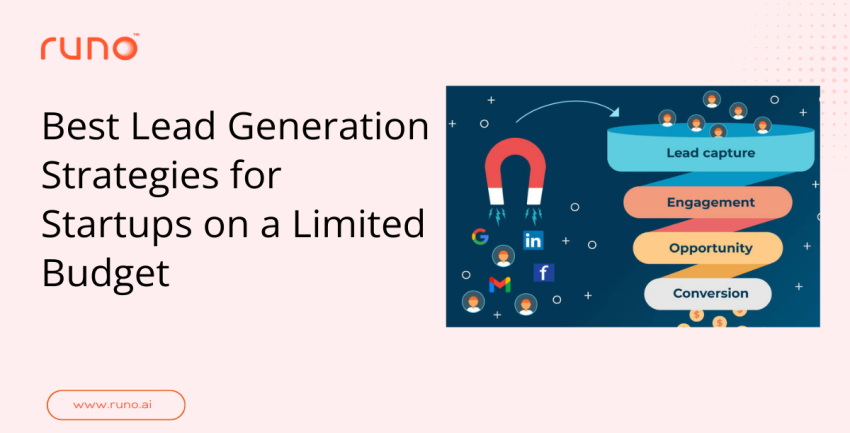
The best lead generation strategies for startups are not about spending big money. They are about being smart, focused, and consistent. When you are a startup, every rupee matters. You want real leads, not vanity numbers. The good news is that you do not need a huge marketing budget to attract the right customers. You need the right plan.
According to HubSpot's 2025 State of Marketing Report, 61% of marketers say generating high-quality leads is their biggest challenge, and startups face this pressure even more acutely with limited budgets. This informative blog breaks down lead generation strategies that actually work for startups with limited funds. These are practical ideas you can start using right away. No fluff. No complex tools. Just simple steps that help you grow.
Understanding Lead Generation for Startups
Before jumping into tactics, it helps to understand what lead generation really means.
Lead generation is the process of attracting people who may be interested in your product or service and turning them into potential customers. These people could be website visitors, social media followers, or someone who filled out a form or called your business.
For startups, the goal is not to reach everyone. The goal is to reach the right people. That is why choosing the right lead generation strategies for a startup is so important.
Why Budget-Friendly Lead Generation Matters
Budget-friendly lead generation allows startups to acquire customers without large upfront costs, reducing financial risk while testing what works. Startups often work with small teams and tight budgets. Spending money without precise results can hurt growth.
Low-cost lead generation helps you:
- Test ideas without considerable risk.
- Learn what your audience wants.
- Build steady growth over time.
- Improve trust and brand awareness.
The key is to focus on channels that give long-term value instead of quick but expensive wins.
Five Strategies That Work Best for Startups in Generating Leads
As per HubSpot’s 2025 State of Marketing Report , highlights effective channels for lead generation are: Website, blog, and SEO lead the list at 23.21%, followed by social media shopping tools at 22.74%.
Email marketing comes close at 22.35%, while paid social media content shows a 21.39% ROI. Content marketing also performs well, with a conversion ROI of 20.81%.
The following five strategies are among the most effective ways for startups to generate leads:
Content Marketing as a Core Lead Generation Strategy
Content marketing is one of the most effective lead generation strategies for startups.
You create helpful content that answers questions your audience already has. This content brings people to your website and builds trust.
How Content Helps Generate Leads
- Builds authority in your niche.
- Attracts organic traffic from search engines.
- Educates users before they talk to sales.
- Works for a long time once published.
Types of Content You Can Create
- Blog posts
- How-to guides
- Case studies
- Simple videos
- Checklists and PDFs
Start with blog posts that solve real problems. Keep the language simple. Focus on one topic at a time. End each piece with a clear call to action, like signing up for a newsletter or booking a call.
Search Engine Optimisation for Long-Term Leads
Search engine optimisation (SEO) is one of the best lead generation strategies for startups that want steady leads without paying for ads.
SEO helps your website show up when people search for topics related to your business.
Simple SEO Steps for Startups
- Use clear keywords in your content.
- Write helpful page titles and descriptions.
- Keep paragraphs short and readable.
- Add internal links between pages.
- Make sure your site loads fast.
SEO takes time, but once it works, it brings free and consistent leads. Even one well-ranked page can bring leads every month.
Social Media Outreach Without Paid Ads
You do not need to run ads to get leads from social media. Organic outreach still works if done right.
Choose one or two platforms where your audience spends time. Do not try to be everywhere.
Smart Social Media Lead Generation Tips
- Share helpful tips, not just promotions.
- Comment on posts from your target audience.
- Answer questions in groups or threads.
- Share short stories about your journey.
- Use direct messages carefully and politely.
Social media works best when you focus on building relationships first. Leads come naturally when people trust you.
Common Lead Nurturing Mistakes to Avoid
Even experienced marketers make these lead nurturing mistakes. Here’s how to avoid them:
1. Ignoring Follow-Ups After Initial Contact
The mistake: Contacting a lead once and giving up if they don’t respond immediately.
Why it fails: 80% of sales require 5+ follow-ups, but 44% of salespeople give up after one (RAIN Group).
The fix: Build a multi-touch sequence with at least 5-8 touchpoints over 2-4 weeks.
2. Sending Generic, One-Size-Fits-All Messages
The mistake: Using the same email template for all leads regardless of industry, behavior, or stage.
Why it fails: 71% of consumers abandon brands that provide irrelevant experiences.
The fix: Segment leads by industry, company size, behavior, and stage. Personalize every message.
3. Contacting Leads at the Wrong Time
The mistake: Calling during business hours when decision-makers are in meetings, or sending emails at low-engagement times.
Why it fails: Timing affects response rates by up to 400%.
The fix: Test send times. For B2B, early morning (8-9 AM) and late afternoon (4-5 PM) often work best. Use AI tools to optimize timing.
4. Not Tracking Lead Activity and Engagement
The mistake: Failing to monitor which emails are opened, which links are clicked, or which pages are visited.
Why it fails: You can’t optimize what you don’t measure. Untracked leads fall through the cracks.
The fix: Use CRM and marketing automation tools to track every interaction. Set up alerts for high-intent behaviors.
5. Over-Nurturing: Bombarding Leads with Too Many Messages
The mistake: Sending daily emails or calling multiple times per week.
Why it fails: Leads feel pressured and unsubscribe or block your number.
The fix: Space out touchpoints. A good cadence is 1-2 emails per week, with calls spaced 5-7 days apart.
6. Failing to Align Sales and Marketing
The mistake: Marketing nurtures leads but doesn’t communicate readiness signals to sales, or sales contacts leads too early.
Why it fails: 79% of leads never convert due to lack of alignment (MarketingSherpa).
The fix: Define clear lead scoring criteria and handoff processes. Hold regular sales-marketing alignment meetings.
Good lead nurturing is patient, organized, and data-driven.
Email Marketing with a Small but Quality List
Email marketing is cheap and powerful. You do not need thousands of subscribers. A small, engaged list is enough.
Offer something valuable in exchange for an email address. It could be a free guide, checklist, or early access to a feature.
How to Use Email for Lead Generation
- Send honest and straightforward emails.
- Share helpful tips and updates.
- Avoid sending too often.
- Add clear next steps in every email.
Email helps you stay in touch with leads until they are ready to buy.
Referral Marketing Through Happy Customers
Referrals are one of the most trusted lead generation strategies for a startup .
People trust recommendations from friends more than ads.
How to Encourage Referrals
- Ask happy customers for referrals.
- Offer small rewards or discounts.
- Make it easy to share your product.
- Thank people who refer others.
Even a few strong referrals every month can make a big difference for a startup.
Lead Nurturing: Turning Cold Leads into Customers
Most leads are not ready to buy immediately. Lead nurturing is the process of staying in touch with prospects over time, providing value until they are ready to make a decision.
For startups, a simple email nurture sequence can keep your brand top-of-mind without requiring constant manual effort.
Simple 3-Email Nurture Sequence
- Day 1 – Welcome & Education : Thank them for downloading your lead magnet. Share one helpful tip related to their pain point.
- Day 4 – Case Study or Social Proof : Send a short customer success story or testimonial showing results similar to what they want.
- Day 7 – Clear Call-to-Action : Invite them to book a call, start a free trial, or ask a question. Make the next step easy and low-pressure.
Even free email tools like Mailchimp or HubSpot allow you to automate these sequences, saving time while keeping leads engaged.
Lead Scoring and Qualification for Startups
Lead scoring helps you prioritize which leads to follow up with first. It assigns points to leads based on their actions and fit with your ideal customer profile.
For startups with small teams, a simple lead scoring system can double conversion rates by focusing effort on the most promising prospects.
Simple Lead Scoring Framework
Assign points based on:
- Engagement : Downloaded content (+5), visited pricing page (+10), requested demo (+20)
- Fit : Matches ideal customer profile (+10), has budget authority (+10), in target industry (+5)
- Recency : Engaged in last 7 days (+5), last 30 days (+2)
Leads scoring 30+ points are hot and should be contacted immediately. Leads scoring 15-29 should be nurtured via email. Leads under 15 go into a long-term nurture sequence.
Even a basic scoring system in a free CRM like HubSpot can help startups focus on leads most likely to convert.
Partnerships and Collaborations
Working with other small businesses can help you reach new audiences without spending money.
Look for businesses that serve the same audience but are not competitors.
Partnership Ideas
- Guest blog posts
- Joint webinars
- Shared social media posts
- Cross-promotions in emails
It is a smart way to apply five strategies that work best for startups in generating leads without extra costs.
Free Tools and Platforms That Help Generate Leads
Many free tools can support your lead generation strategies .
Some examples include:
- Free CRM tools.
- Google Forms for lead capture.
- Social media scheduling tools.
- Email marketing free plans.
These tools help you stay organised and respond to leads faster, which improves conversion.
Offline Lead Generation Still Works
Not all leads come from online channels.
Offline methods can work well, especially for local startups.
Offline Ideas to Try
- Attend local events or meetups.
- Give short talks or demos.
- Network with other founders.
- Collect contacts and follow up.
The key is to follow up quickly after meeting someone.
Using Call-Based Leads More Effectively
Many startups get leads through phone calls, especially in service-based businesses. Effective call management plays a vital role in startups on a limited budget.
Handling these calls properly can double your chances of closing deals.
That is where tools like Runo.ai can help.
How Runo.ai Supports Lead Generation
Runo.ai is an AI-powered SIM-based call management CRM designed for startups and growing teams.
It helps you:
- Track calls from multiple lead sources.
- Improve calling productivity within weeks.
- Build trust on every customer call.
- Integrate with existing CRMs easily.
If your startup relies on calls for sales or support, managing them well is a big part of your lead generation strategies for a startup .
Runo also offers a 10-day free trial with no credit card required, making it easy to test without risk.
Measuring What Works and What Does Not
You do not need complex data tools to track results.
Start simple.
What You Should Track
- Number of leads per channel
- Cost per lead
- Conversion rate
- Response time
Stop spending time on channels that do not bring results. Focus more on what works.
Common Mistakes Startups Should Avoid
Even the best lead generation strategies can fail if mistakes are repeated.
Avoid these common errors:
- Trying too many strategies at once.
- Ignoring follow-ups.
- Talking too much about features, not benefits.
- Not listening to customer feedback.
Simple fixes can lead to better results.
How to Choose the Right Strategy for Your Startup
Not every strategy suits every startup.
Ask yourself:
- Where does my audience spend time?
- Do they prefer calls, emails, or messages?
- What problem am I solving for them?
Start with one or two strategies. Test. Improve. Then scale.
Final Thoughts on Lead Generation for Startups
The best lead generation strategies for startups are simple, affordable, and focused on people, not tools. You do not need a big budget to grow. You need clarity, consistency, and patience.
Use content, SEO, email, social media, referrals, and innovative tools to build trust and attract the right leads. Over time, these efforts compound and help your startup grow in a steady and healthy way.
If you stay focused on value and relationships, lead generation will not feel complex or expensive. It will feel natural.
To know more, explore the Runo expert blog section!
FAQs: Best Lead Generation Strategies for Startups
1. What are the best lead generation strategies for startups with low budgets?
The best lead generation strategies for startups include content marketing, SEO, social media outreach, email marketing, and referrals. These methods cost little but deliver strong results when done consistently.
2. How long does it take for lead generation strategies to show results?
Some lead generation strategies, like social media outreach and referrals, can bring leads quickly. Others, such as SEO and content marketing, take time but offer long-term and steady growth.
3. Which lead generation strategy works best for early-stage startups?
For early-stage businesses, content marketing, direct outreach, and referrals are among the five strategies that work best for startups in generating leads. They help build trust without heavy spending.
4. Can startups generate quality leads without paid advertising?
Yes. Many lead generation strategies for a startup focus on organic channels like SEO, email marketing, partnerships, and social media engagement, which can generate high-quality leads without paid ads.
5. How can startups manage and convert call-based leads better?
Startups can use call management tools like Runo.ai to track leads from multiple sources, improve calling productivity, and build trust on every call, making lead conversion easier and more efficient.