


The best WhatsApp automation tool is what many businesses are searching for today. As more customers prefer chatting over calling or emailing, WhatsApp business automation has become a must-have, not a luxury. It helps brands reply faster, manage leads better, and close more sales without hiring a big team.
From small startups to large companies, everyone wants a smart and simple way to handle messages. That is where WhatsApp automation software steps in. It saves time, reduces manual work, and improves customer support.
In this informative blog, we will look at the top tools you can use in 2026. We will also help you understand what features matter most and how to choose the right tool for your needs.
Why Businesses Need the Best WhatsApp Automation Tool in 2026
Customers today expect quick replies. If they do not get a response within minutes, they move to another brand. That is the reality.
Here is why businesses are investing in WhatsApp business automation :
- Instant auto-replies to common questions.
- 24/7 customer support with chatbots.
- Automated order updates and reminders.
- Lead capture and follow-ups.
- Broadcast messages to customers.
- Reduced response time.
As over 2.2 billion messages are exchanged daily between businesses and customers on WhatsApp, and customer satisfaction rates for WhatsApp-based service queries are at 91%, outperforming email and SMS.
Businesses using WhatsApp automation see measurable ROI: companies report 30% reductions in customer support costs by deflecting routine inquiries to automated flows, and e-commerce brands achieve 40-60% cart recovery rates via WhatsApp compared to email’s 5-15%. WhatsApp chatbots are projected to save businesses 7 billion hours annually by 2026, freeing teams to focus on high-value tasks.
With the right WhatsApp automation software , you can manage thousands of conversations at once without feeling overwhelmed.
Key Features to Look for in WhatsApp Automation Software
Before choosing the best WhatsApp automation tool , make sure it offers these features:
1. Official WhatsApp API Access
The tool should work with the official WhatsApp Business API. This keeps your account safe and compliant. Learn more about setting up the WhatsApp Business API and choosing the right CRM integration for your business.
2. Chatbot Builder
You should be able to create automated flows easily without coding.
3. CRM Integration
The tool must connect with your existing CRM or lead sources.
4. Broadcast and Campaign Tools
You should be able to send bulk messages to segmented audiences.
5. Analytics and Reports
Clear reports help you track open rates, replies, and conversions.
6. Multi-Agent Support
Your team should be able to manage chats together from one dashboard.
7. AI Agent and Conversational AI SupportThe best WhatsApp automation tools with AI agents can qualify leads, answer complex questions, and handle multi-turn conversations without human input. Look for platforms that offer AI-powered chatbots capable of understanding context, learning from interactions, and escalating to human agents only when necessary. AI agents improve response accuracy, reduce manual workload, and increase conversion rates by engaging customers 24/7 with intelligent, personalized replies.
Now, let us explore the top tools available.
Best WhatsApp Automation Tools for Businesses
The 10 best WhatsApp automation tools for businesses in 2026 are as follows:
1. Runo: AI-Powered WhatsApp & Call CRM
When talking about smart communication tools, Runo.ai deserves attention.
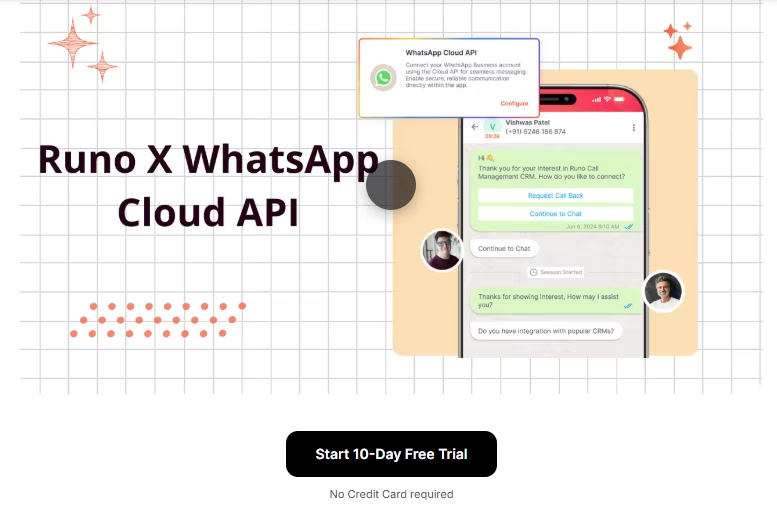
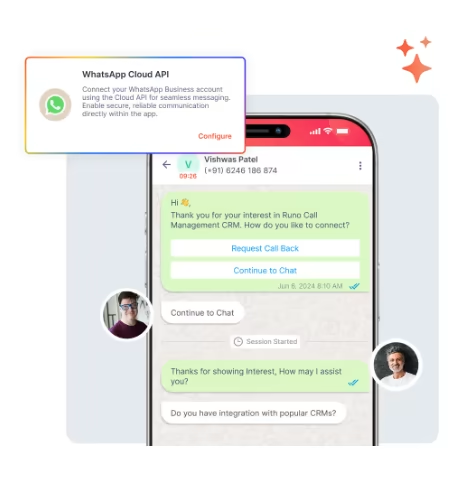
Runo is an AI-powered SIM-based call management CRM that helps businesses double their calling productivity in just two weeks. It also integrates with multiple lead sources and top CRMs, making it easy to manage customer conversations in one place.
Why Runo stands out:
- AI-powered call tracking.
- Easy CRM integration.
- Lead management support.
- 10-day free trial with no credit card.
- Trusted by 3500+ businesses.
- Awarded Global Indian MSME of the Year in Sales Tech.
While it is known for call management, it also supports automation workflows that improve sales and customer communication.
If you handle both calls and WhatsApp conversations, this tool can help you centralise your work.
2. WATI
WATI is a popular choice for WhatsApp business automation .
It offers:
- Shared team inbox.
- No-code chatbot builder.
- Broadcast messaging.
- CRM integrations.
- Quick setup.
It is simple to use and works well for small and medium businesses.
3. Interakt
Interakt is built mainly for Indian businesses and e-commerce brands.
Key features include:
- Order updates via WhatsApp.
- Payment reminders.
- Automated cart recovery.
- CRM and Shopify integration.
- Simple dashboard.
It is ideal for online stores looking to automate sales and support.
4. AiSensy
AiSensy is known as a beginner-friendly free WhatsApp automation tool for small businesses.
It offers:
- Free plan with basic features.
- Broadcast campaigns.
- Chatbot flows.
- Lead management.
- WhatsApp API support.
If you are just starting with automation, AiSensy can be a good entry point.
5. Gupshup
Gupshup is a powerful enterprise-level WhatsApp automation software .
It supports:
- Advanced chatbots.
- Multi-channel communication.
- API integration.
- Rich messaging formats.
- High scalability.
Large companies prefer Gupshup because of its flexibility and strong infrastructure.
6. Zoko
Zoko is designed mainly for e-commerce brands.
Features include:
- WhatsApp marketing campaigns.
- Customer segmentation.
- Automated flows.
- Shopify integration.
- Sales tracking.
It helps brands manage marketing and support from one platform.
7. Gallabox
Gallabox focuses on improving team productivity.
It provides:
- Shared inbox.
- Chat automation.
- Workflow builder.
- CRM integration.
- Performance reports.
It works well for growing teams handling high message volumes.
8. DoubleTick
DoubleTick is designed for sales teams.
It offers:
- WhatsApp CRM.
- Follow-up reminders.
- Automated messages.
- Broadcast campaigns.
- Mobile-friendly dashboard.
It helps sales teams respond faster and track leads properly.
9. Respond.io
Respond.io supports multiple messaging channels, including WhatsApp.
Key highlights:
- Unified inbox.
- Advanced chatbot builder.
- Workflow automation.
- Detailed analytics.
- CRM sync.
It is suitable for businesses that manage customers across different platforms.
10. Twilio
Twilio provides strong API-based WhatsApp automation software for developers.
Features include:
- Customisable workflows.
- API flexibility.
- Multi-channel messaging.
- Enterprise-grade security.
It is best for businesses that need full control and have technical support.
Free vs Paid: Should You Use a Free WhatsApp Automation Tool?
Many businesses look for a free WhatsApp automation tool to reduce costs. While free plans are useful for beginners, they often come with limits.
Free tools usually have:
- Message caps.
- Limited automation flows.
- Basic reporting.
- Restricted integrations.
Paid tools offer:
- Advanced chatbots.
- Better analytics.
- Priority support.
- High message limits.
- Stronger CRM integration.
If you are serious about growth, investing in the best WhatsApp automation tool can give better results in the long run.
How to Choose the Best WhatsApp Automation Tool for Your Business
Here are simple steps to help you decide:
Step 1: Define Your Goal
Are you focusing on support, sales, marketing, or all three?
Step 2: Check Integration
Make sure the tool connects with your CRM, website, and lead sources.
Step 3: Look at Pricing
Choose a plan that fits your budget and growth plans.
Step 4: Test the Free Trial
Many tools offer trial periods. Use them before making a decision.
Step 5: Check Scalability
Pick a tool that can grow with your business.
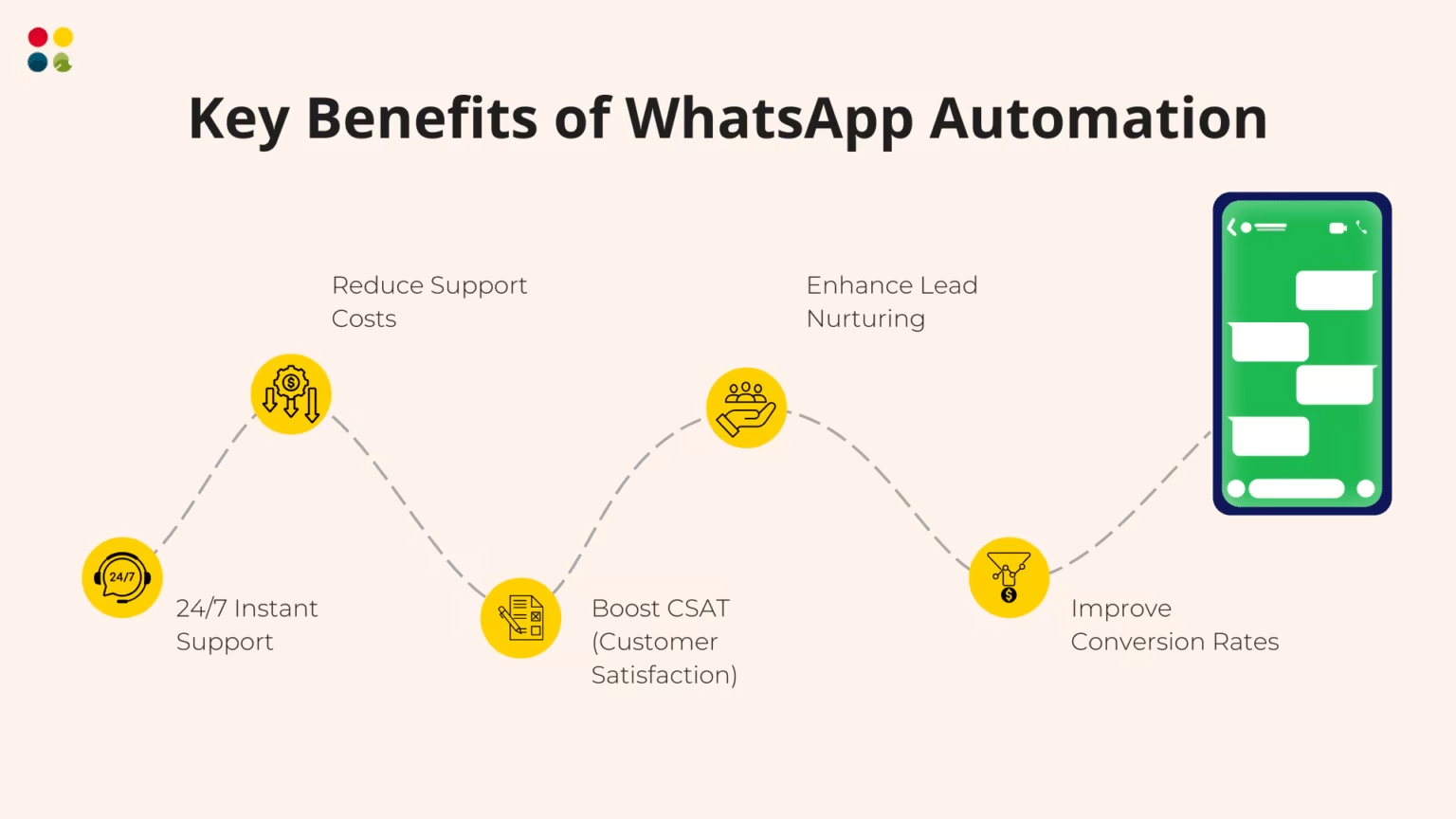
Benefits of Using WhatsApp Business Automation
Using WhatsApp business automation brings many benefits:
- Faster customer replies.
- Better customer satisfaction.
- Improved sales conversion.
- Reduced manual work.
- Centralised communication.
- Better lead tracking.
It also builds trust because customers feel heard and supported.
Common Mistakes to Avoid When Using WhatsApp Automation Software
Even the best tool will not help if used incorrectly.
Avoid these mistakes:
- Sending too many promotional messages.
- Ignoring personalisation.
- Using complicated chatbot flows.
- Not tracking performance.
- Failing to update customer data.
Automation should feel natural, not robotic.
Final Thoughts
Choosing the best WhatsApp automation tool depends on your business size, budget, and goals. Some tools are great for small teams. Others are built for large enterprises.
If you want simple automation, tools like AiSensy or Interakt can help. If you need advanced features, platforms like Gupshup or Twilio may suit you better.
And if your business handles both calls and chats, solutions like Runo can help you centralise communication and improve productivity.
The right WhatsApp automation software can save time, increase sales, and improve customer trust. Start small, test different tools, and choose what works best for you.
In 2026, smart businesses will not manage chats manually. They will automate wisely and grow faster.
To know more, explore the Runo expert blog section!
Frequently Asked Questions
1. What is the best WhatsApp automation tool in 2026?
The best WhatsApp automation tool depends on your business needs. For AI-powered CRM and call management, Runo is a top choice. For SMBs focused on customer support, WATI and Interakt offer strong shared inbox and chatbot features. Enterprise teams should consider Gupshup or Twilio for scalability and custom API integration.
2. Is there a free WhatsApp automation tool?
Yes, AiSensy offers a free plan with basic features including broadcast campaigns, chatbot flows, and WhatsApp API support. However, free plans typically have message limits and fewer integrations. For growing businesses, paid tools provide advanced automation, better analytics, and priority support.
3. How does WhatsApp business automation help increase sales?
WhatsApp business automation helps you reply faster, follow up with leads automatically, and send order updates or reminders. Quick replies improve customer trust. Automated follow-ups also reduce missed opportunities, which can lead to more sales.
4. Is there a reliable free WhatsApp automation tool available?
Yes, some platforms offer a free WhatsApp automation tool with limited features. These free plans usually have message limits and basic automation options. They are good for beginners, but growing businesses may need a paid plan for advanced features and higher message limits.
5. What features should I look for in WhatsApp automation software?
When choosing WhatsApp automation software, look for:
- Official WhatsApp API access
- Easy chatbot builder
- CRM integration
- Broadcast messaging
- Analytics and reports
- Multi-user support
These features help you manage customer conversations smoothly and safely.
6. Is WhatsApp automation software safe and legal to use?
Yes, it is safe and legal if you use tools that work with the official WhatsApp Business API. Avoid unofficial tools, as they may risk account suspension. Always follow WhatsApp’s messaging rules and get customer consent before sending promotional messages.
7. Do WhatsApp automation tools require the official WhatsApp Business API?
Yes, reputable WhatsApp automation tools use the official WhatsApp Business API to ensure compliance, account safety, and access to advanced features like verified business profiles, automated messaging, and CRM integrations. Avoid unofficial tools that risk account bans.
8. Can WhatsApp automation tools integrate with my CRM?
Most leading WhatsApp automation tools offer native CRM integrations with platforms like HubSpot, Salesforce, Zoho, and Pipedrive. Tools like Runo, WATI, and Respond.io provide seamless CRM sync to centralize customer data and automate lead management.