

Every customer interacts with your business in many small ways. A website visit. A sales call. A follow-up message. Each of these moments shapes how people feel about your brand.
These moments are called customer touchpoints. They guide how someone moves from first hearing about you to becoming a paying customer.
In this blog, we break down customer touchpoints in simple terms. You’ll learn how they fit into the buyer journey, why they matter, and how to manage them better. We also explain how to map, track, and improve touchpoints so every interaction feels clear, timely, and helpful.
Customer Touchpoint Meaning: What Are Customer Touchpoints?
A customer touchpoint is any interaction a person has with your brand. This can happen through a website, an app, an ad, a sales call, customer support, or an AI assistant.
Every touchpoint affects trust. Some build confidence. Others create doubt. That is why customer journey and touchpoints must work together. A single poor interaction can undo several good ones.
Customer experience touchpoints work like relationships. Each interaction adds to the overall impression. When touchpoints are clear, timely, and helpful, customers are more likely to stay and return.
Touchpoints differ by business type. In retail, they may include in-store visits or chatbots. In SaaS, they often involve onboarding emails, product demos, and support calls.
This is where customer touchpoint management matters. Through customer touchpoint mapping, businesses can identify key moments, improve consistency, and analyse customer touchpoint performance to strengthen the full customer experience.
Examples of Customer Touchpoints
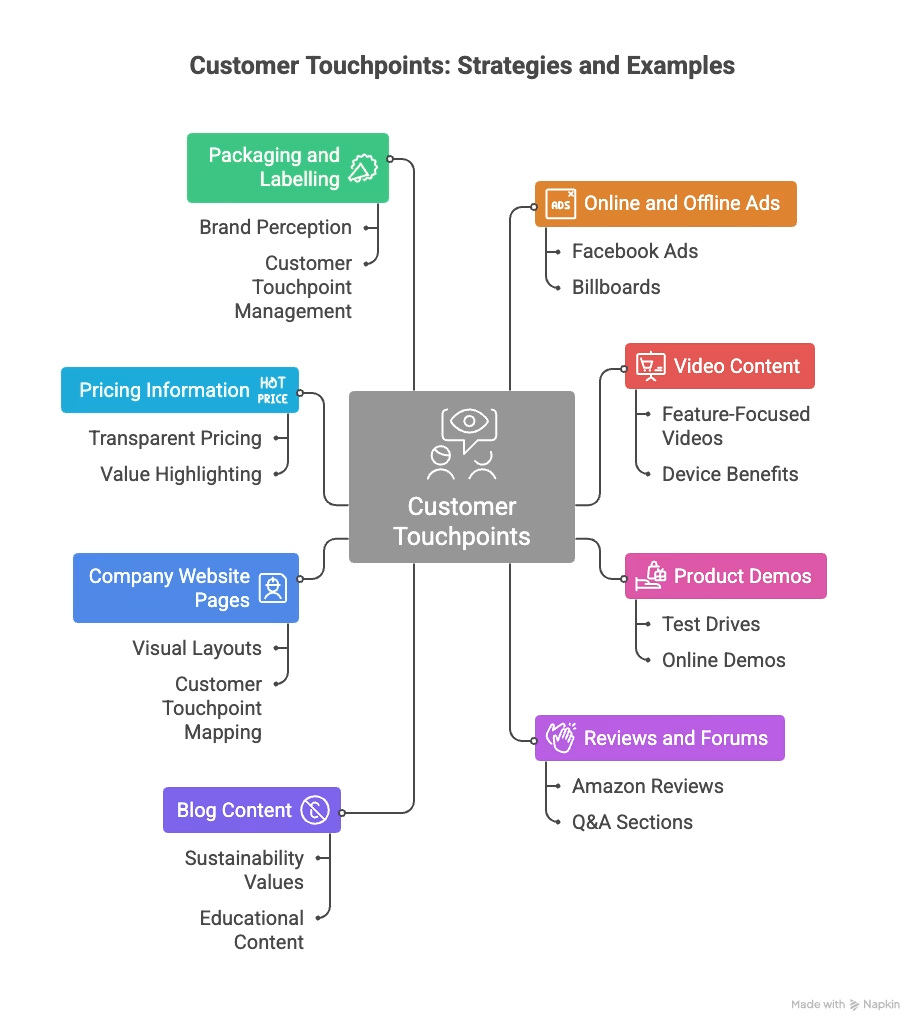
- Online and offline ads: Digital ads on platforms like Facebook and physical billboards introduce a brand to new audiences. Nike uses both to increase visibility and awareness.
- Video content: Videos help customers quickly understand products. Apple uses feature-focused videos to clearly explain device benefits.
- Product demos: Demos allow hands-on experience and build trust. Tesla offers test drives and online demos to reduce buyer hesitation.
- Reviews and forums: Reviews provide social proof and influence decisions. Amazon reviews and Q&A sections support strong customer experience touchpoints.
- Blog content: Blogs educate and build authority. Patagonia uses blogs to align content with sustainability values.
- Company website pages: Web pages guide buying decisions. IKEA uses visual layouts to support customer touchpoint mapping.
- Pricing information: Clear pricing supports faster decisions. Costco highlights value through transparent pricing.
- Packaging and labelling: Packaging shapes perception. Apple’s packaging strengthens customer touchpoint management.
- Physical stores: Stores offer direct interaction. Sephora enables product trials.
Why Customer Touchpoints Matter in the Buyer Journey
Customer touchpoints matter because they shape how customers experience your brand at every stage. Each interaction influences decisions, trust, and long-term behaviour. Together, these moments define the customer journey and touchpoints.
Touchpoints shape perception. A clear, helpful interaction builds trust. A poor one creates doubt. This is why customer experience touchpoints must feel consistent and reliable.
Touchpoints help build relationships. Every call, message, or visit gives businesses an opportunity to understand needs and respond more effectively. Strong interactions encourage loyalty and repeat engagement.
Well-designed touchpoints improve satisfaction. When businesses solve problems early and share relevant information, customers feel supported. This directly impacts retention.
Touchpoints also drive revenue. Clear communication and smooth experiences increase conversions and lifetime value. Loyal customers buy more and recommend brands.
Touchpoints provide insight. Through customer touchpoint analysis, businesses learn what works and what fails. With customer touchpoint mapping and customer touchpoint management, brands stay customer-focused and reduce churn.
Customer Touchpoints at Each Stage of the Buyer Journey
The buyer journey moves through three clear stages. At each stage, customer touchpoints guide how people progress from awareness to action. Together, these interactions define the customer journey and touchpoints.
Awareness Stage
Customers realise they have a problem or need. They focus on understanding the issue, not on choosing a brand. Early customer experience touchpoints should educate and attract attention.
Customer touchpoints at this stage include:
- Online and offline ads
- Social media posts
- Blog articles and SEO content
- Video content
- Word-of-mouth and referrals
Consideration Stage
Customers start comparing solutions. They evaluate options and look for proof, clarity, and value. This stage benefits most from clear mapping of customer touchpoints.
Customer touchpoints at this stage include:
- Company website and product pages
- Product demos and explainer videos
- Reviews, forums, and testimonials
- Email communication
- Sales inquiries and chat support
Decision Stage
Customers choose a solution but have not completed the purchase. Strong customer touchpoint management helps reduce doubt and encourage action.
Customer touchpoints at this stage include:
- Pricing and plan pages
- Sales calls and follow-ups
- Free trials or onboarding sessions
- FAQs and support interactions
- Checkout or sign-up experience
What Is Customer Touchpoint Mapping?
Customer touchpoint mapping is the process of identifying and visualising every interaction a customer has with your brand. It helps businesses understand how people move across the customer journey and touchpoints before, during, and after a purchase.
The buyer journey is rarely simple. Most customers interact with a brand multiple times before converting. In some cases, this can mean dozens of customer touchpoints across channels. Without visibility, these interactions feel disconnected.
Customer touchpoint mapping brings structure. It shows each step from first discovery to post-purchase engagement. This allows teams to see the journey from the customer’s perspective, not the company’s.
With a clear map, businesses can:
- Identify key customer experience touchpoints
- Understand customer behaviour and preferences
- Spot gaps, delays, or friction points
- Improve flow across marketing, sales, and support
- Strengthen customer touchpoint management
- Use insights to analyse customer touchpoint performance
- Increase satisfaction, retention, and long-term loyalty
How to Create an Effective Customer Touchpoint Map
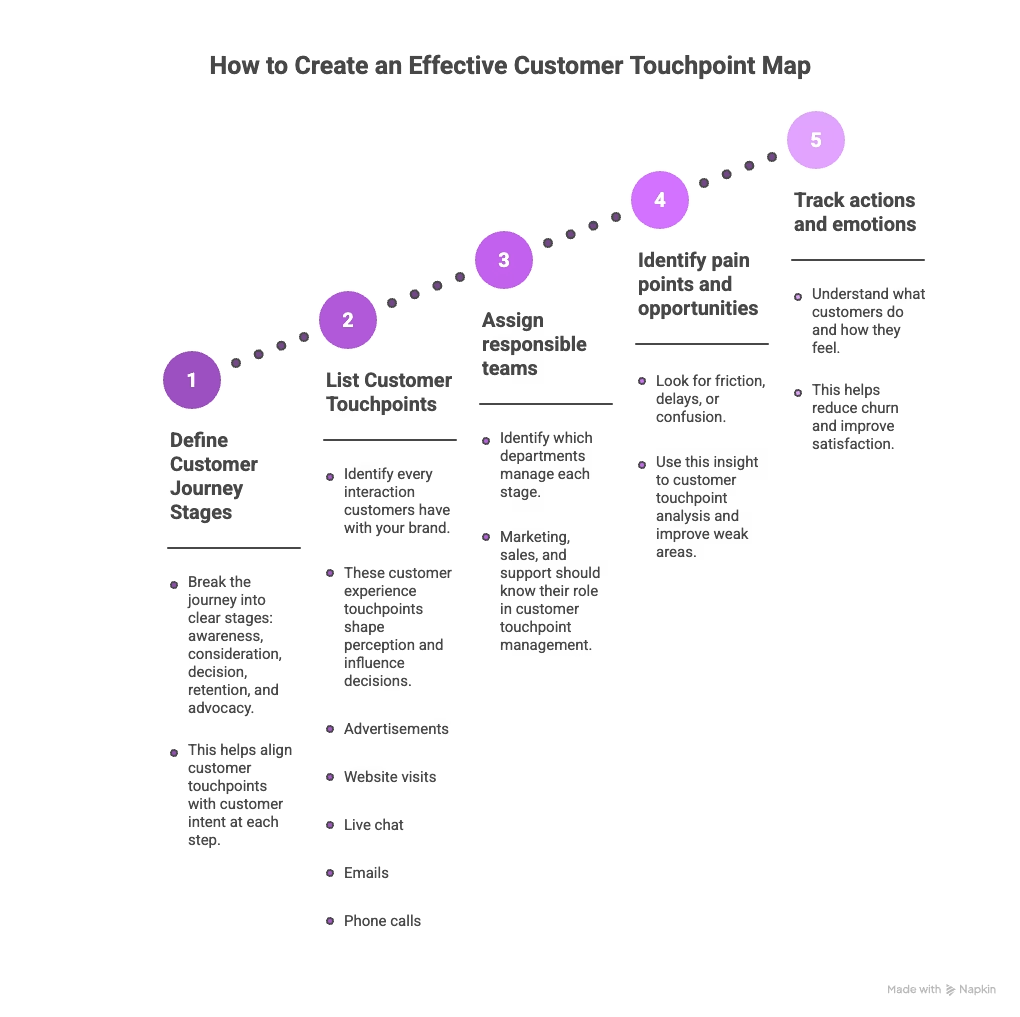
Creating an effective customer touchpoint mapping process helps businesses understand every interaction across the customer journey. A clear map reveals what customers experience, feel, and expect at each stage.
Step 1: Define Customer Journey Stages
Break the journey into clear stages: awareness, consideration, decision, retention, and advocacy. This helps align customer touchpoints with customer intent at each step.
Step 2: List Customer Touchpoints
Identify every interaction customers have with your brand. These customer experience touchpoints shape perception and influence decisions.
Common touchpoints include:
- Advertisements
- Website visits
- Live chat
- Emails
- Phone calls
Step 3. Assign responsible teams
Identify which departments manage each stage. Marketing, sales, and support should know their role in customer touchpoint management.
Step 4. Identify pain points and opportunities
Look for friction, delays, or confusion. Use this insight to customer touchpoint analysis and improve weak areas.
Step 5. Track actions and emotions
Understand what customers do and how they feel. This helps reduce churn and improve satisfaction.
How to Analyse Customer Touchpoints
To analyse customer touchpoints, businesses must first identify every interaction customers have with their brand. These customer touchpoints vary by industry, audience, and channel, so analysis starts with understanding real customer behaviour across the customer journey and touchpoints.
Start by defining your target customers and their needs. Use research to identify where and how they prefer to engage. This helps select the right customer experience touchpoints early in the journey.
Next, view the journey from the customer’s perspective. Walk through each step from problem discovery to post-purchase interaction. Note where customers search, compare, buy, and seek support.
Review engagement data across channels. Identify which touchpoints drive traffic, conversions, or drop-offs. This insight supports better management of customer touchpoints.
Use customer touchpoint mapping and experience maps to visualise interactions at each stage. Categorise touchpoints as before, during, and after purchase.
Finally, review touchpoints regularly. Customer behaviour changes, and touchpoint analysis must evolve to maintain a strong experience.
Common Customer Touchpoint Challenges (And How to Fix Them)
Handling real-time conversations
Managing high volumes of live chats, calls, and messages can overwhelm teams and slow response times.
Solutions:
- Use chatbots for routine queries
- Automate FAQs and basic responses
- Prioritise conversations based on urgency
- Equip agents with quick-access customer data
Maintaining context across channels
Customers switch between channels, which can fragment conversations and reduce trust.
Solutions:
- Centralise communication in one system
- Maintain a unified customer interaction history
- Enable teams to view past conversations instantly
- Improve handoffs between teams
Adapting to changing customer needs
Customer expectations evolve, making static processes ineffective.
Solutions:
- Collect regular customer feedback
- Review touchpoints through customer touchpoint analysis
- Update journeys using customer touchpoint mapping
- Encourage flexibility in service processes
Ensuring consistent messaging and branding
Inconsistent tone and information confuse customers.
Solutions:
- Create clear brand and communication guidelines
- Train teams on messaging standards
- Audit customer experience touchpoints regularly
- Use shared templates across channels
How Runo Helps Manage Customer Touchpoints
Runo helps businesses manage customer touchpoints by bringing every interaction into one connected system. It supports the full customer journey and touchpoints, from first contact to final conversion.
Sales CRM and Lead Management
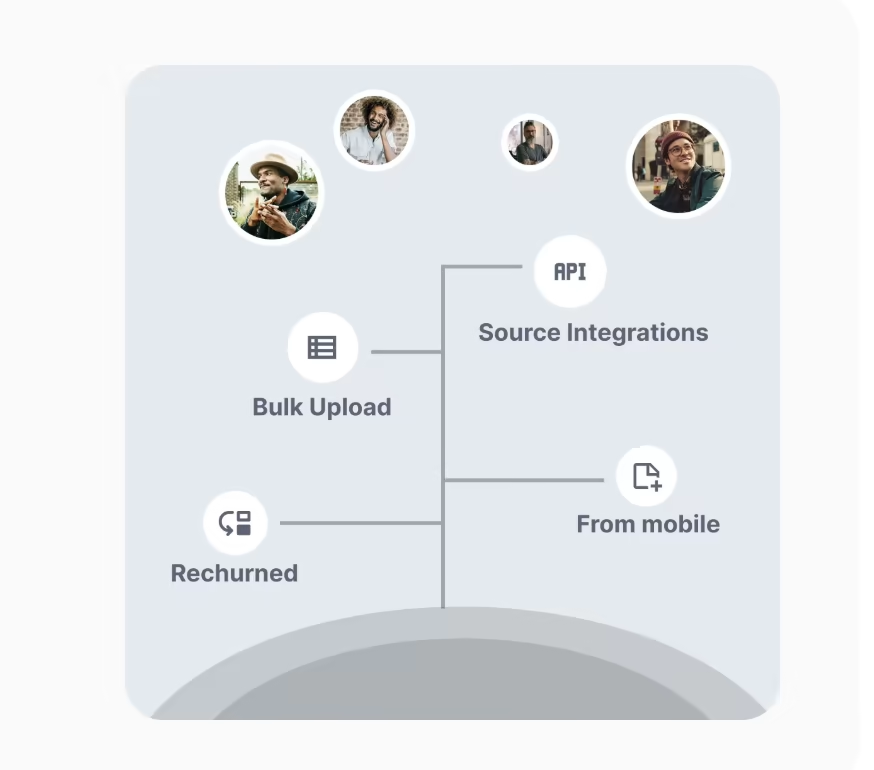
Runo’s Sales CRM tracks every lead from capture to closure. Leads are collected from websites, ads, and marketplaces and then auto-assigned to the appropriate sales rep through a lead management system . Real-time updates show where each lead stands in the funnel. Follow-up reminders and team tracking reduce delays and missed opportunities. This strengthens customer touchpoint management by keeping every interaction timely and visible.
Telemarketing CRM and Telecaller App
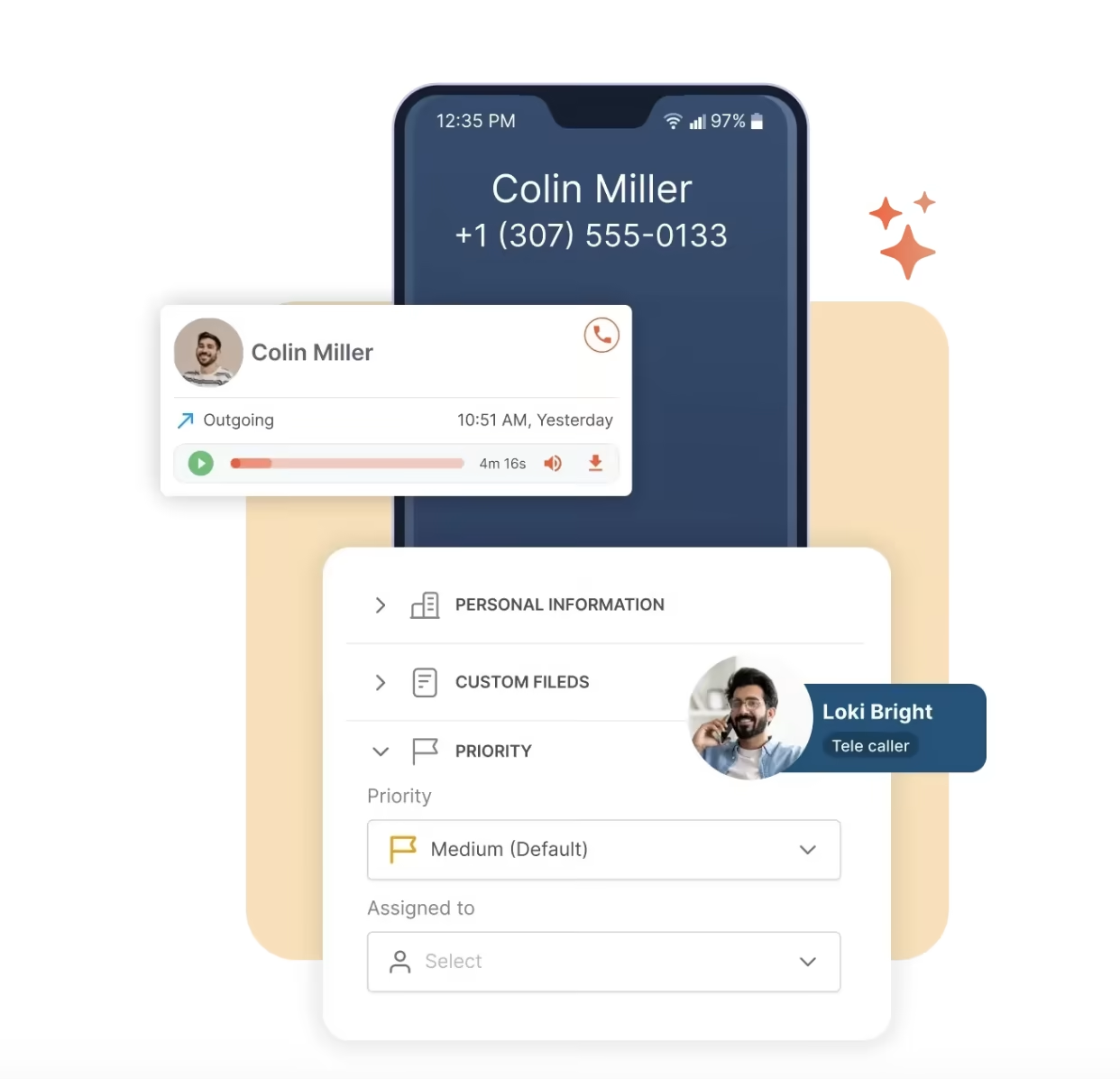
Runo’s SIM-based telemarketing CRM handles high-volume calling without losing context. Agents can call using SIM or virtual numbers, automatically log calls, and send WhatsApp or SMS follow-ups. Every call becomes a clear customer experience touchpoint. Managers can monitor activity, call status, and outcomes in real time, improving consistency across conversations.
Sales Call Tracking and Recording
Runo tracks 100% of inbound and outbound calls . Teams can measure talk time, pickup rates, and live performance. Call recordings help review quality and maintain message consistency. This makes it easier to analyse customer touchpoints, identify what works, and where customers drop off.
WhatsApp Touchpoints in One Place
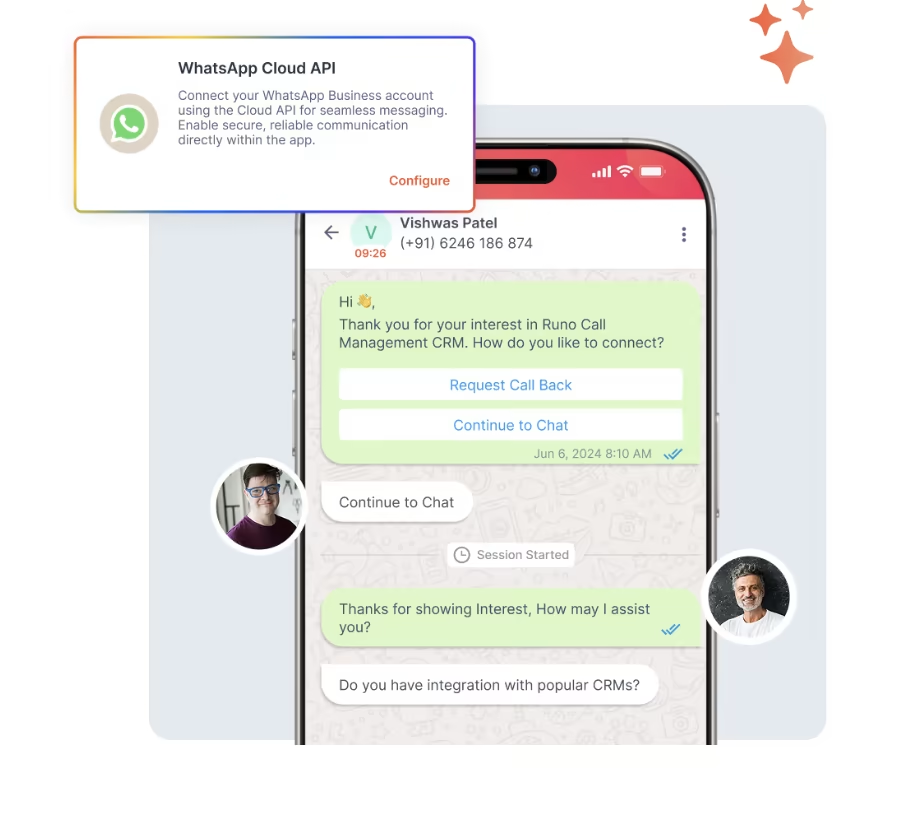
Runo also centralises WhatsApp communication. Businesses can run campaigns, personalise messages, and track chats alongside calls and notes. This unified timeline supports better customer touchpoint mapping and smoother follow-ups.
FAQs
What are customer touchpoints?
Customer touchpoints are any interactions a person has with your brand, such as ads, calls, emails, or website visits.
Why are customer touchpoints important?
They shape customer perception, influence decisions, and affect trust, loyalty, and conversions.
What is customer touchpoint mapping?
It is the process of identifying and visualising all interactions across the customer journey.