

Call centre metrics help businesses understand how well their calling operations are performing. These metrics show how fast agents connect with customers, how many calls get answered, how issues are resolved, and how customers feel after the interaction.
In simple words, call centre metrics tell you whether your calling system, your agents, and your processes are actually working the way they should.
No matter whether your team uses SIM-based calling , cloud telephony , or a mix of both, tracking the correct numbers helps you improve customer trust, agent productivity, and overall results.
Why Call Centre Metrics Matter for Modern Businesses
Today, calling is no longer limited to a single phone line or desk phone. Call management systems have evolved over time, from physical phone lines to internet-based calling and now to advanced SIM-based call management.
Because of this evolution, businesses need precise data to understand what is happening on every call.
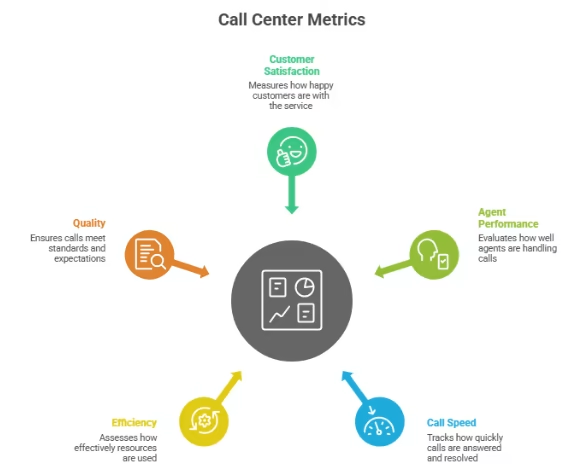
Tracking call centre metrics helps you:
- Measure agent performance clearly
- Reduce missed and unanswered calls.
- Improve customer experience
- Identify training gaps
- Make better staffing decisions.
- Increase call pickup and conversion rates.
Without metrics, businesses operate on guesswork. With metrics, decisions become data-driven.
Understanding Call Management Before Tracking Metrics
Before jumping into metrics, it is essential to understand how calls actually happen.
Cloud Telephony (Internet-Based Calling)
Cloud telephony is a system where calls happen entirely over the internet .
Key points:
- Calls depend on internet availability
- Caller ID usually shows a virtual landline number.
- Familiar landline series include 080, 044, 011, etc.
- Agents can call from laptops or desktops.
- No physical SIM is required.
- Easy to scale numbers quickly
Cloud telephony is widely used in enterprise environments where mobile phones are not allowed on the floor.
SIM-Based Call Management Systems
SIM-based call management works at the GSM level using real mobile SIMs.
Key points:
- Calls go through actual mobile numbers
- Caller ID shows a real mobile number , not a virtual one.
- Higher call pickup rates
- No internet dependency for making calls
- The Internet is only required for tracking, recording, and reporting.
This system builds higher trust because customers see a real mobile number instead of a virtual landline number.
Where Runo Fits In
Runo started as a SIM-based call management CRM , built to track, manage, audit, and record calls made from real mobile numbers.
Now, Runo is evolving further.
Runo will soon offer:
- SIM-based calling
- Cloud telephony
- Both are available inside a single app.
Even more importantly, Runo’s cloud telephony will display virtual mobile numbers , not landline series numbers. It keeps call pickup rates high while allowing internet-based scalability.
Core Call Centre Metrics Every Business Should Track
Now that the foundation is clear, let’s get into the most critical metrics.
Call centres often use multiple channels like calls, emails, chats, and social media. Here are essential contact centre metrics to measure:
1. First Call Resolution (FCR)
This metric shows how many customer issues are solved in the first call itself.
Why it matters:
- Reduces repeat calls
- Improves customer satisfaction
- Lowers support cost
Higher FCR means your agents are skilled and well-equipped.
2. Average Handling Time (AHT)
AHT measures how long an agent spends on a call, including talk time and follow-up work.
Why it matters:
- Shows agent efficiency
- Helps plan workloads
- Prevents long queues
A very low AHT may hurt quality, while a very high AHT may reduce efficiency. Balance is key.
3. Average Speed of Answer (ASA)
ASA shows how quickly calls are answered after they reach the queue.
Why it matters:
- Long wait times reduce trust
- Faster answers improve customer experience.
- Shows staffing efficiency
4. Call Abandonment Rate
This metric shows how many callers hang up before reaching an agent.
Common reasons:
- Long wait times
- Low agent availability
- Poor call routing
Reducing abandonment improves customer satisfaction instantly.
5. Customer Satisfaction Score (CSAT)
CSAT measures how customers feel after interacting with your agents.
Why it matters:
- Direct feedback from customers
- Highlights service quality
- Identifies coaching needs
6. Net Promoter Score (NPS)
NPS measures customer loyalty and willingness to recommend your business.
Why it matters:
- Shows long-term trust
- Predicts repeat business
- Reflects brand experience
7. Service Level
Service level tracks how many calls are answered within a defined time.
Example:
- 80% of calls answered within 20 seconds
This metric helps maintain consistent service quality.
8. Occupancy Rate
The occupancy rate shows how busy your agents are during working hours.
Why it matters:
- Prevents burnout
- Avoids idle time
- Improves workforce planning
9. Call Transfer Rate
This metric shows how often calls are transferred between agents.
High transfer rates usually indicate:
- Poor call routing
- Knowledge gaps
- Incomplete training
10. Repeat Call Rate
Repeat calls happen when an issue is not resolved correctly.
Lower repeat call rates mean:
- Better first-call resolution
- Higher customer trust
- Lower workload
Important Call Centre Quality Assurance Metrics
Beyond speed and volume, quality matters.
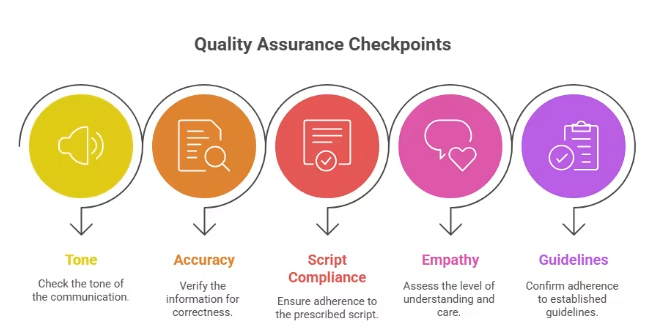
Key call centre quality assurance metrics include:
- Script adherence
- Accuracy of information
- Tone and empathy
- Compliance with guidelines
- Call recording review scores.
These call centre quality metrics help managers coach agents and maintain consistency.
Essential Contact Centre Metrics Across Channels
For businesses using calls, chats, and emails, tracking contact centre metrics is essential.
These include:
- Channel-wise response time
- Resolution rate per channel
- Customer satisfaction by channel
- Volume trends
It helps businesses understand which channels perform best.
Key KPI in BPO Operations
For BPO setups, metrics are tied directly to contracts and SLAs.
Important KPI in BPO include:
- AHT
- FCR
- Service level
- Quality scores
- Conversion rates
- Compliance metrics
Tracking these KPIs ensures client expectations are met.
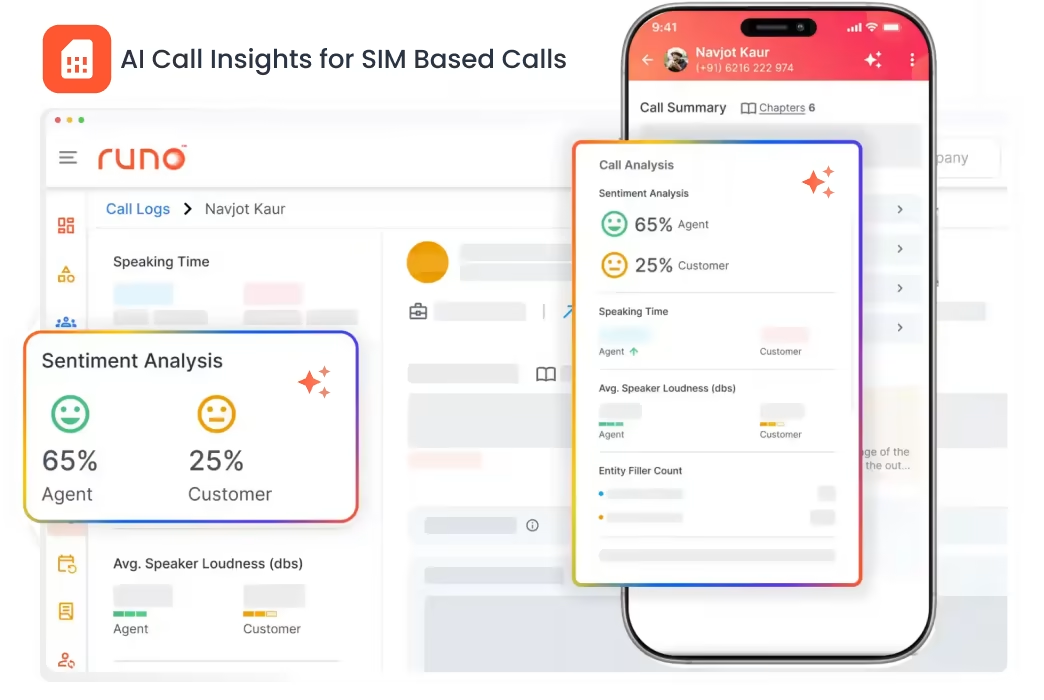
How Runo Helps Track Call Centre Metrics Better
Runo is built to support modern calling needs.
With Runo, businesses can:
- Track SIM-based calls with real mobile numbers
- Manage cloud telephony calls from laptops.
- Switch between calling modes using one app.
- Record and audit all calls
- Improve call pickup rates.
- Centralise reports and analytics.
Runo integrates with multiple lead sources and existing CRMs, making it easy to manage calls without changing workflows.
Trusted by 3,500+ businesses, Runo was also named Global Indian MSME of the Year in Sales Tech .
Conclusion
Tracking the right call centre metrics is not optional anymore. It is essential for growth, trust, and efficiency.
When businesses clearly understand their calling setup, whether SIM-based , cloud telephony , or both, they can track the right metrics without confusion.
With accurate data, better tools like Runo, and clear visibility into performance, businesses can build calling operations that customers trust and that agents enjoy working with.
To know more, explore the Runo expert blog section.
FAQs about Call Centre Metrics
1. What are call centre metrics and why are they important?
Call centre metrics are numbers that show how well a call centre is working. They help businesses understand call volume, response time, agent performance, and customer satisfaction. Tracking these metrics helps teams fix problems early and improve service quality.
2. Which call centre metrics should every business track?
Every business should track core call centre metrics like Average Handle Time (AHT), First Call Resolution (FCR), Call Abandonment Rate, Customer Satisfaction Score (CSAT), and Service Level. These metrics give a clear picture of both agent efficiency and customer experience.
3. How often should call centre metrics be reviewed?
Call centre metrics should be reviewed daily for operations, weekly for team performance, and monthly for business decisions. Regular tracking helps managers act fast and avoid long-term issues in service quality.
4. Can call centre metrics improve customer satisfaction?
Yes, call centre metrics directly impact customer satisfaction. Metrics like FCR and CSAT show how happy customers are after a call. Improving these numbers usually leads to faster resolutions, fewer repeat calls, and better customer trust.
5. Are call centre metrics useful for small businesses too?
Absolutely. Call centre metrics are not only for large BPOs. Small businesses can use them to track agent workload, reduce missed calls, and deliver better customer support without increasing costs.