


Sales pipeline management is the systematic process of tracking, organizing, and optimizing sales opportunities as they move through each stage of the sales cycle from initial contact to closed deal to improve forecasting, productivity, and revenue growth.
Many businesses struggle with missed follow-ups, lost leads, or unclear deal status. This informative blog explains what sales pipeline management is , why it matters, and exactly how to manage a sales pipeline step by step in a simple, straightforward way.
What Is Sales Pipeline Management?
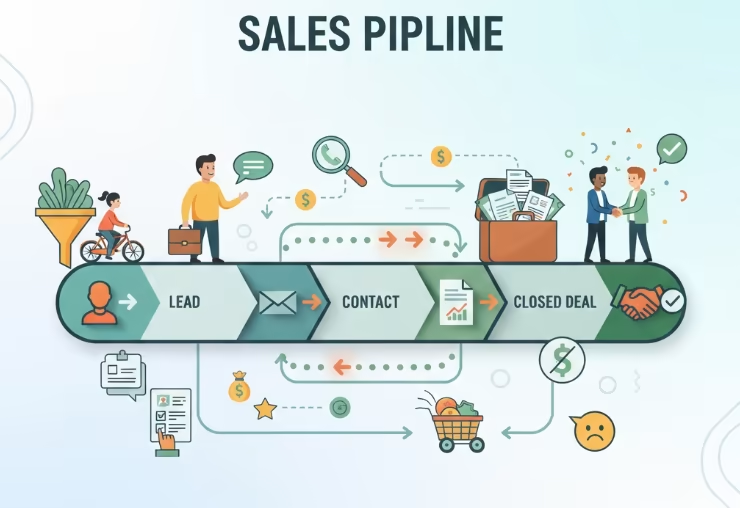
Sales Pipeline Management is the method of managing all your sales opportunities from the first contact to the final sale. It shows where each deal stands and what action is needed next.
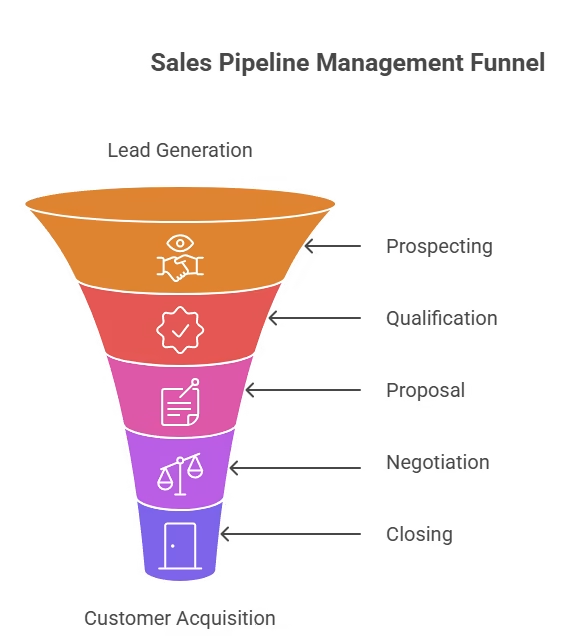
A sales pipeline is usually divided into stages such as lead capture, contact, meeting, proposal, and closing. Sales and pipeline management help sales teams move deals smoothly from one stage to the next.
Without proper sales pipeline management , teams often work blindly. With it, every lead has a clear status and priority.
Why Sales Pipeline Management Matters for Every Business
Strong sales pipeline management is not only for big companies. Small and growing businesses benefit just as much.
Here is why it matters:
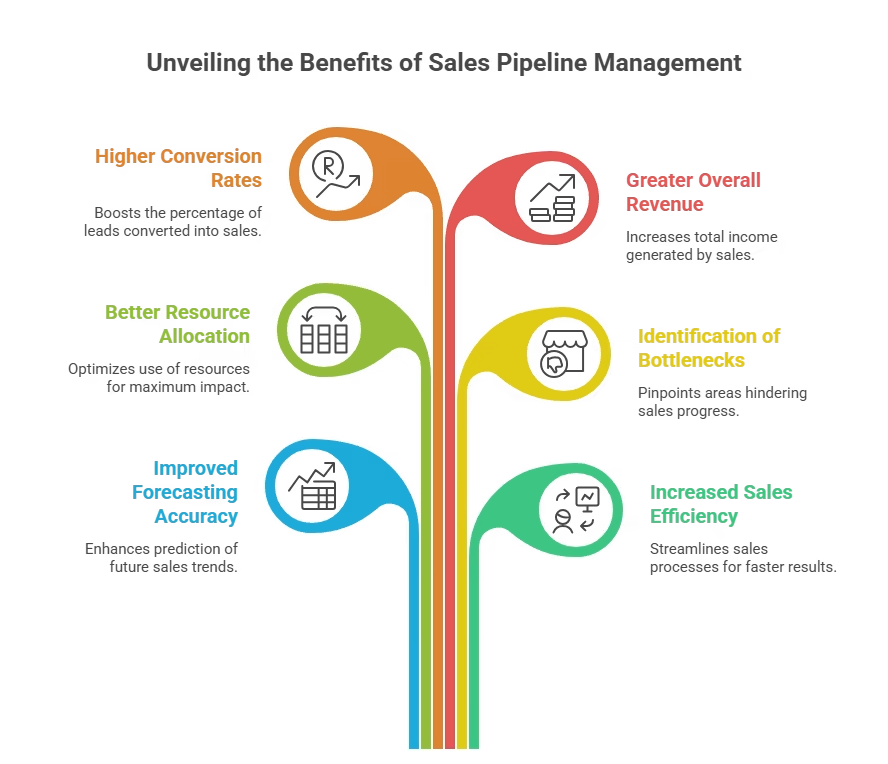
- Gives clear visibility into all active deals. According to research, 63% of sales managers say their organization does a poor job managing its pipeline, leading to lost revenue opportunities.
- Helps predict future revenue more accurately. Companies with a well-defined sales process see 18% faster revenue growth than those without one.
- Reduces missed follow-ups and delays. Studies show that 80% of sales require five follow-up calls after the initial contact, yet 44% of salespeople give up after just one follow-up.
- Improves team focus and productivity. Sales reps spend only 34% of their time actually selling; effective pipeline management helps reclaim lost time.
- Makes sales performance easy to measure. Data-driven pipeline reviews improve win rates by up to 15%.
When sales teams know exactly what to do next, deals move faster, and results improve, as studies show that companies with effective sales pipeline management see a 28% higher revenue growth rate compared with those without a formal sales process.
Key Stages of a Sales Pipeline Explained
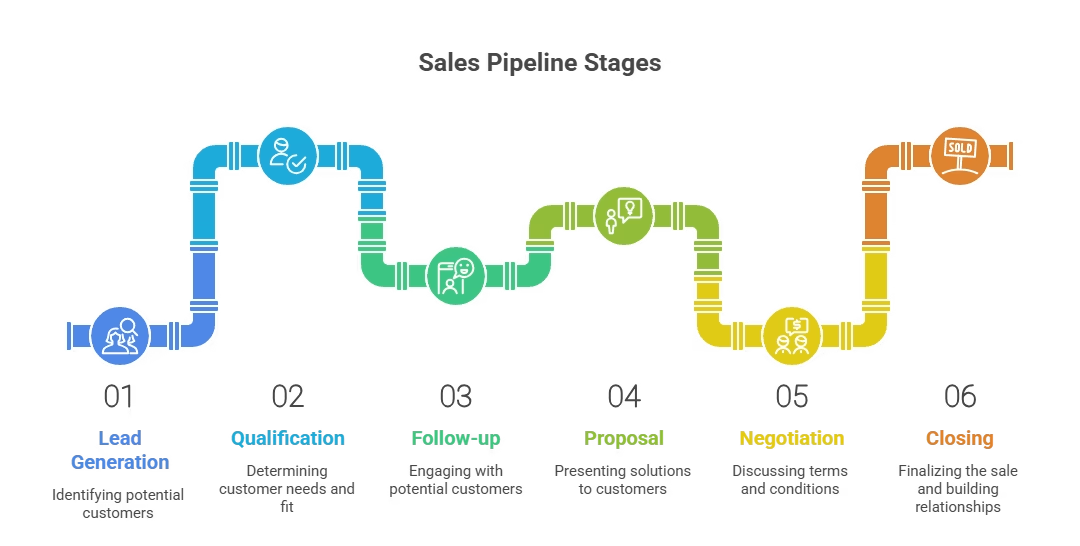
To understand sales pipeline management , you must know the standard pipeline stages. These may change by business, but the idea stays the same.
1. Lead Generation Stage: New leads enter the system from ads, calls, referrals, or forms. Good sales pipeline management ensures every lead is captured and stored correctly.
2. Lead Qualification Stage: Not all leads are ready to buy. This stage checks interest, budget, authority, and need (BANT framework). Filtering early saves time and improves close rates.
3. Contact and Follow-Up Stage: Sales teams connect with qualified leads through calls, messages, or emails. Timely follow-ups are critical here 80% of sales require five follow-up attempts.
4. Proposal or Demo Stage: The product or service is explained in detail. Pricing and value are shared. This is where trust is built and objections are addressed.
5. Negotiation Stage: Questions are cleared, terms are discussed, and objections are handled. Strong pipeline tracking prevents deals from going cold at this stage.
6. Closing Stage: The deal is finalized, and payment is confirmed. Clear records help avoid confusion and delays, ensuring a smooth handoff to customer success or fulfillment teams.
How to Manage Sales Pipeline Step by Step
If you are wondering how to manage a sales pipeline effectively, follow these simple steps.
Step 1: Define Clear Sales Stages
Every team must use the same pipeline stages. Avoid vague steps.
Clear stages make sales pipeline management easier and more accurate.
Step 2: Capture Every Lead Automatically
Leads should never be written on paper or lost in chats.
Using digital tools ensures all leads enter the pipeline.
Step 3: Assign Ownership to Each Lead
Each lead should have one clear owner.
It avoids missed follow-ups and confusion.
Step 4: Set Follow-Up Rules
Decide how often to call or message leads at each stage.
Consistent follow-ups are key to strong sales and pipeline management .
Step 5: Track Movement Between Stages
Deals should move forward or be closed as lost.
Stuck deals often need attention or removal.
Step 6: Review Pipeline Weekly
Regular reviews show what is working and what is not.
This step improves planning and forecasting.
Common Sales Pipeline Management Challenges
Even good teams face issues with sales pipeline management .
Poor Lead Quality
Too many unqualified leads slow down the pipeline.
Better filters solve this.
Missed Follow Ups
Manual tracking leads to forgotten calls.
Automation helps here.
No Visibility for Managers
Without reports, managers cannot guide teams.
A proper system fixes this.
Inaccurate Sales Forecasts
Unclear stages lead to wrong revenue predictions.
Clear definitions improve accuracy.
Advanced Sales Pipeline Management Strategies
Once you’ve mastered the basics, these advanced strategies can help you scale pipeline performance and close deals faster.
1. Multithreading: Engage Multiple Stakeholders
Multithreading means building relationships with multiple decision-makers and influencers within a target account, not just one contact. Research shows that deals with 3+ stakeholders engaged have a 35% higher win rate.
How to do it: Map out the buying committee (economic buyer, technical buyer, end users) and assign team members to engage each stakeholder. Use your CRM to track all touchpoints.
2. Leverage AI for Pipeline Insights
AI-powered CRMs analyze deal patterns, predict which opportunities are likely to close, and surface at-risk deals before they stall. Tools like Runo use AI to automatically log calls, score leads, and recommend next actions.
How to do it: Enable AI features in your CRM to get real-time deal health scores, churn risk alerts, and recommended follow-up actions.
3. Optimize Pipeline Coverage Ratio
Pipeline coverage ratio measures whether you have enough pipeline value to hit your sales target. A healthy ratio is 3-4× your quota.
Formula: Pipeline Coverage Ratio = Total Pipeline Value ÷ Sales Quota
Example: If your quarterly quota is $100,000, you should maintain a pipeline worth $300,000-$400,000.
How to do it: Review your coverage ratio weekly. If it drops below 3×, prioritize lead generation and prospecting activities.
4. Increase Sales Velocity
Sales velocity measures how quickly deals move through your pipeline and generate revenue. Increasing velocity means closing deals faster without sacrificing quality.
Formula: Sales Velocity = (Number of Opportunities × Average Deal Value × Win Rate) ÷ Sales Cycle Length
How to improve it:
Grow the number of opportunities through consistent prospecting.
Shorten your sales cycle by automating follow-ups and reducing approval delays.
Increase win rate by improving lead qualification and sales training.
Boost average deal value by upselling and cross-selling.
Sales Pipeline Management Best Practices to Follow
Using proven sales pipeline management best practices makes a big difference.
Keep the Pipeline Simple
Too many stages confuse teams.
Stick to clear and necessary steps.
Focus on Deal Quality, Not Just Quantity
More deals do not always mean more revenue.
Prioritise deals with a higher chance of closing.
Clean the Pipeline Regularly
Remove dead or inactive leads.
A clean pipeline gives better insights.
Use Data to Improve Decisions
Track conversion rates at each stage.
Data-driven actions lead to better results.
Train the Sales Team Often
Sales processes change over time.
Regular training keeps teams sharp.
Role of CRM in Sales Pipeline Management
A CRM plays a significant role in sales pipeline management. Learn more about choosing the right CRM for your sales team in our detailed guide.
What Is Sales Pipeline Management CRM?
A sales pipeline management crm is a tool that stores leads, tracks deals, and shows pipeline stages in one place.
It removes manual work and improves accuracy.
Benefits of Using a Sales Pipeline Management CRM
- Central place for all lead data.
- Automatic reminders for follow-ups.
- Real-time pipeline visibility.
- Easy performance tracking.
- Better team coordination.
Using the right CRM makes managing the sales pipeline much simpler.
How Runo Supports Sales Pipeline Management
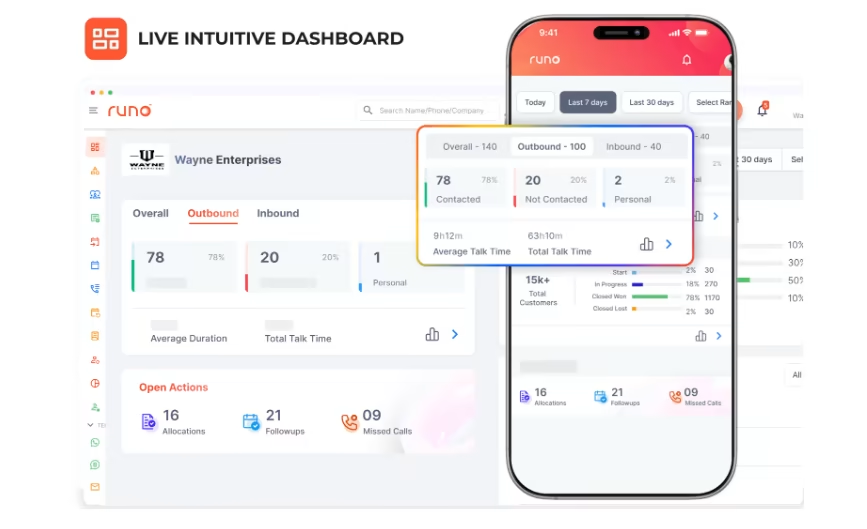
Runo is an AI-powered SIM-based call management CRM built for sales teams that rely on calling.
It helps businesses improve sales pipeline management by connecting calls directly with lead data.
Key Benefits of Runo
- Tracks every sales call automatically.
- Links calls to leads and pipeline stages.
- Works with multiple lead sources.
- Integrates with existing CRMs.
- Improves calling productivity quickly.
Runo helps sales teams earn trust on every call while keeping the pipeline organised.
With over 3500 businesses using it, Runo has proven its value in sales pipeline management crm solutions.
You can start with a 10-day free trial without a credit card.
Sales and Pipeline Management Metrics You Should Track
Tracking the correct numbers improves sales and pipeline management .
1. Lead Conversion Rate
What it is: The percentage of leads that move from one pipeline stage to the next.
Formula: (Number of Leads Advanced ÷ Total Leads in Stage) × 100
Example: If 50 out of 100 qualified leads move to the proposal stage, your conversion rate is 50%.
Benchmark: Healthy conversion rates range from 20-30% from qualification to proposal.
2. Average Deal Size
What it is: The average revenue value of closed deals.
Formula: Total Revenue from Closed Deals ÷ Number of Closed Deals
Example: If you closed 10 deals worth $100,000 total, your average deal size is $10,000.
Why it matters: Helps forecast revenue and prioritize high-value opportunities.
3. Sales Cycle Length
What it is: The average time it takes to close a deal from first contact.
Formula: Total Days to Close All Deals ÷ Number of Closed Deals
Example: If 5 deals took 150 days combined to close, your average sales cycle is 30 days.
Benchmark: B2B sales cycles typically range from 30-90 days depending on deal complexity.
4. Win Rate
What it is: The percentage of opportunities that result in closed-won deals.
Formula: (Number of Closed-Won Deals ÷ Total Opportunities) × 100
Example: If you won 15 out of 50 opportunities, your win rate is 30%.
Benchmark: Average B2B win rates are 20-30%; top performers exceed 40%.
5. Pipeline Coverage Ratio
What it is: The ratio of total pipeline value to your sales target.
Formula: Total Pipeline Value ÷ Sales Quota
Example: If your pipeline is worth $400,000 and your quota is $100,000, your coverage ratio is 4:1.
Benchmark: Sales teams need 3–4× pipeline coverage to reliably hit quota.
6. Sales Velocity
What it is: The speed at which deals move through your pipeline and generate revenue.
Formula: (Number of Opportunities × Average Deal Value × Win Rate) ÷ Sales Cycle Length (days)
Example: (50 opportunities × $10,000 × 30% win rate) ÷ 30 days = $5,000/day in sales velocity.
Why it matters: Increasing sales velocity directly accelerates revenue growth.
Mistakes to Avoid in Sales Pipeline Management
Avoiding these mistakes strengthens sales pipeline management:
1. Relying only on memory or notes.
What to do instead: Use a CRM to automatically capture and store all lead and deal data in one place.
2. Not updating deal status regularly.
What to do instead: Set a daily or weekly routine to update deal stages and log activities immediately after calls or meetings.
3. Ignoring stalled deals.
What to do instead: Review stalled deals weekly. Either re-engage with a new approach or mark them as lost to keep your pipeline accurate.
4. Using too many pipeline stages.
What to do instead: Limit your pipeline to 5-7 clear, actionable stages that reflect your actual sales process.
5. Failing to review pipeline data.
What to do instead: Schedule weekly pipeline reviews with your team to analyze metrics, identify bottlenecks, and adjust strategies.
Fixing these issues leads to a smoother sales flow.
How Sales Pipeline Management Improves Business Growth
Strong sales pipeline management helps businesses grow steadily.
It improves planning, reduces stress, and builds confidence in revenue goals.
Teams work smarter, not harder.
Managers make better decisions.
Customers receive timely and clear communication.
Final Thoughts on Sales Pipeline Management
Understanding sales pipeline management is the first step toward better sales results. By following clear stages, using the right tools, and applying proven sales pipeline management best practices , any business can improve deal flow and revenue.
Learning how to manage a sales pipeline is not about working more. It is about working in a clear, organised way.
With tools like Run supporting calling and lead tracking, sales teams can stay focused, productive, and in control at every stage of the pipeline.
To know more, explore the Runo expert blog section!
FAQs on Sales Pipeline Management
1. What is sales pipeline management in simple terms?
Sales pipeline management means tracking every lead from first contact to final sale. It helps sales teams know where each deal stands and what action to take next.
2. Why is sales pipeline management important for small businesses?
Sales pipeline management helps small businesses avoid missed follow-ups, manage leads better, and predict sales more clearly. It saves time and improves closing chances.
3. How to manage the sales pipeline effectively?
To manage the sales pipeline well, define clear sales stages, track every lead, follow up on time, review the pipeline often, and use a CRM to stay organised.
4. What are sales pipeline management best practices?
Key sales pipeline management best practices include keeping stages simple, cleaning the pipeline regularly, focusing on quality leads, tracking data, and training the sales team.
5. What is a sales pipeline management CRM, and why is it useful?
A sales pipeline management crm is a tool that stores leads, tracks deal stages, and reminds sales teams to follow up. It improves visibility, accuracy, and overall sales performance.