


Call centre analytics refers to the collection, measurement, and analysis of customer interaction data to improve contact center performance and customer experience. The main types include predictive analytics, speech analytics, text analytics, sentiment analysis, interaction analytics, customer journey analytics, omnichannel analytics, workforce analytics, and business performance management. Each type serves a specific purpose from forecasting call volumes to analyzing agent performance and understanding customer emotions across all channels.
Modern contact centres generate massive volumes of customer interaction data every day the average contact center handles over 1 million customer interactions annually (source: Forrester Research, 2024). Without the right analytics, this data remains underused. Call centre analytics help businesses understand agent performance, customer behaviour, operational gaps, and service quality in real time. From speech and sentiment analytics to predictive and omnichannel analytics, each type plays a specific role in improving efficiency and customer experience.
This blog explains the most important types of call centre analytics used in modern contact centres, how they work, and why they matter. Whether you manage a small support team or a large contact centre, understanding these analytics helps you make smarter, data-driven decisions.
Overview of the Types of Call Centre Analytics
| Analytics Type | What It Analyzes | Why It Matters (Significance) |
| Predictive Analytics | Historical patterns and behaviours | Forecasts call volumes, churn risk, and future outcomes |
| Speech Analytics | Voice calls and audio interactions | Identifies sentiment, intent, compliance, and agent gaps |
| Text Analytics | Chats, emails, tickets, and messages | Extracts themes, issues, and sentiment from text data |
| Sentiment Analysis | Emotional tone in conversations | Detects customer frustration, satisfaction, or risk |
| Interaction Analytics | Calls, chats, and emails combined | Analyzes 100% interactions for CX and QA improvement |
| Customer Journey Analytics | End-to-end customer touchpoints | Reveals friction points across the full customer lifecycle |
| Omnichannel Analytics | All channels under one identity | Ensures consistent experience across voice, chat, and email |
| Cross-Channel Analytics | Channel influence on outcomes | Shows how channels work together to drive conversions |
| Customer Satisfaction Analytics | CSAT, NPS, CES, feedback | Measures happiness, loyalty, and effort levels |
| Workforce Analytics | Agent performance and schedules | Optimises staffing, productivity, and training needs |
| Business Performance Analytics (BPM) | KPIs, goals, and outcomes | Aligns operations with business objectives |
| Data Integration Analytics | Data from multiple systems | Creates a single source of truth for accurate insights |
How to Choose the Right Call Centre Analytics Solution
Selecting the right analytics platform requires evaluating your contact centre’s specific needs, existing technology stack, and business goals. The following factors will help you make an informed decision.
Key Features to Prioritize
Look for platforms that offer real-time analytics dashboards, automated quality assurance, speech and text analytics capabilities, and customizable reporting. The solution should support 100% interaction analysis rather than sample-based QA, provide role-based access for agents and supervisors, and include AI-powered insights that surface actionable recommendations automatically.
Integration and Data Requirements
Your analytics solution must integrate seamlessly with your existing CRM, CCaaS platform, workforce management system, and other business tools. Verify that the platform can ingest data from all communication channels voice, email, chat, SMS, and social media-and consolidate it into a single source of truth. API availability and pre-built connectors reduce implementation time and technical complexity.
ROI and Business Impact
Calculate expected ROI by measuring potential improvements in First Call Resolution (FCR), Average Handle Time (AHT), Customer Satisfaction (CSAT), and agent productivity. Leading analytics platforms typically deliver 15-25% improvement in FCR, 10-20% reduction in AHT, and 20-30% decrease in quality assurance costs through automation. Factor in both hard savings (reduced handle time, lower attrition) and soft benefits (improved customer experience, better compliance).
Implementation and Adoption Best Practices
Successful analytics implementation requires executive sponsorship, clear KPI definitions, phased rollout, and ongoing agent training. Start with a pilot program focused on one analytics type (e.g., speech analytics for compliance) before expanding to additional capabilities. Establish baseline metrics before launch, set realistic improvement targets, and create feedback loops so agents can see how analytics insights improve their performance. Plan for 60-90 days of adoption support to ensure teams fully leverage the platform’s capabilities.
Types of Call Centre Analytics Used in Call Centres
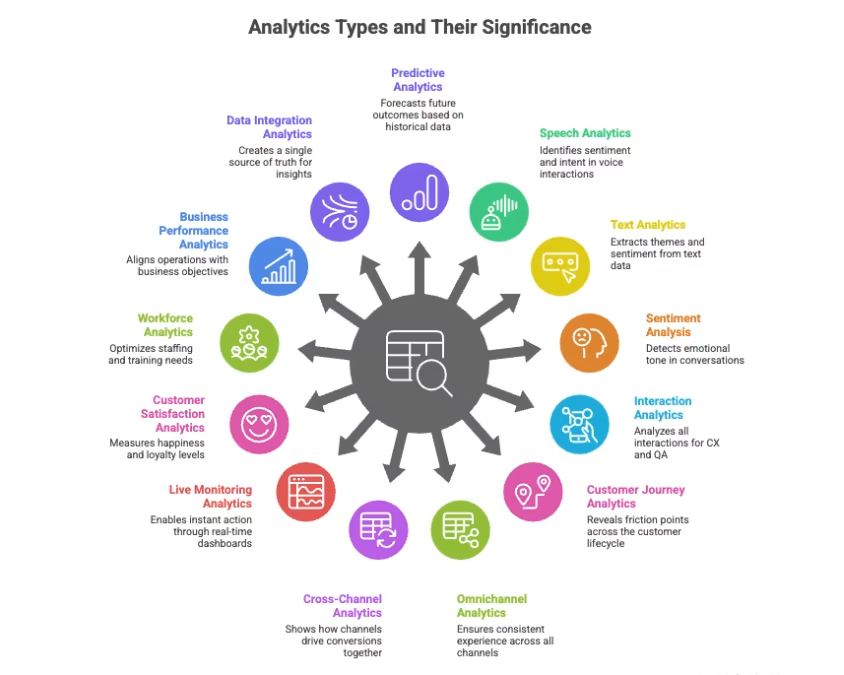
Call centre analytics helps teams turn daily interactions into measurable insights to inform better decisions. Alongside analytics, call centre metrics and KPIs like Average Handle Time (AHT), First Call Resolution (FCR), CSAT, and Call Abandonment Rate are essential for tracking efficiency, service quality, and agent performance.
Predictive Analytics
Predictive analytics forecasts future outcomes using historical call data and machine learning models. It helps contact centres move from reactive decisions to proactive planning.
This type of analytics identifies patterns in customer behaviour, call volume, and agent performance. Teams use these insights to anticipate issues before they impact operations.
Significance of Predictive Analytics
- Forecasts call volumes for better staffing and scheduling
- Predicts customer churn and repeat call likelihood
- Identifies high-risk interactions needing early intervention
- Improves conversion rates through intent prediction
- Supports fraud detection by flagging abnormal call behaviour
- Optimises resource allocation across teams and campaigns
Call Centre Speech Analytics
Speech analytics converts call audio into text using AI and natural language processing. It analyses conversations to understand customer intent, sentiment, and behaviour.
This analytics type goes beyond what was said to explain why customers called. Call centre voice analytics identifies keywords, emotions, pauses, and patterns across large call volumes, turning raw audio into structured insights.
Significance of Speech Analytics
- Detects customer sentiment to improve service quality
- Identifies recurring issues and call drivers in real time
- Provides objective insights into agent communication and performance
- Supports compliance by monitoring disclosures and script adherence
- Uncovers trends that inform product, onboarding, and process improvements
- Reduces operational costs through automation and call deflection
Common Implementation Challenges
While call centre analytics delivers significant benefits, organizations face several implementation challenges. Data integration complexity is the most common obstacle contact centres often use 5-10 different systems (CRM, CCaaS, WFM, ticketing) that don’t communicate seamlessly. Consolidating data from these silos requires technical expertise and robust integration capabilities.
Agent adoption resistance can slow ROI realization. Agents may perceive analytics as surveillance rather than coaching support, leading to pushback. Successful implementations require change management, transparent communication about how analytics will be used, and demonstrating clear benefits to agents (e.g., easier coaching, recognition for good performance).
Data privacy and compliance concerns require careful attention, especially in regulated industries like healthcare and finance. Analytics platforms must comply with GDPR, CCPA, HIPAA, and PCI-DSS requirements. Organizations need clear data governance policies covering what data is collected, how long it’s retained, who can access it, and how it’s secured.
Self-service Analytics
Self-service analytics enables contact centre teams to access and analyse data independently. It allows non-technical users to generate insights without relying on IT teams.
This analytics type uses intuitive tools like dashboards and visual reports. Users explore real-time data to quickly answer operational and performance questions.
Significance of Self-Service Analytics
- Reduces dependency on technical and data teams
- Speeds up decision-making with real-time access
- Enables managers to track KPIs without delays
- Improves transparency across contact centre operations
- Supports faster identification of performance gaps
- Encourages a data-driven culture across teams
Text Analytics
Text analytics analyses written customer interactions using NLP and statistical models. It converts unstructured text from emails, chats, and reviews into structured insights.
This analytics type helps contact centres understand customer feedback at scale. It identifies sentiment, topics, and recurring themes across large volumes of text.
Significance of Text Analytics
- Extracts sentiment from customer emails and chat conversations
- Identifies common issues and inquiry themes quickly
- Improves response quality through better context understanding
- Supports brand monitoring across digital channels
- Enables faster issue prioritisation and resolution
- Transforms raw text into actionable operational insights
Business Performance Management
Business performance management analytics tracks how contact centres meet strategic and operational goals. It aligns people, processes, and technology using measurable performance data.
This analytics type uses KPIs to monitor efficiency, service quality, and outcomes. Teams analyse trends and adjust strategies to improve overall contact centre health.
Significance of Business Performance Management Analytics
- Aligns contact centre goals with business strategy
- Tracks KPIs across agents, operations, and customers
- Improves accountability through measurable performance
- Supports accurate forecasting and resource planning
- Identifies performance gaps and optimisation opportunities
- Enables continuous improvement through data-driven actions
Interaction Analytics
Interaction analytics analyses all customer conversations using AI and NLP technologies. It covers calls, chats, emails, and messages to extract sentiment, intent, and issues.
This analytics type evaluates 100 per cent of interactions instead of small samples. It turns unstructured conversation data into actionable insights for contact centres.
Significance of Interaction Analytics
- Reveals customer intent and emotional drivers behind interactions
- Improves customer experience through proactive issue resolution
- Automates quality assurance and reduces manual reviews
- Enhances agent performance with targeted coaching insights
- Identifies root causes affecting First Call Resolution
- Supports revenue growth through upsell and cross-sell insights
Omnichannel Analytics
Omnichannel analytics analyses customer interactions across all communication channels together. It connects calls, chats, emails, and digital touchpoints into one unified customer view.
This analytics type uses identity resolution to link interactions across devices and platforms. It helps contact centres understand the complete customer journey instead of isolated moments.
Significance of Omnichannel Analytics
- Delivers consistent and personalised customer experiences across channels
- Reveals behaviour patterns missed in single-channel analysis
- Improves operational efficiency through better context and automation
- Reduces resolution time with full interaction history visibility
- Increases revenue through targeted cross-sell and upsell insights
- Enables predictive decisions using end-to-end customer data
Customer Journey Analysis
Customer journey analysis tracks and analyses every customer interaction across channels. It shows the complete path from first contact to long-term loyalty.
This analytics type moves beyond single calls or sessions. It connects touchpoints across marketing, sales, and support systems.
Customer journey analysis uses journey maps to visualise stages and interactions. It highlights friction points, drop-offs, and experience gaps.
Significance of Customer Journey Analysis
- Identifies pain points across the full customer lifecycle
- Improves conversion by reducing journey friction
- Enhances customer experience through stage-based insights
- Aligns marketing, sales, and support efforts
- Increases retention and long-term loyalty
- Supports data-driven optimisation decisions
Sentiment Analysis
Sentiment analysis uses NLP and machine learning to classify customer opinions. It identifies whether interactions are positive, negative, or neutral.
This call centre analytics type analyses text from chat transcripts, reviews, and social media posts. It also detects emotions such as anger, happiness, and frustration.
Sentiment analysis helps contact centres understand customer perception at scale. It turns unstructured feedback into measurable insights.
Significance of Sentiment Analysis
- Measures customer satisfaction and dissatisfaction
- Monitors brand reputation in real time
- Identifies recurring emotional pain points
- Supports product and service improvement decisions
Cross-Channel Analytics
Cross-channel analytics analyses customer interactions across multiple channels. It shows how web, mobile, email, social, and offline touchpoints work together.
This contact centre analytics type removes data silos. It delivers a complete view of customer behaviour and engagement.
Cross-channel analytics helps teams understand interaction flow. It improves experience consistency and marketing effectiveness.
Significance of Cross-Channel Analytics
- Provides a unified customer view for better decisions
- Reveals real customer paths, not isolated actions
- Improves attribution beyond last-click models
- Optimises marketing spend and channel performance
- Enables seamless and personalised customer experiences
Data Integration
Data integration analytics combines data from multiple systems into one unified view. Effective call centre data analytics depends on removing data silos and ensuring consistency for accurate analysis and reporting.
This analytics type connects databases, apps, cloud tools, and platforms. It uses ETL pipelines, APIs, streaming, and data virtualisation.
Data integration analytics supports business intelligence and AI use cases. It ensures teams work with complete, reliable, and up-to-date information.
Significance of Data Integration Analytics
- Improves BI accuracy and reporting quality
- Increases operational efficiency across teams
- Creates unified customer views for a better experience
- Strengthens AI and machine learning predictions
Descriptive Analytics
Descriptive analytics explains what happened and what is happening in a contact centre. It uses historical and real-time data to clearly summarise performance.
This type of analytics relies on statistics, dashboards, and reports. It provides visibility into calls, agents, customers, and operational trends.
Descriptive analytics forms the foundation for predictive and prescriptive analytics. Teams use it to understand outcomes before planning improvements.
Significance of Descriptive Analytics
- Identifies call volume and handling trends
- Reveals recurring customer behaviour patterns
- Tracks KPIs against defined targets
- Supports informed, data-backed decisions
Best Call Centre Monitoring Software for Agent Tracking
The best call centre monitoring software gives managers real-time visibility into every agent interaction. Runo is designed to help teams track calls, guide agents, and scale conversations without adding manual effort or operational complexity.
How Real-time Call Centre Monitoring Works With Runo
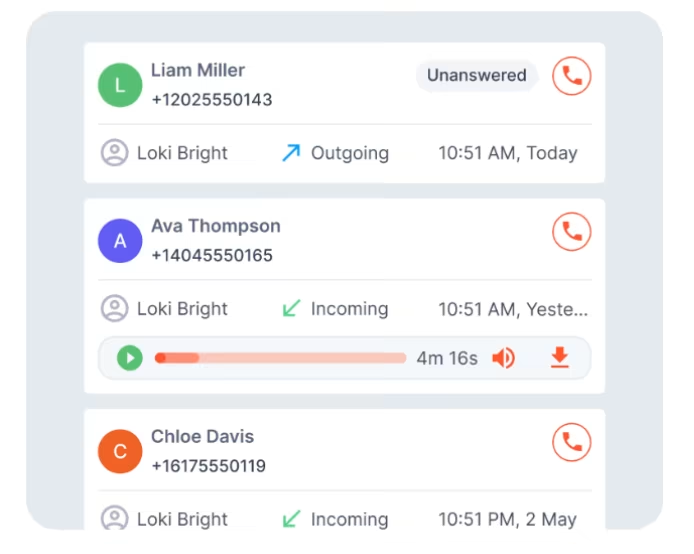
Runo monitors every live call and automatically records all inbound and outbound conversations. This ensures complete visibility, accurate quality checks, and secure data storage to meet compliance requirements. Supervisors no longer rely on random call sampling. Every interaction is available for review.
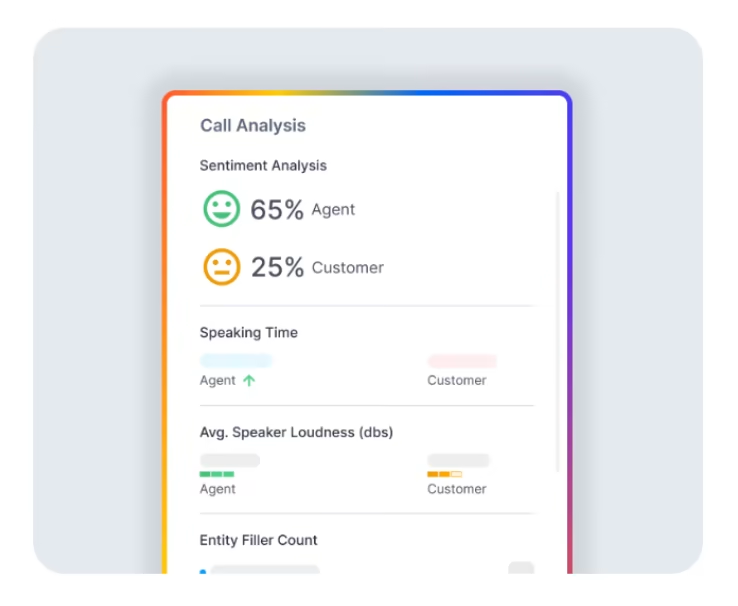
With built-in AI, Runo analyses calls in real time to generate insights, QA scores, and performance metrics. Managers can understand call quality, agent behaviour, and customer sentiment without spending hours on manual reporting. Data is updated in real time, enabling faster, more reliable performance tracking.
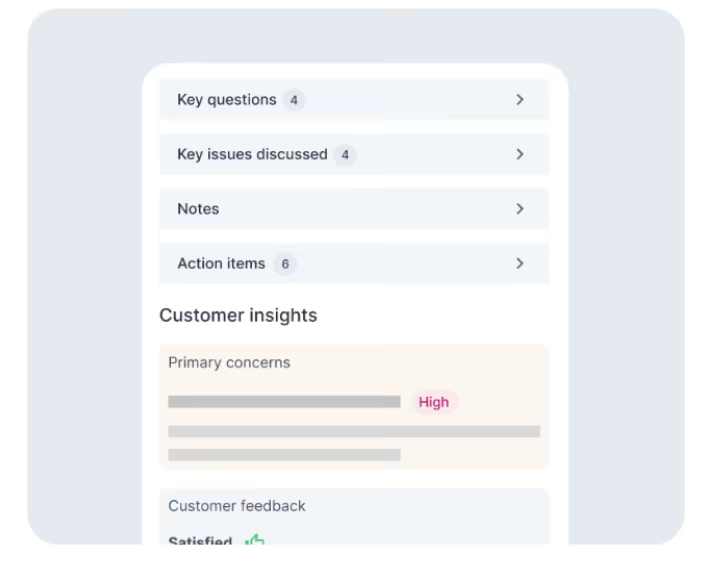
Runo also makes agent coaching simple and effective. Managers can use call recordings, AI summaries, and analytics to identify gaps, train agents, and improve conversion rates. Coaching becomes continuous, targeted, and measurable.
What Call Centre Managers Love About Runo
- 100% visibility into live calls and agent activity
- AI-powered quality analysis that saves QA time
- Faster, data-backed coaching using call insights
Powerful Features to Monitor and Improve Every Call
- Automatic call recording for all conversations
- Real-time agent status and performance dashboards
- Follow-up reminders to meet SLAs and callbacks
- AI call summaries with action items and MOMs
- AI sentiment analysis to spot frustrated customers early
- Interaction timelines combining calls, notes, and CRM data
- Seamless CRM integrations with lead sources and sales tools
FAQs
What is call centre analytics?
Call centre analytics uses data from calls and interactions to improve performance, quality, and customer experience.
Why are call centre analytics important?
They help reduce costs, improve agent efficiency, and enhance customer satisfaction.
What types of data are used in call centre analytics?
Voice calls, chats, emails, CRM data, and customer feedback are commonly analysed.
Can small contact centres use call centre analytics?
Yes, analytics tools scale easily and support teams of all sizes.
How does real-time analytics help managers?
It provides real-time visibility into calls, agent status, and customer sentiment to enable faster action.
Which type of call centre analytics is most important?
No single type is most important the best approach combines multiple analytics types. Predictive analytics helps with forecasting and staffing, speech analytics improves agent coaching and compliance, and interaction analytics provides a complete view of customer conversations across all channels.
How does predictive analytics improve call centre operations?
Predictive analytics uses historical data and machine learning to forecast call volumes, predict customer churn, identify high-risk interactions, and optimize staffing schedules, enabling proactive rather than reactive management.
Can small contact centres benefit from call centre analytics?
Yes. Modern cloud-based analytics platforms offer scalable solutions for small teams, providing real-time dashboards, automated quality assurance, and actionable insights without requiring large IT investments or data science expertise.