

AI Voice Analytics is software that automatically records, transcribes, and analyzes spoken conversations to extract data on sentiment, talk patterns, compliance, and call quality. It processes every call a team makes, not just a sample, and turns that audio into structured, actionable insights for managers without any manual review.
Key Takeaways
- AI call analysis converts spoken audio into measurable data, including sentiment scores, filler word rates, talk time ratios, and compliance outcomes.
- The voice analytics market was valued at $1.53 billion in 2025 and is projected to grow to $2.97 billion by 2029, according to The Business Research Company.
- Traditional quality assurance reviews less than 5% of total call volume. AI call analysis evaluates every call using the same criteria.
- McKinsey reports that companies using speech analytics achieve cost savings of 20 to 30% and improvements in customer satisfaction of 10% or more.
- For sales and telecalling teams, voice analytics surfaces coaching opportunities, compliance failures, and customer sentiment patterns that manual review cannot detect at scale.
- Runo automatically applies call-level AI analysis to every interaction, scoring quality, detecting sentiment, identifying filler words, and generating written summaries without agent input.
What Is Voice Analytics AI?
Voice analytics AI is software that processes spoken audio from calls and converts it into structured data. It uses speech recognition to transcribe audio, natural language processing to interpret meaning, and machine learning to detect patterns in tone, sentiment, pacing, and language.
It is different from basic call recording. A call recorder stores audio. The AI reads that audio, interprets it, and produces scores, summaries, flags, and reports. The output is data a manager can act on, not a file they have to listen to.
The most common application is the call center. According to The Business Research Company , the speech and voice analytics market was valued at $3.3 billion in 2025 and is projected to reach $13.2 billion by 2035, growing at a 14.7% CAGR. The contact center intelligence segment accounts for the largest share of this market at 28.6%.
The reason is straightforward. Call centers generate enormous volumes of spoken data every day. Most of it goes unanalyzed. AI-powered analysis makes that data useful.
How Does AI Voice Analytics Work?
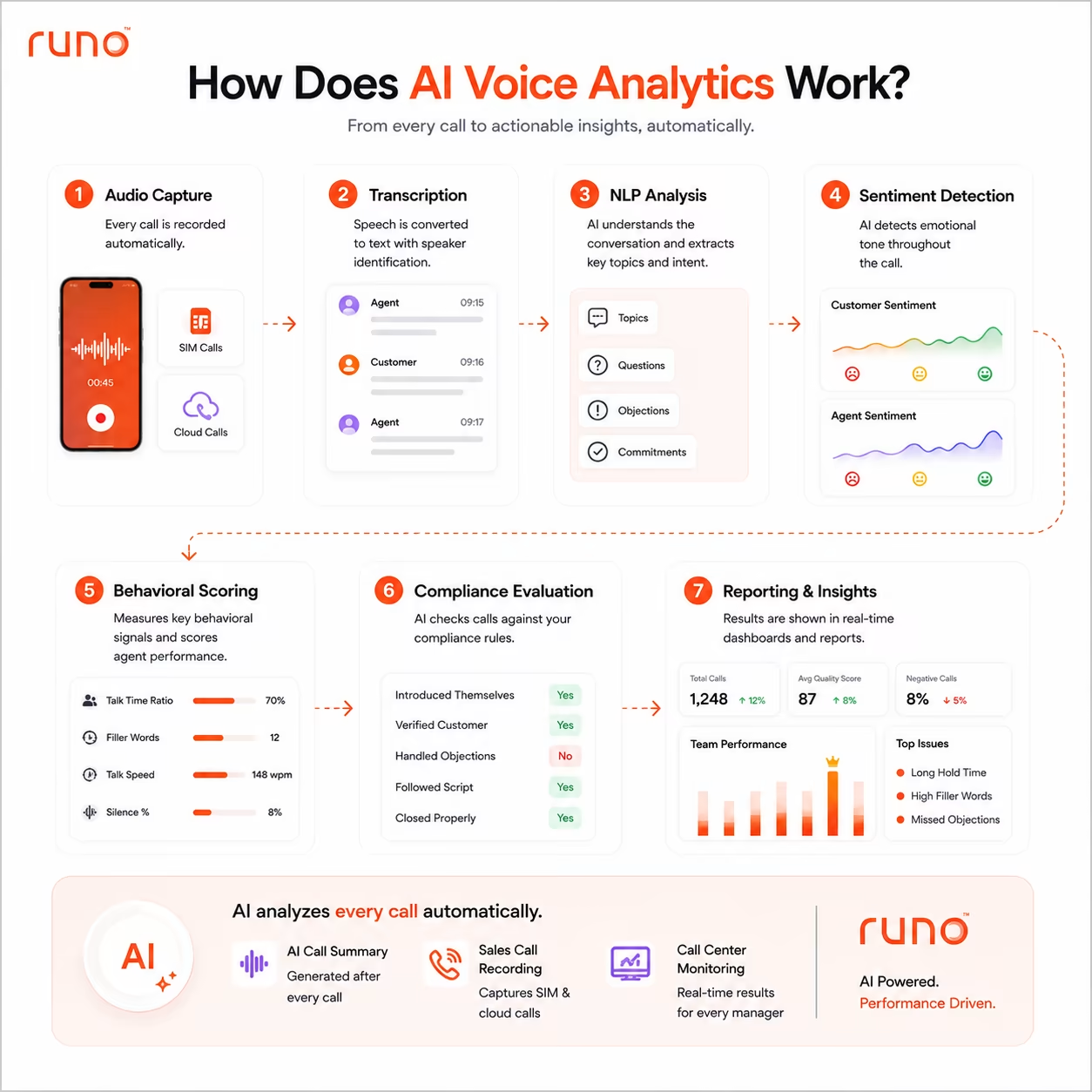
The system processes calls through a sequence of steps, each building on the last.
Step 1: Audio capture
Every call is recorded automatically. For SIM-based calling teams, this includes calls made directly from the device’s mobile network. For cloud telephony teams, it includes VoIP calls. The recording is the raw input on which everything else depends.
Step 2: Transcription
Automatic speech recognition converts the audio into text. Each line is attributed to the correct speaker (agent or customer) and timestamped. The result is a searchable, readable transcript of the full conversation.
Step 3: Natural language processing
The transcript is analyzed by NLP models that identify what was said, how it was said, and what it means in context. This includes detecting topics discussed, questions asked, objections raised, and commitments made.
Step 4: Sentiment detection
Machine learning models read the emotional tone of both the agent and the customer throughout the call. Each is scored separately as positive, neutral, or negative. This is tracked at the individual call level and aggregated across the team.
Step 5: Behavioral scoring
The system measures specific behavioral signals: how long the agent spoke versus the customer, how many filler words were used, how loud each speaker was, and how much silence occurred. Each signal is scored against configurable thresholds set by the manager.
Step 6: Compliance evaluation
The AI checks each call against a defined list of compliance parameters, whether the agent introduced themselves, closed the call properly, handled objections, verified the customer, and followed the script. Each parameter gets a Yes, No, or NA result, backed by the specific transcript line used as evidence.
Step 7: Reporting
All outputs are surfaced in dashboards. Managers see individual call scores, team-level aggregates, daily sentiment trends, bottom- and top-performer rankings, and flagged calls that need attention.
Runo applies this full process to every call that goes through the platform. The AI Call Summary is generated automatically after each call. The Sales Call Recording Software captures both SIM-based and cloud calls. The Call Center Monitoring Software surfaces results in real time. Nothing requires a manager to initiate the analysis.
What Are the Key Benefits of AI Voice Analytics for Call Centers?
AI voice analysis for call centers produces measurable improvements across four areas.
Every call gets evaluated, not a sample
Traditional quality assurance reviews two to four calls per agent per month, according to McKinsey . That is less than 5% of the total call volume. AI evaluates every call using the same criteria, removing the sampling problem entirely. A team making 300 calls a day gets 300 scored interactions, not 10.
Coaching becomes specific, not general
When a manager tells an agent they need to improve, the agent needs to know exactly what went wrong and where. Voice analytics links every score to the transcript evidence behind it. A manager can open a specific call, point to the exact line where the agent missed a compliance step, and play the 30-second clip. The conversation becomes about a fact, not an opinion.
Compliance is monitored automatically
For teams with regulatory requirements, manually auditing compliance is not feasible at scale. AI voice analysis for call centers checks every call against defined criteria automatically and flags failures immediately. This is more reliable than spot checks and far faster than manual review.
Customer sentiment is tracked at scale
Sentiment data from individual calls aggregates into a team-wide picture. Managers see whether positive sentiment is trending up or down by day, which agents consistently trigger negative customer reactions, and which call types produce the most friction. McKinsey reports that companies using speech analytics see customer satisfaction improvements of 10% or more.
Where Is AI Voice Analytics Used?
Sales Teams Making Outbound Calls
Sales managers use call-level AI scoring to identify which agents are using the right discovery questions, which are dominating the conversation, and which are failing to close calls properly. The scoring data feeds directly into weekly coaching sessions. According to McKinsey , a mobility company that used AI-powered voice analytics for its contact center agents achieved a 5-10% boost in conversion rates and a 10-20% decrease in canceled orders.
Telecalling and Inside Sales Teams
For high-volume telecalling teams making 100 or more calls per agent per day, voice analytics is the only way to assess quality at scale. It surfaces filler word rates, talk ratios, and compliance outcomes across the full team, giving managers a daily picture rather than a weekly guess. Runo’s AI Sentiment Analysis tracks emotional tone on every call and flags patterns that need attention before they become persistent problems.
Compliance-Sensitive Industries
Financial services, insurance, and healthcare teams use AI call monitoring to automatically verify whether agents are following regulatory scripts, disclosing required information, and avoiding prohibited language. Every check is logged with a timestamp and transcript evidence, creating an audit trail without manual effort.
Agent Training and Onboarding
New agents are scored from their first call. Managers can compare new hire performance against top-performer benchmarks using the same call criteria, identify specific gaps early, and run targeted training on those gaps rather than generic sessions. The Call Center Monitoring Software at Runo gives managers a live view of all agent activity and AI scores, enabling coaching conversations grounded in real call data.
Customer experience management
At the team level, aggregated sentiment and satisfaction data tell managers which customer segments are frustrated, which call types resolve quickly, and where the experience is breaking down. This data does not exist anywhere else in the business because it lives within conversations that were previously unanalyzed.
FAQs
How is voice analytics AI different from speech analytics?
The key difference is depth. Speech analytics focuses on the words and topics in a call transcript. The AI goes further by analyzing how things are said, tone, pacing, loudness, emotional signals, and silence, alongside the transcript content.
Does this technology work on SIM-based calls or only VoIP?
Most enterprise tools are built for VoIP and cloud-based calls. Runo applies the same AI analysis, transcription, sentiment scoring, quality scores, and compliance checks to every call made through the device’s mobile network, not just internet-based calls.
How accurate is AI voice analysis for call centers?
Accuracy depends on audio quality, language, and the model used. Modern systems running on clean stereo recordings with speaker diarization achieve high transcription accuracy. Runo processes SIM-based and cloud recordings with automatic speaker separation, which is the foundation for all downstream analysis.
Book a demo with Runo to see how what is voice analytics AI becomes clear in practice, applied to a live telecalling team.