

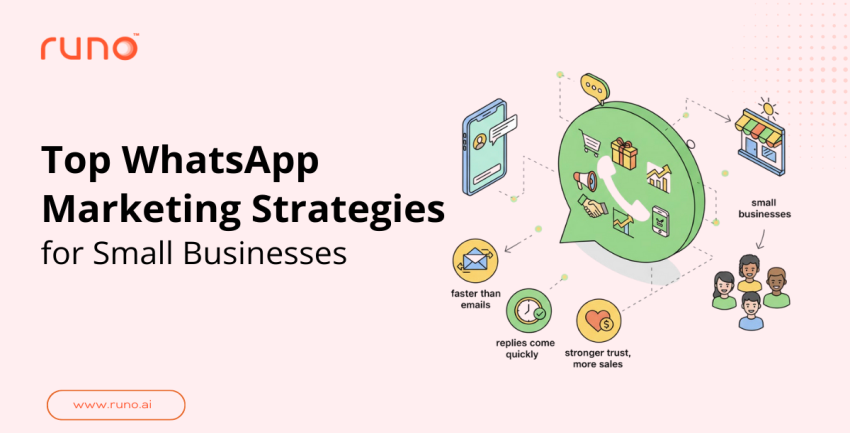
The best WhatsApp marketing strategies can transform how small businesses connect with customers delivering 98% open rates, instant replies, and measurable sales growth without expensive ad budgets. With over 2 billion active users worldwide, WhatsApp has become the most direct, personal, and cost-effective channel for small business marketing.
This guide shares proven, practical WhatsApp marketing strategies that small businesses can implement today. You'll learn how to set up your profile, craft messages people actually read, automate without losing the human touch, and scale your efforts as you grow all with real examples and clear, actionable steps.
Why WhatsApp Marketing Works for Small Businesses
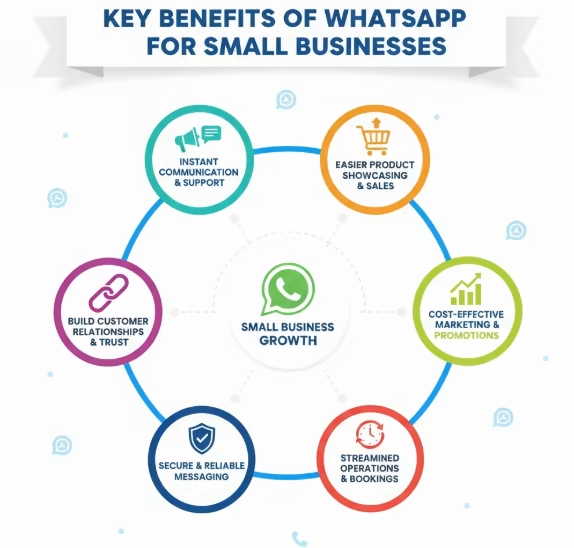
WhatsApp marketing works for small businesses because it delivers direct, personal communication with 98% open rates, instant replies, and low costs far outperforming email and traditional ads.
Here's why it's so effective:
Direct access to customers
WhatsApp lets you talk to customers one-to-one. There is no algorithm blocking your message. When you send a message, it lands straight in their chat list.
High open and response rates.
One big reason WhatsApp works so well is message visibility. According to industry research by Infobip, WhatsApp messages see open rates as high as 98 per cent , which is far higher than email or SMS.
It means most of your messages are actually seen, not lost in crowded inboxes.
Low cost, high impact
You do not need a big budget to start. Even small teams can run a strong whatsapp business marketing strategy with basic tools and planning.
Builds trust faster
WhatsApp feels personal. Customers see your business as more human, not just another brand pushing ads. According to Meta, 75% of users say they’re more likely to buy from a business they can message directly, and businesses using WhatsApp see an average response time of under 90 seconds far faster than email or phone support.
WhatsApp Marketing Compliance: What You Must Know
WhatsApp has strict rules to protect users from spam. Violating these rules can get your number banned permanently. Here’s what you need to know:
Always Get Explicit Opt-In
You must have clear, documented permission before messaging anyone. Opt-in methods include:
- Checkbox on your website or checkout page (“Yes, I want to receive updates via WhatsApp”)
- QR code in-store with a sign explaining what messages they’ll receive
- Keyword opt-in (“Text JOIN to [number] to subscribe”)
- Verbal consent (document it in your CRM)
Never: Buy contact lists, scrape numbers, or add people without permission.
Follow GDPR and Privacy Laws
If you operate in the EU, UK, or serve customers there, you must comply with GDPR:
- Store proof of consent (timestamp, source, opt-in method)
- Allow users to opt out easily (“Reply STOP to unsubscribe”)
- Provide a privacy policy explaining how you use their data
- Delete data upon request
US businesses should follow CAN-SPAM and state privacy laws (e.g., CCPA in California).
For businesses in India: Comply with the Digital Personal Data Protection Act (DPDP Act) 2023, which requires explicit consent for data collection, secure storage, and the right to data deletion. Always store opt-in records and provide a clear privacy policy in English and regional languages if serving non-English-speaking customers.
Respect WhatsApp’s Commerce Policy
WhatsApp prohibits:
- Sending messages to users who haven’t opted in
- Sharing or selling user data
- Sending spam or misleading content
- Using WhatsApp for illegal activities
Full policy: WhatsApp Commerce Policy
Use Approved Message Templates (API Users)
If you use the WhatsApp Business API, all marketing messages must use pre-approved templates submitted to Meta. Templates are reviewed for compliance before you can send them.
Document Everything
Use a CRM (like Runo’s WhatsApp CRM) to automatically log:
- When and how each contact opted in
- What messages they’ve received
- Opt-out requests
This protects your business and ensures compliance.
Setting the Foundation for a WhatsApp Marketing Strategy
The following setting is needed to start a WhatsApp marketing strategy:
Create and optimise a WhatsApp Business profile.
Your first step is to set up WhatsApp Business , not personal WhatsApp. The official WhatsApp Business app is free and designed specifically for small businesses to manage customer conversations professionally.
Make sure to:
- Add a clear business name.
- Upload a clean logo.
- Write a short business description.
- Set business hours.
- Add website and contact details.
This profile is the base of your whatsapp initial marketing strategy .
Define clear marketing goals.
Before sending messages, decide what you want to achieve.
Common goals include:
- Getting new leads.
- Increasing repeat purchases.
- Sharing offers and discounts.
- Providing faster support.
Clear goals help shape your whatsapp digital marketing strategy. Learn more about setting effective marketing goals in our guide to lead management best practices.
Build a permission-based contact list.
Never message people without consent. It can harm trust and even get your number blocked.
Good ways to collect opt-ins:
- Website pop-ups
- Checkout pages
- QR codes in stores
- Social media links
Always tell users what kind of messages they will receive.
Crafting Messages That People Actually Read
Crafting messages is an art, and if done correctly, people actually read them. Let’s look at how we can do it correctly:
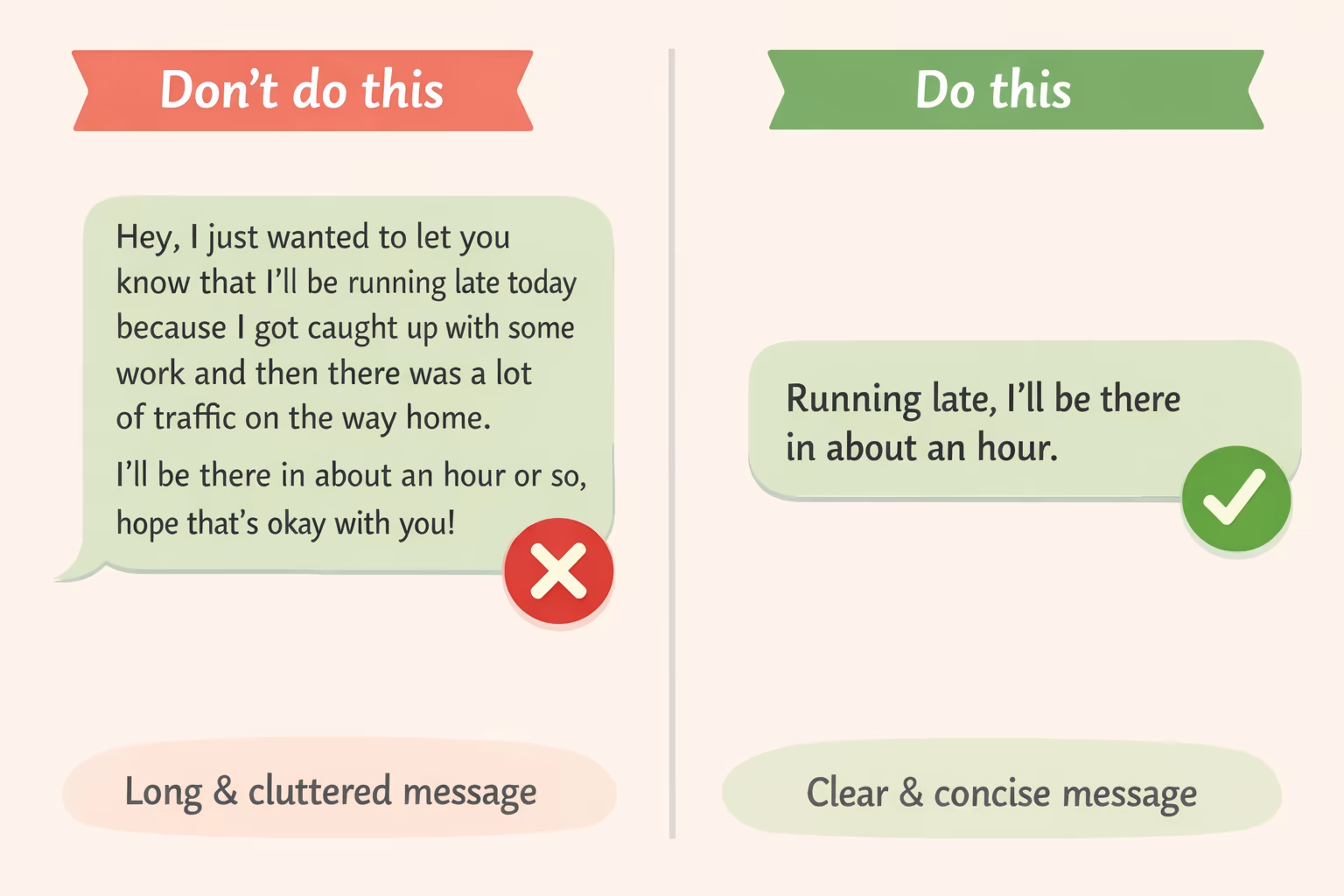
Keep messages short and precise.
WhatsApp is not email. Long messages often get ignored.
Best practices:
- Use short sentences
- One idea per message
- Clear call to action
It keeps your whatsapp marketing strategy user-friendly.
Use a friendly, human tone.
Write as you speak. Avoid sales-heavy language.
Instead of: “Avail our exclusive limited-time offer.”
Say: “Hey! We have a small discount for you today 😊”
Add value before selling.
Do not push offers in every message.
Mix in:
- Tips
- How-to guides
- Updates
- Helpful reminders
This balance strengthens your whatsapp business marketing strategy.
Using WhatsApp Broadcasts the Right Way
Let’s understand what a WhatsApp broadcast is:
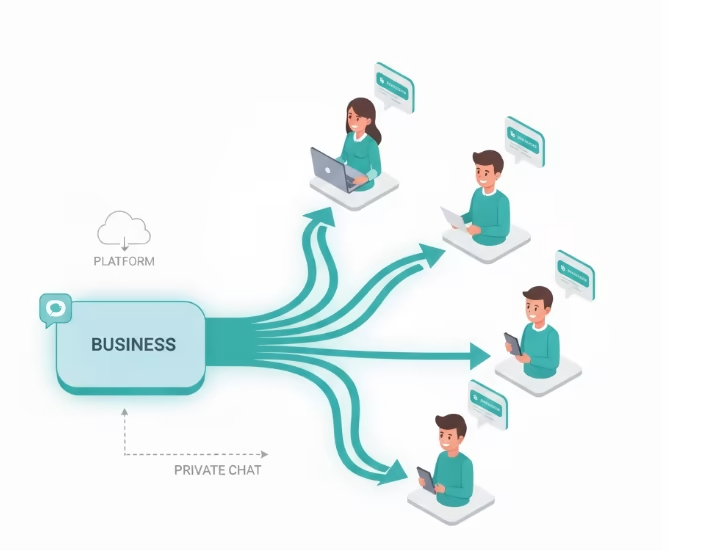
What are WhatsApp broadcasts?
Broadcasts let you send one message to many contacts at once. Each user receives it as a private chat.
Best practices for broadcasts
- Segment your audience
- Send only relevant messages.
- Limit frequency
Too many messages can lead to blocks.
Examples of effective broadcast use
- New product launch
- Festival offers
- Service updates
- Limited-time deals
Broadcasts work best when aligned with a clear whatsapp digital marketing strategy .
Customer Support as a Marketing Tool
Customer support isn’t just about fixing issues. It also acts as a great marketing tool in the following ways:
Faster replies build trust.
Customers expect quick answers on WhatsApp. Even a short reply like “We are checking this” helps.
Use quick replies and templates.
Save time by using pre-written replies for common questions.
Examples:
- Pricing details
- Delivery timelines
- Refund policy
It improves service without extra effort.
Turn support chats into sales.
When done right, support becomes part of your whatsapp marketing strategy .
For example:
- Suggest related products
- Share upgrade options
- Offer small discounts
Keep it helpful, not pushy.
Automating WhatsApp Marketing Without Losing the Human Touch
Automation is essential for scaling WhatsApp marketing, but it can be done without losing the human touch, and we can do it in the following ways:
Use automation wisely
Automation saves time, but overdoing it feels robotic.
Good uses of automation:
- Welcome messages
- Order confirmations
- Appointment reminders
Avoid sending long automated sales messages.
Combine automation with human follow-ups.
Let automation handle first responses. Bring in a human when needed.
This mix makes your whatsapp business marketing strategy scalable and personal.
Tools that support intelligent automation
Using the right tools helps manage messages, leads, and follow-ups in one place.
That is where platforms like Runo can support growing teams.
Integrating WhatsApp with Your Sales and CRM Systems
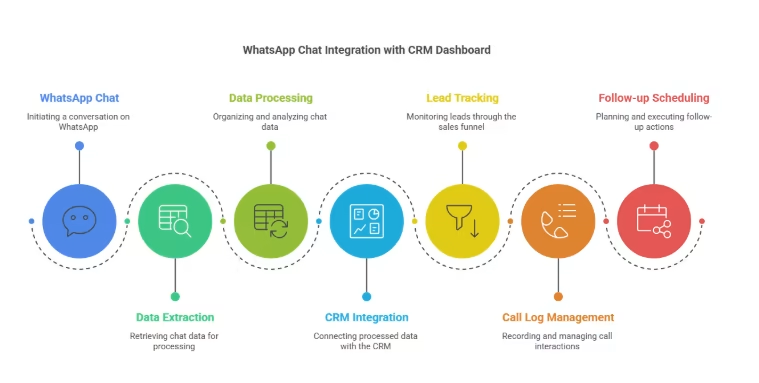
When WhatsApp works alone, tracking is hard. Whatsapp CRM Integration helps you see the whole customer journey.
Benefits of CRM integration
- Track lead sources
- Record call and chat history
- Follow up on time
- Measure performance
It strengthens your whatsapp digital marketing strategy with data-backed decisions.
Runo for smarter call and chat management
Runo’s WhatsApp CRM software empowers teams to launch campaigns, manage WhatsApp chats, and automate workflows through a unified dashboard with full WhatsApp CRM integration.
It helps you:
- Manage WhatsApp and call leads
- Improve calling productivity in just two weeks.
- Build trust in every customer interaction.
Runo integrates with all primary lead sources and CRMs, making it easier to manage WhatsApp-driven leads without confusion.
Personalisation: The Key to Better Engagement
We can enhance customer experience and engagement by personalisation in the following ways:
Use names and past interactions.
Simple personal touches increase replies.
Examples:
- Use customer names
- Refer to past purchases.
- Mention previous chats
It makes your whatsapp marketing strategy feel more natural.
Segment your audience
Not all customers are the same.
Segment based on:
- Location
- Purchase history
- Interest
- Behaviour
Send messages that match each group’s needs.
Measuring WhatsApp Marketing Performance
Measuring the performance of your WhatsApp marketing campaigns is essential to understanding what works and what doesn’t.
Key Metrics to Track (and What Good Looks Like)
To improve, you need to measure results. Here are the most important WhatsApp marketing metrics and benchmark ranges:
1. Delivery Rate
- What it is: Percentage of messages successfully delivered.
- Benchmark: 95–99%
- How to track: WhatsApp Business app (Insights tab) or API analytics dashboard.
2. Open Rate
- What it is: Percentage of delivered messages that are opened.
- Benchmark: 70-98% (far higher than email’s 15-25%)
- How to track: Available via WhatsApp Business API providers like Runo.
3. Reply Rate
- What it is: Percentage of recipients who respond to your message.
- Benchmark: 20-40% for broadcasts; 60-80% for 1:1 conversations.
- How to track: Manually count replies or use CRM integration.
4. Conversion Rate
- What it is: Percentage of recipients who complete a desired action (purchase, booking, sign-up).
- Benchmark: 10-25% for well-targeted campaigns.
- How to track: Use UTM links or promo codes unique to WhatsApp.
5. Opt-Out Rate
- What it is: Percentage of users who block your number or ask to unsubscribe.
- Benchmark: Under 2% (if higher, you’re messaging too often or without value).
- How to track: Monitor blocks via API or track unsubscribe requests manually.
6. Response Time
- What it is: Average time it takes your team to reply to a customer message.
- Benchmark: Under 5 minutes for sales inquiries; under 1 hour for support.
- How to track: WhatsApp Business app or CRM with WhatsApp integration.
Regularly review these metrics weekly or monthly, and adjust your messaging frequency, content, and targeting based on what the data tells you.
Learn and adjust
If replies are low:
- Change message timing
- Improve message clarity
- Reduce frequency
Regular review keeps your whatsapp initial marketing strategy on track.
Advanced WhatsApp Marketing Tactics for Growth
Once you’ve mastered the basics, these advanced tactics can help you scale results and maximize ROI.
Build Multi-Step Drip Campaigns
Drip campaigns nurture leads over time with a series of automated, value-driven messages.
Example sequence for a SaaS free trial:
- Day 0: Welcome message + quick-start guide link
- Day 2: Tip on using the most popular feature
- Day 5: Case study or success story
- Day 7: Reminder that trial ends soon + upgrade offer
Use your CRM or WhatsApp automation tool to trigger messages based on user behavior (e.g., if they haven’t logged in, send a re-engagement message).
Retarget Website Visitors with Click-to-WhatsApp Ads
Run Facebook or Instagram ads with a ‘Send Message’ CTA that opens a WhatsApp conversation. This works especially well for:
- High-intent keywords (e.g., ‘buy laptop online’)
- Retargeting users who abandoned carts
- Promoting limited-time offers
Pro tip: Use UTM parameters in your ad links to track which ads drive the most WhatsApp conversions.
Use AI-Powered Personalization
Modern WhatsApp CRMs (like Runo) can use AI to:
- Suggest the best time to send messages to each contact
- Predict which leads are most likely to convert
- Auto-generate personalized message content based on past interactions
This level of personalization increases reply rates by 30-50% compared to generic broadcasts.
Implement WhatsApp Chatbots for 24/7 Engagement
Chatbots handle common queries instantly, even outside business hours.
Best uses:
- Answer FAQs (pricing, delivery, return policy)
- Qualify leads with a few questions before routing to a human
- Send order status updates automatically
Important: Always offer an option to speak with a human. Over-automation frustrates users.
Common Mistakes to Avoid in WhatsApp Marketing
The common mistakes to avoid in WhatsApp marketing include:
Sending too many messages
It is the fastest way to lose subscribers.
Ignoring replies
Unanswered messages hurt trust and brand image.
Using WhatsApp only for selling
Value-first communication always works better.
Not following WhatsApp rules.
Always respect user privacy and platform guidelines.
Avoiding these mistakes protects your whatsapp business marketing strategy in the long run.
WhatsApp Marketing Ideas for Small Businesses
Here are proven WhatsApp marketing ideas tailored to different types of small businesses:
For E-commerce & Retail
- Abandoned cart recovery: Send a reminder 2-4 hours after cart abandonment with a direct checkout link.
- New product launches: Share photos and early-access links with your VIP subscribers.
- Flash sales: Announce limited-time discounts (e.g., “24-hour sale: 30% off all shoes”).
- Order and shipping updates: Send real-time order confirmations, shipping notifications, and delivery updates.
For Service Businesses (Salons, Clinics, Consultants)
- Appointment reminders: Reduce no-shows with automated reminders 24 hours before appointments.
- Booking confirmations: Send instant confirmations with date, time, and location.
- Last-minute availability: Fill cancellations by broadcasting open slots to your list.
- Post-service follow-up: Ask for feedback or reviews after the appointment.
For SaaS & Software Companies
- Onboarding sequences: Guide new trial users with tips, tutorials, and setup help.
- Feature announcements: Share product updates and new features with active users.
- Renewal reminders: Send friendly reminders before subscriptions expire.
- Support escalation: Offer WhatsApp as a premium support channel for paying customers.
For Restaurants & Food Businesses
- Daily specials: Share today’s menu or chef’s special each morning.
- Reservation confirmations: Confirm bookings instantly via WhatsApp.
- Loyalty rewards: Send exclusive discounts to repeat customers (“Show this message for 10% off”).
- Order updates: Notify customers when their delivery or pickup order is ready.
For Coaches, Educators & Course Creators
- Webinar reminders: Send reminders 1 hour and 10 minutes before live sessions.
- Course updates: Share new lessons, resources, or bonus content.
- Q&A sessions: Host live Q&A via WhatsApp for engaged students.
- Motivational check-ins: Send weekly tips or encouragement to keep learners engaged.
Each idea fits naturally into a strong whatsapp digital marketing strategy and can be adapted to your unique business model.
Scaling WhatsApp Marketing as Your Business Grows
The following steps help scale your WhatsApp marketing efforts:
Build systems early
As message volume grows, manual handling becomes hard.
Use tools that:
- Assign chats to team members
- Track follow-ups
- Store conversation history
Train your team
Everyone handling WhatsApp should follow the same tone and rules.
It keeps your whatsapp marketing strategy consistent.
Use innovative platforms like Runo.
With 3500+ businesses already using it, Runo helps small teams scale without losing control.
It offers:
- Better lead tracking
- Higher calling productivity
- Easy CRM integration
You can start with a 10-day free trial without a credit card.
Final Thoughts
A strong whatsapp marketing strategy can help small businesses build genuine connections, close more sales, and offer better support. The key is to stay human, respect user consent, and focus on value over volume.
Start small. Test what works. Improve step by step.
With the proper planning, tools, and mindset, WhatsApp can become one of your most powerful marketing channels.
To know more, explore the Runo expert blog section.
FAQs
1. What is a WhatsApp marketing strategy?
A whatsapp marketing strategy is a plan that helps businesses use WhatsApp to talk to customers, share updates, promote products, and offer support. It focuses on direct, personal communication to improve engagement and sales.
2. Is WhatsApp valuable marketing for small businesses?
Yes, WhatsApp works very well for small businesses. A strong whatsapp business marketing strategy allows direct contact with customers, faster replies, and better trust, all without spending much money on ads.
3. How do I start a WhatsApp digital marketing strategy?
To begin a whatsapp digital marketing strategy, create a WhatsApp Business account, set up your profile correctly, collect customer consent, and start sending helpful and relevant messages. Keep your messages short and friendly.
4. What should be included in a WhatsApp initial marketing strategy?
A good whatsapp initial marketing strategy should include a clear goal, a permission-based contact list, message templates, and a plan for how often you will message customers. It should also focus on adding value, not just selling.
5. How often should businesses send marketing messages on WhatsApp?
Most businesses should send one to two messages per week. Sending too many messages can annoy users and lead to blocks. The key to a successful whatsapp marketing strategy is quality over quantity.