

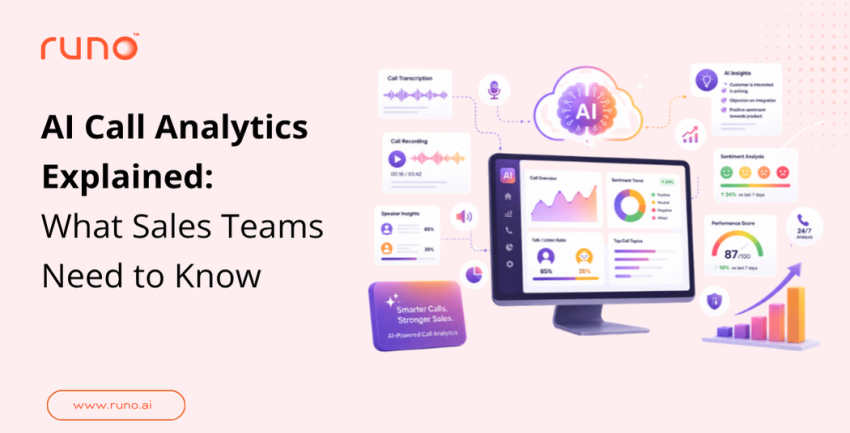
AI call analytics is changing the way sales teams talk, listen, and close deals. It helps businesses understand what really happens on calls. Instead of guessing why a deal was won or lost, teams can now see clear data and insights.
In simple words, it uses artificial intelligence to study sales calls. It looks at words, tone, talk time, questions asked, and customer responses. Then it gives feedback that helps teams improve.
If your team depends on phone calls to sell, support, or follow up, this informative blog will help you understand how it works and why it matters.
What Is AI Call Analytics?
AI call analytics is a tool that records and studies business calls using artificial intelligence. It listens to conversations and turns speech into text. Then it studies the data to find patterns, trends, and insights.
Unlike old call tracking tools that only showed call duration and numbers, this system looks deeper. It checks:
- What was said
- How it was said
- Who spoke more
- Which questions led to positive responses
- When customers showed interest or doubt
This is also called AI call analysis because it breaks down each conversation and explains what worked and what did not.
For sales teams, this means better coaching, better messaging, and better results.
How Does AI-Powered Call Analytics Work?
Let us break it down into simple steps.
1. Call Recording
The system records sales or support calls automatically.
2. Speech-to-Text Conversion
The AI converts spoken words into written text. This makes it easy to review conversations.
3. Conversation Analysis
Now comes the smart part. The system studies:
- Keywords used.
- Customer objections.
- Buying signals.
- Talk-to-listen ratio.
- Sentiment and tone
This process is known as AI call analysis .
4. Insights and Reports
The tool then creates easy-to-read reports. Managers can see trends like:
- Which scripts work best
- Which reps interrupt customers
- When customers mention competitors
- Common objections
This is how AI-powered call analytics helps teams improve step by step.
Why Sales Teams Need AI Call Analytics
Sales is not just about talking. It is about listening, understanding, and responding the right way.
Here is why this technology matters.
Better Coaching for Sales Reps
Managers cannot sit on every call. But with AI call analytics , they do not have to.
They can:
- Review calls quickly.
- Spot mistakes.
- Share real examples.
- Give clear feedback
Instead of general advice like “Improve your pitch,” managers can say, “You interrupted the customer three times during the pricing discussion.”
That makes coaching real and useful.
Faster Onboarding for New Reps
New sales reps often struggle at the start. They do not know what works.
With AI-powered call analytics , they can:
- Listen to top-performing calls.
- See winning scripts.
- Understand common objections.
- Learn from real data.
This reduces training time and improves confidence.
Identify What Wins Deals
Sometimes small words make a big difference.
For example:
- Asking open questions instead of yes/no questions.
- Talking less and listening more.
- Mentioning pricing at the right time.
AI call analytics studies thousands of calls and finds patterns. It shows what top performers do differently.
This removes guesswork from sales.
This is not just theory. According to research by Bain & Company , early AI deployments in sales have boosted win rates by over 30%. This shows that AI tools are already helping teams close more deals with better insights.
Improve Customer Experience
Customers do not like pushy or robotic calls. They want clear answers and honest conversations.
With AI call analysis , teams can check:
- If reps sound rushed.
- If customers feel frustrated.
- If important questions are ignored.
When calls improve, customer trust improves too.
Key Features of AI-Powered Call Analytics
Not all tools are the same. But most AI-powered call analytics platforms include the following features:
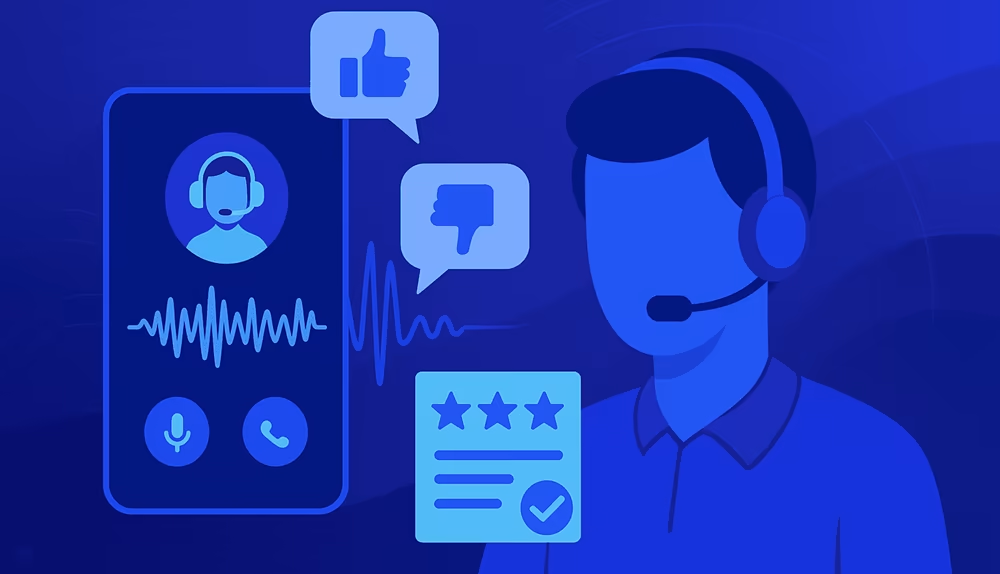
Call Transcription
Every call is turned into text. This makes it searchable and easy to review.
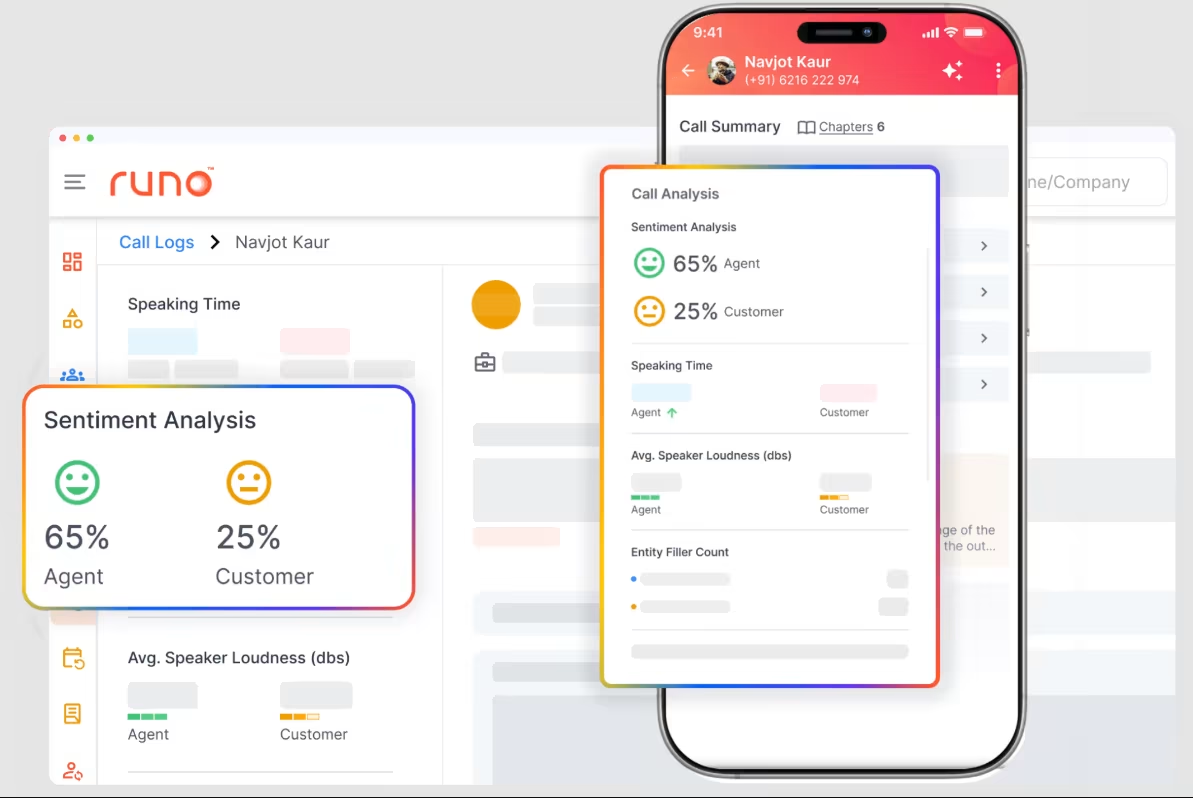
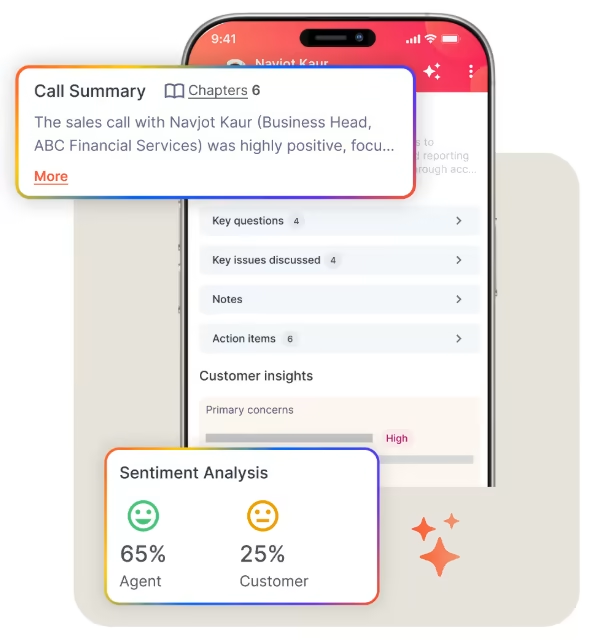
Sentiment Analysis
The system checks tone and mood. It can detect:
- Frustration
- Interest
- Confusion
- Excitement
This helps reps understand customer emotions.
Keyword Tracking
You can track words like:
- “Price”
- “Discount”
- “Competitor name”
- “Cancel”
This helps teams respond faster.
Talk-Time Analysis
The tool checks how long each person talks. A good sales call usually means the rep listens more than talks.
Objection Tracking
If customers often say, “It is too expensive,” the system highlights it. Teams can then improve pricing conversations.
Real-World Use Cases of AI Call Analytics
Let us look at where it is most useful.
Sales Teams
- Improve closing rates.
- Reduce lost deals.
- Train new staff faster.
Customer Support
- Monitor service quality.
- Identify common issues.
- Reduce repeat complaints.
Inside Sales and Telecalling
- Track daily call performance.
- Improve scripts.
- Increase productivity.
How AI Call Analysis Boosts Productivity
Time is important for every sales team.
Manually reviewing calls takes hours. But AI call analysis does it in minutes.
Managers can:
- Search for specific keywords.
- Jump to important moments.
- Review summary reports.
- Compare team performance.
This saves time and improves focus.
The Role of AI in Modern Call Management
Artificial intelligence is not just about chatbots. It is becoming a core part of call management systems.
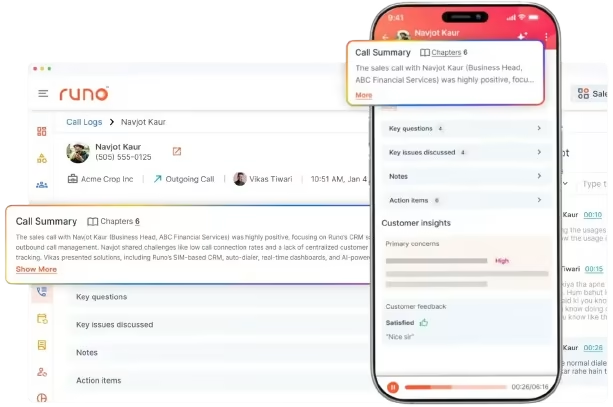
A good example is Runo.ai , an AI-powered SIM-based Call Management CRM. It helps businesses manage and track calls directly from SIM cards.
With smart automation and tracking, tools like Runo combine call management with AI-powered call analytics . This helps teams:
- Increase calling productivity.
- Track multiple lead sources.
- Integrate with existing CRMs.
- Build trust on every call.
Runo has been named Global Indian MSME of the Year in Sales Tech and is trusted by 3500+ businesses.
It also offers a 10-day free trial without needing a credit card, making it easy for teams to test the system before committing.
What to Look for in an AI Call Analytics Tool
If you are planning to use AI call analytics , keep these points in mind:
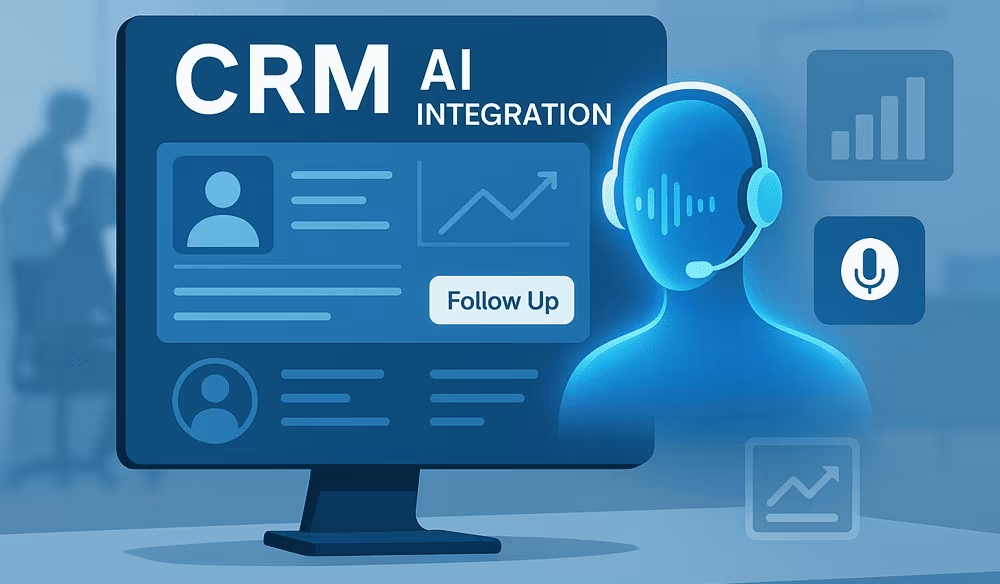
Easy Integration
The tool should work with your current CRM and lead sources.
Simple Dashboard
Reports should be easy to read. Complex charts confuse users.
Real-Time Insights
Getting feedback after weeks is not helpful. Real-time data is better.
Data Security
Customer calls contain sensitive information. Choose a secure platform.
Scalability
Your tool should grow as your business grows.
Common Myths About AI-Powered Call Analytics
Let us clear a few misunderstandings.
“AI Will Replace Sales Reps”
No. AI supports sales reps. It gives insights but does not replace human conversations.
“It Is Only for Big Companies.”
Small and medium businesses can benefit even more. They need every call to count.
“It Is Too Technical.”
Modern platforms are simple. If you can read a report, you can use it.
Challenges to Consider
Like any technology, AI call analytics has some challenges.
Learning Curve
Teams may take time to trust the system.
Data Overload
Too much data can confuse managers. Focus only on key metrics.
Privacy Concerns
Always inform customers if calls are recorded.
When used responsibly, the benefits are far greater than the challenges.
The Future of AI Call Analysis
The future looks promising.
We may soon see:
- Real-time call suggestions during conversations.
- Automatic script improvement.
- Predictive scoring for deal success.
- Deeper emotion detection.
As AI improves, sales calls will become smarter and more customer-focused.
Final Thoughts on AI Call Analytics
AI call analytics is not just a trend. It is a practical tool that helps sales teams work smarter.
It improves coaching, boosts productivity, reduces mistakes, and increases trust with customers.
Whether you run a small team or a large sales department, understanding your calls can change your results.
Tools like AI-powered call analytics, combined with smart CRM systems such as Runo, make it easier than ever to track, analyse, and improve every conversation.
In sales, every call matters. And when you know what is happening inside those calls, you make better decisions.
That is the real power of AI call analysis .
To know more, explore the Runo expert blog section!
FAQs on AI Call Analytics
1. What is AI call analytics in simple terms?
AI call analytics is a tool that records and studies business calls using artificial intelligence. It converts speech into text and analyses conversations to find patterns, customer emotions, objections, and performance gaps. It helps sales teams improve their calls using real data instead of guesswork.
2. How does AI-powered call analytics improve sales performance?
AI-powered call analytics improves sales performance by showing what works and what does not. It tracks talk time, keywords, objections, and buying signals. Managers can coach reps using real call data, which helps increase win rates and reduce lost deals.
3. Is AI call analysis only useful for large companies?
No. AI call analysis is helpful for businesses of all sizes. Small and medium businesses benefit even more because every call matters. It helps teams improve faster without hiring large training or quality teams.
4. Does AI call analytics replace sales representatives?
No, it does not replace sales reps. AI call analytics supports them by giving insights and feedback. It helps them understand customer behaviour, improve communication skills, and close more deals. Human connection is still essential in sales.
5. What should I look for in an AI-powered call analytics solution?
When choosing an AI-powered call analytics tool, look for:
- Easy integration with your CRM.
- Clear and simple reports.
- Real-time insights.
- Secure call recording.
- Scalability as your business grows.
The right tool should be easy to use and focused on helping your team improve daily performance.