

Running an auto dealership today means juggling walk-in customers, website enquiries, marketplace leads, finance queries, and service follow-ups, often all in the same hour. A missed call or a delayed response can send a genuine buyer straight to the dealership down the road. This is exactly why choosing the right CRM software has become one of the most important decisions a dealership owner or sales manager can make.
Modern car buyers research online, compare prices across multiple dealers, and expect a quick response once they show interest. Sales teams that rely on spreadsheets, sticky notes, or basic phone logs simply cannot keep pace with this behaviour. A dedicated CRM software for auto dealerships brings every enquiry, every call, and every follow-up into one place, so no lead is ever left unattended. With AI now built into most modern platforms, dealerships can also predict which leads are most likely to convert, automate repetitive tasks, and give their sales reps more time to actually sell cars.
In this article, we have compiled the best AI-compatible CRM software for auto dealerships along with their strengths, features, and ideal use cases, so you can choose the right solution for your showroom or dealer group.
How We Selected These Companies?
Choosing the right CRM for an auto dealership requires looking beyond standard business features. We evaluated each platform based on the factors that matter most for dealership sales teams, from lead management and AI capabilities to ease of adoption and overall business value.
Our evaluation was based on the following criteria:
- Lead Capture: Ability to capture enquiries from websites, marketplaces, OEM campaigns, and other sources.
- Lead Management: Speed and accuracy of lead allocation, follow-ups, and tracking.
- Calling and Communication: Built-in calling, WhatsApp integration , and communication tools for faster customer engagement.
- AI Capabilities: Features such as AI lead scoring, call transcription, call summaries, and automation.
- Ease of Use: User-friendly interface and quick adoption for busy dealership sales teams.
- Integrations: Compatibility with existing dealership systems and third-party applications.
- Pricing and Scalability: Value for money and suitability for both single showrooms and multi location dealer groups.
Based on the above criteria, we have compiled our list of the top 7 AI-compatible CRM software solutions for auto dealerships.
Top 7 AI-Compatible CRM Software for Auto Dealerships
Based on our research into what actually helps dealerships convert more enquiries into sales, here are the platforms worth considering, starting with the one we believe offers the best balance of calling power, AI features, and ease of adoption for dealership sales teams.
1. Runo
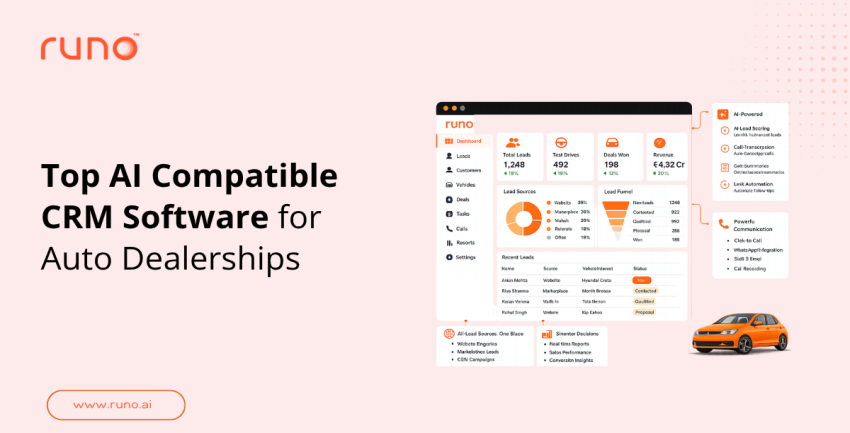
Runo is an AI-powered SIM and virtual calling CRM designed for sales teams that live on the phone, which makes it a strong fit for dealership BDC desks and telecalling teams who follow up on enquiries all day long. Rather than being a heavy dealer management system, Runo focuses on doing one thing exceptionally well, helping sales teams capture, call, and convert leads faster.
Key Features
Auto allocation of leads coming in from your website, ads, or marketplace listings straight to the right sales rep, part of Runo’s lead management system , so no enquiry sits unattended
- Built-in SIM-based calling and cloud telephony , giving reps the flexibility to call from their own number or a business virtual number
- AI call summaries and call transcription that let managers review conversations without listening to every recording
- WhatsApp CRM with a single business number, rich media campaigns, and a unified inbox for chats alongside calls and notes
- Real-time lead tracking and a live team status dashboard, part of Runo’s call centre monitoring software , so sales managers always know who is following up on what
- Automated follow-up reminders that keep enquiries warm instead of going cold after the first call
- CSV upload for bulk lead import, useful when dealerships receive batches of leads from OEM campaigns or auto classifieds
2. VinSolutions
VinSolutions, part of the Cox Automotive ecosystem, is one of the most widely used CRMs among franchise dealers in the United States. It is built specifically around the dealership sales process, from lead intake through desking and delivery.
Key Features
- Deep integration with Cox Automotive tools, including vAuto and Dealer.com
- Automated lead scoring and prioritisation
- Flexible contract terms compared to some competitors
- Strong reporting and analytics for dealer groups
VinSolutions works best for larger franchise stores that want a CRM tightly woven into a broader Cox Automotive stack, though it can feel heavier to learn than newer, simpler platforms.
3. DealerSocket
DealerSocket, now part of Solera, is a long-standing name in automotive CRM that many franchise dealers already use alongside its website and inventory products.
Key Features
- Unified platform covering CRM, service, and inventory
- Automated marketing and equity mining to identify trading opportunities
- Detailed sales process tracking from lead to delivery
- Wide dealership network already using the platform
DealerSocket suits dealer groups that want everything from one vendor, though its pricing and complexity are usually better suited to established, larger operations.
4. AutoRaptor
AutoRaptor has built its reputation on transparency and simplicity, which makes it popular with independent and buy-here-pay-here dealers who want dealership-specific features without enterprise-level pricing.
Key Features
- Published pricing with unlimited users on most plans
- AI-powered lead response that works without a dedicated CRM administrator
- Over ninety integrations with lead sources and marketing tools
- Simple interface designed for quick adoption by sales staff
AutoRaptor is a good middle ground for dealers who find enterprise CRMs like VinSolutions or DealerSocket too complex or expensive for their size.
5. Zoho CRM
Zoho CRM is not automotive-specific out of the box, but its automotive industry configuration, including a CommandCenter module, has made it a popular choice for dealers, OEMs, and workshops seeking a flexible, budget-friendly platform.
Key Features
- CommandCenter module that maps the dealer journey from order to delivery
- Zia AI assistant for lead scoring, forecasting, and sentiment analysis
- Omnichannel communication across SMS, WhatsApp, and email
- Broad ecosystem covering marketing, finance, and customer service beyond CRM
Zoho suits dealerships that want AI capability and customisation without automotive-specific pricing, though it requires more setup effort to tailor it to dealership workflows.
6. DriveCentric
DriveCentric has earned a reputation among salespeople for having one of the more modern, intuitive interfaces in the automotive CRM space, which has helped drive genuine adoption on the sales floor.
Key Features
- An AI-powered virtual business development centre agent is available around the clock
- Digital showroom for real-time collaboration with online shoppers
- Live video walkarounds and remote finance and insurance discussions
- Clean, modern interface that reduces training time for new hires
DriveCentric is a strong pick for stores where the sales team has been actively resisting an older, clunkier CRM, since interface design alone can meaningfully improve daily usage.
7. Salesforce Automotive Cloud
Salesforce Automotive Cloud brings the scale and customisation of the broader Salesforce platform into a dealership-specific configuration, aimed largely at very large dealer groups and OEM-level operations.
Key Features
- Unified driver, vehicle, and household-level data view
- AI-driven insights layered across sales and service touchpoints
- Strong OEM and ecosystem partner collaboration tools
- Extensive customisation through the wider Salesforce platform
Salesforce Automotive Cloud is best suited to dealer groups with the budget and technical team to manage a heavily customised enterprise deployment.
Top AI-Compatible CRM Software for Auto Dealerships: Quick at a Glance
To help you compare the leading solutions quickly, here is a snapshot of the best AI-compatible CRM software for auto dealerships, along with their ideal use cases and standout AI capabilities:
| CRM Software | Best For | Key AI Strength |
| Runo | Dealerships looking for AI-powered calling and faster lead follow-up | AI call summaries, call transcription, and intelligent lead management |
| VinSolutions | Franchise dealerships using the Cox Automotive ecosystem | AI-based lead scoring and sales prioritisation |
| DealerSocket | Large dealer groups needing an all in one dealership platform | Automated marketing and equity mining |
| AutoRaptor | Independent and smaller dealerships | AI-powered lead response and automation |
| Zoho CRM | Dealerships seeking a flexible and affordable CRM | Zia AI for lead scoring, forecasting, and sentiment analysis |
| DriveCentric | Sales teams that value a modern CRM experience | AI virtual BDC agent and digital showroom capabilities |
| Salesforce Automotive Cloud | Enterprise dealer groups and OEMs | AI-driven customer insights and predictive analytics |
How to Choose the Right CRM for Your Dealership
Choosing the right CRM depends on your dealership’s biggest challenges and how your sales team works. Before making a decision, keep these factors in mind:
- Identify your biggest pain point: Choose a CRM that solves your primary challenge, whether it is lead follow-up, calling, inventory management, or customer engagement.
- Prioritise ease of use: A simple, mobile-friendly CRM encourages higher adoption among sales teams and improves productivity.
- Evaluate AI capabilities: Look for practical features such as AI lead scoring, call summaries, and automated lead allocation that save time and improve conversions.
- Check implementation time: Select a solution that is quick to deploy and easy to manage without requiring extensive technical support.
- Test before committing: Run a trial with real dealership leads to ensure the CRM fits your workflow and delivers the expected results.
Conclusion
There is no single best CRM for every dealership, since so much depends on your size, sales process, and where your team is currently losing time. Large franchise groups with dedicated IT resources may lean toward platforms like VinSolutions, DealerSocket, or Salesforce Automotive Cloud, while independent dealers and BDC-focused teams often get faster results from a calling and WhatsApp-first platform like Runo.
The important thing is to match the CRM to the actual problem you are trying to solve, whether that is faster lead response, better call visibility, or a smoother path from enquiry to delivery, rather than choosing based on feature count alone.
Frequently Asked Questions
What is the best AI-compatible CRM software for auto dealerships?
The right choice depends on your dealership’s size and biggest challenge. Runo is a strong option for dealerships where fast calling, WhatsApp follow-ups, and quick lead allocation are the priorities, while platforms like VinSolutions and DealerSocket suit larger franchise groups that need deep DMS integration.
Do small or independent dealerships need a different CRM than large dealer groups?
Yes. Independent dealerships usually benefit from simpler, faster to set up platforms with transparent pricing, such as AutoRaptor or Runo, while large dealer groups often need the deeper customisation and reporting that enterprise platforms like Salesforce Automotive Cloud or VinSolutions provide.
How does AI actually help in a dealership CRM?
AI in a dealership CRM typically handles lead scoring so reps know who to call first, automatic call summaries so managers do not need to review every recording, smart lead allocation, and predictive insights on which enquiries are most likely to convert into a sale.
Can a CRM replace my dealership management system?
No. A CRM manages customer relationships, leads, and communication, while a dealer management system handles inventory, accounting, and back office operations. Many dealerships use both together, with the CRM focused on sales and follow-up and the DMS handling operations.
How quickly can a dealership get started with a new CRM?
This varies widely by platform. Enterprise automotive CRMs can take several weeks to implement, while mobile-first platforms like Runo are built for same-day setup, which matters for dealerships that cannot afford downtime during a switch.
Is WhatsApp integration important for a dealership CRM?
In markets where WhatsApp is a primary communication channel, yes. Buyers often prefer sending photos, asking quick questions, and confirming appointments over WhatsApp rather than email, so a CRM with built-in WhatsApp support helps keep the entire conversation in one place alongside calls and notes.