

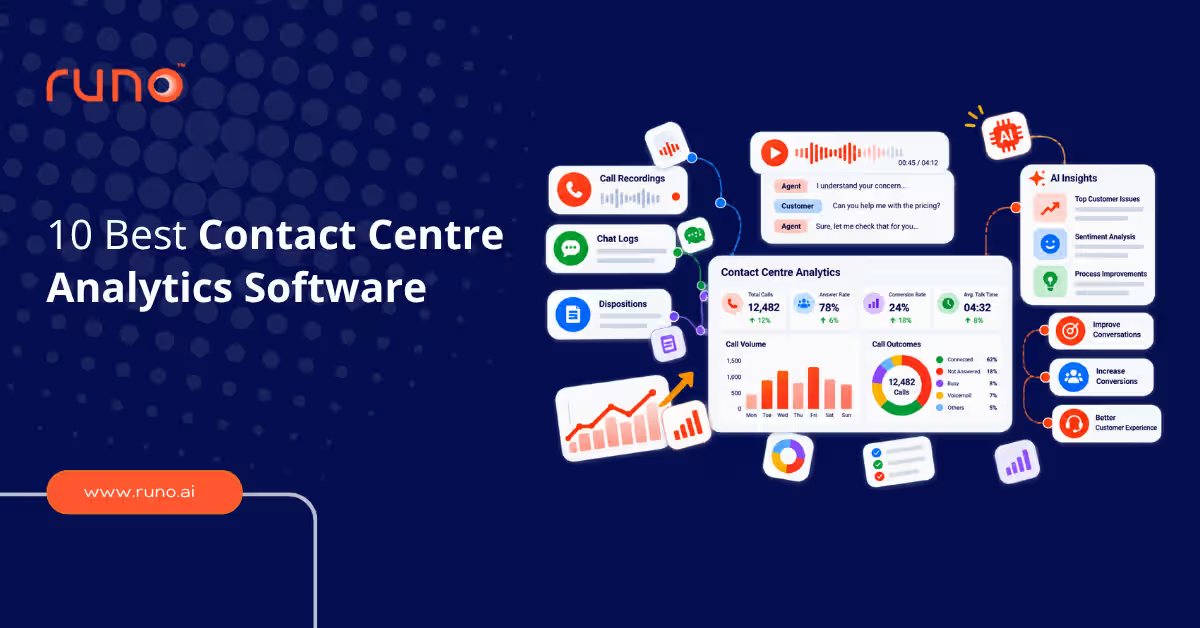
The most uncomfortable truth about contact centres: the data needed to improve performance already exists inside call recordings, chat logs, and dispositions collected every day. And the real challenge is turning that raw conversation data into useful answers quickly enough to act on them.
QA teams may review only a small percentage of calls, while managers often discover process issues only after they affect queues, conversions, or customer experience. When someone asks why conversions dropped last week, the answer can still be buried across multiple reports.
Contact centre analytics software helps close this gap by turning conversation data into actionable insights. But the category is broad, and different platforms solve different problems. Some focus on enterprise speech analytics, while others combine analytics with a complete CCaaS platform or an outbound calling CRM.
This guide ranks the 10 best contact centre analytics platforms for 2026, with four key features, three pros and cons, and each platform's G2 rating.
Key Takeaways
- Contact centre analytics turns conversation data from calls, chats, tickets, and surveys into actionable insights around contact drivers, sentiment, agent performance, and trends.
- The category includes conversation/speech analytics platforms, full CCaaS suites with analytics, and broader voice-of-customer platforms.
- For outbound sales and telecalling teams, analytics works best when it is part of the calling workflow itself, which makes Runo a strong choice for this use case.
- Coverage matters as much as dashboards. Analysing more conversations gives managers a clearer view of actual team performance.
- Enterprise speech analytics platforms such as CallMiner, Verint, and Observe.AI provide advanced capabilities for large operations.
- The right platform depends on your primary channel, team size, analytics requirements, and deployment timeline.
Our Evaluation Approach
Rather than judging platforms by feature count alone, we evaluated capabilities that influence real business decisions: conversation coverage, real-time versus post-call insights, the connection between insights and action, channel and language coverage, and time to value. We also considered deployment requirements, since a platform that can be live within hours offers a very different experience from one that requires a lengthy enterprise rollout.
Each entry below includes four key features, three pros and cons, its G2 rating, and the type of team it suits best.
Top 10 Contact Centre Analytics Software in 2026
Here is a detailed look at each platform, its key capabilities, pros and cons, and G2 rating. We begin with Runo, a strong fit for outbound and telecalling teams that want analytics built directly into their calling workflow.
1. Runo
For outbound teams, analytics becomes much more useful when it is connected directly to the calling workflow. Runo brings AI call analytics into a SIM-based calling CRM, so agents can capture, record, summarise, and score calls within the same platform they use for daily calling activity. This gives managers a more complete view of conversations and team performance.
Key features:
- AI call summaries automatically generated on every call
- AI quality score evaluating tone, script, and outcome for coaching
- Real-time agent tracking with live team dashboards
- AI assistant for plain-language queries such as "show missed follow-ups"
Pros:
- Analytics across 100% of calls instead of relying only on manual samples
- Calling data, CRM activity, and analytics stay connected in one workflow
- Strong fit for high-volume outbound and telecalling operations
Cons:
- Primarily designed around calling and sales workflows
- Best suited to voice-led operations rather than broad omnichannel analytics
- Enterprise teams may need additional platforms for advanced cross-channel requirements
G2 rating: 4.3/5
Best for: Outbound sales, telecalling, and lead-follow-up teams that want call analytics built directly into their calling workflow.
2. CallMiner
CallMiner is an established name in speech analytics, with its Eureka platform designed for enterprises with mature QA and compliance requirements. It analyses voice and digital interactions for sentiment, topics, intent, and compliance risks.
Key features:
- Deep speech and text analytics across channels
- Compliance monitoring and risk detection
- Sentiment and intent analysis
- CallMiner Coach for structured coaching workflows
Pros:
- Deep analytics for regulated, high-volume enterprises
- Mature compliance capabilities for structured QA programmes
- Strong support for detailed conversation intelligence
Cons:
- Enterprise deployment can require significant implementation time
- Has a learning curve for teams new to advanced speech analytics
- May offer more functionality than smaller teams need
G2 rating: 4.6/5
Best for: Large enterprises with dedicated compliance and analytics teams running structured QA programmes.
3. AmplifAI
AmplifAI brings data from CRM, CCaaS, workforce management, and surveys into a unified layer. It then uses that information for automated QA, AI-enabled coaching, and performance management.
Key features:
- Unified data layer across CRM, CCaaS, WFM, and surveys
- Automated QA and quality management
- AI-enabled coaching workflows
- Performance dashboards with 150+ integrations
Pros:
- Connects analytics with coaching and performance management
- Broad integration coverage across the contact centre stack
- Useful for teams looking to turn insights into specific actions
Cons:
- Works best when connected with the existing technology stack
- Implementation can involve multiple data sources
- May be more than smaller teams need for basic analytics
G2 rating: 4.8/5
Best for: Contact centres that want customer and sales data connected to coaching and performance workflows.
4. NICE CXone
NICE CXone combines contact centre analytics with routing, workforce management, automation, and customer experience tools. Its Enlighten AI engine supports interaction analytics within the wider CXone environment.
Key features:
- Enlighten AI interaction analytics
- Built-in routing and workforce management
- Omnichannel coverage across voice and digital
- Automation and orchestration tools
Pros:
- Brings analytics and contact centre operations into one platform
- Strong analytics capabilities when NICE is the core platform
- Broad omnichannel and workforce management functionality
Cons:
- Advanced analytics are positioned within higher-tier plans
- The wider platform can require more setup and configuration
- May be more comprehensive than teams looking only for analytics require
G2 rating: 4.3/5
Best for: Contact centres that want analytics alongside routing, workforce management, and other full-stack CCaaS capabilities.
5. Verint
Verint combines workforce management, quality management, and interaction analytics in one platform. Its automated scoring and trend detection capabilities make it useful for enterprises that manage staffing, forecasting, QA, and analytics together.
Key features:
- Interaction and speech analytics
- Automated quality scoring with Quality Bot
- Workforce management and forecasting
- Data Insights Bot for trends and anomalies
Pros:
- Combines workforce planning, QA, and analytics
- Strong automated scoring for large operations
- Useful for organisations managing complex contact centre environments
Cons:
- The wider suite can require significant adoption across teams
- More platform-focused than teams seeking a standalone analytics tool
- Implementation may take longer for complex environments
G2 rating: 4.3/5
Best for: Large contact centres that want workforce planning and quality management alongside analytics.
6. Observe.AI
Observe.AI is a contact centre intelligence platform focused on QA and coaching. Its AutoQA capability can score 100% of interactions, helping teams expand quality monitoring beyond small manual samples.
Key features:
- AutoQA scoring on 100% of interactions
- Coaching workflows tied to conversation data
- Customer intent detection
- Conversation summaries and insights
Pros:
- Expands QA coverage across the full interaction set
- Strong coaching workflows for high-volume teams
- Turns conversation data into actionable quality insights
Cons:
- Transcription quality can vary with strong accents or challenging audio
- Teams may need time to configure scoring and coaching workflows
- More focused on contact centre intelligence than general CRM analytics
G2 rating: 4.6/5
Best for: High-volume contact centres moving from manual QA samples towards broader automated coverage.
7. SentiSum
SentiSum is a customer analytics engine that analyses support conversations, surveys, and reviews across voice and text. It brings feedback together into topics, subtopics, and sentiment to help teams understand recurring customer issues.
Key features:
- Speech and text analytics across 100+ languages
- Automatic topic and subtopic tagging
- Sentiment and root-cause analysis
- AI assistant for natural-language queries
Pros:
- Strong cross-channel voice-of-customer capabilities
- Automatic tagging reduces manual categorisation work
- Helps teams identify recurring customer issues and themes
Cons:
- Automated tagging may need occasional refinement
- Pricing is positioned towards larger teams
- More focused on VoC and support analytics than outbound sales analytics
G2 rating: 4.8/5
Best for: Support teams that want cross-channel VoC insights across tickets, calls, surveys, and reviews.
8. Cresta
Cresta is an AI-native platform focused on real-time agent assistance. It provides live coaching prompts, compliance reminders, conversation intelligence, and QA scoring during customer interactions.
Key features:
- Real-time agent assist during live calls
- AutoQA scoring across interactions
- Knowledge Agent for source-backed answers
- Auto-summaries pushed into CRM or ticketing
Pros:
- Provides coaching while conversations are still happening
- Combines agent assist with QA and conversation intelligence
- Can connect summaries with CRM and ticketing workflows
Cons:
- Enterprise pricing can be significant
- Best suited to organisations with mature contact centre operations
- Transcription performance can vary with challenging audio and accents
G2 rating: 4.2/5
Best for: Large enterprises that want agents supported in real time during calls and chats.
9. Dialpad
Dialpad combines voice, video, and messaging with AI-powered analytics. Its capabilities include real-time transcription, sentiment analysis, and automatic post-call summaries with action items.
Key features:
- Real-time speech-to-text transcription
- AI-generated post-call summaries and action items
- Sentiment analysis on live calls
- CRM integration and multi-device access
Pros:
- Fast real-time transcription and AI-generated summaries
- Brings voice, video, and messaging into one workspace
- Useful AI capabilities for everyday communication workflows
Cons:
- Analytics are lighter than dedicated conversation-intelligence platforms
- Advanced requirements may need additional tools
- Teams focused only on outbound calling may not need the full communications suite
G2 rating: 4.4/5
Best for: Teams that want AI transcription and summaries inside their communications platform.
10. Qualtrics (XM Discover)
Qualtrics XM Discover analyses survey responses, chat, and call transcripts across multiple industry models and languages. It is designed for organisations running structured, company-wide voice-of-customer programmes.
Key features:
- Text and speech analytics across 150+ industry models
- Company-wide voice-of-customer programme tools
- Scorecard builder for agent evaluation
- Behavioural and conversational journey analysis
Pros:
- Extends beyond the contact centre into the wider customer journey
- Strong insight capabilities for enterprise VoC programmes
- Useful for organisations managing customer feedback at scale
Cons:
- Has a steep learning curve for new users
- Enterprise deployments can take longer to roll out
- Investment can be substantial for smaller organisations
G2 rating: 4.4/5
Best for: Large organisations running formal VoC programmes across the customer journey.
Contact Centre Analytics Software at a Glance
To make the shortlist easier, this table compares what each platform does best, its analytics type, deployment speed, and G2 rating.
| Platform | Best For | Analytics Type | Deployment Speed | G2 Rating |
| Runo | Outbound/telecalling teams | AI call scoring inside calling CRM | Fast (under an hour) | 4.3/5 |
| CallMiner | Enterprise compliance and speech | Deep speech analytics | Slow (~5 months) | 4.6/5 |
| AmplifAI | Connecting data to coaching | Performance + QA layer | Medium | 4.8/5 |
| NICE CXone | All-in-one CCaaS | Bundled interaction analytics | Medium | 4.3/5 |
| Verint | WFM + analytics | Interaction + workforce | Slow | 4.3/5 |
| Observe.AI | Scaling QA coverage | AutoQA and coaching | Medium | 4.6/5 |
| SentiSum | Cross-channel VoC | Speech + text analytics | Fast | 4.8/5 |
| Cresta | Real-time agent assist | Live conversation intelligence | Medium | 4.2/5 |
| Dialpad | AI transcription | Built-in AI analytics | Fast | 4.4/5 |
| Qualtrics XM Discover | Company-wide VoC | Enterprise experience management | Slow | 4.4/5 |
Choosing the Right Analytics Software for Your Team
The category is broad, so the best choice depends on what your team actually needs from analytics. For outbound-first teams, analytics is most useful when it sits inside the calling workflow. Runo brings AI scoring and summaries into the same app agents use for calling, helping managers work with complete call data and connect insights directly to follow-ups and coaching.
For deeper speech analytics and compliance, CallMiner and Verint offer established enterprise capabilities. NICE CXone is a strong option when analytics needs to sit alongside a wider contact centre platform. For cross-channel customer feedback, SentiSum offers broader VoC coverage, while Cresta is suited to teams that want real-time agent assistance.
The common thread is simple: good analytics should help teams understand what happened, why it happened, and what to do next.
Related reading: Our guides to the top cloud call centre solutions and the best CRM for telemarketing cover the platforms these analytics run on.
Frequently Asked Questions
What is contact centre analytics software?
Contact centre analytics software collects conversations across channels such as calls, chats, emails, and surveys and turns them into useful insights around sentiment, contact drivers, agent performance, and customer trends.
What is the difference between call centre analytics and speech analytics?
Speech analytics focuses specifically on voice conversations, including call transcription, sentiment, keywords, intent, and compliance signals. Contact centre analytics is broader and can also cover text channels, agent performance, and customer journey insights.
What is the best contact centre analytics software for outbound teams?
Runo is a strong fit for outbound sales and telecalling teams because its AI call analytics, summaries, and quality scoring are built directly into a SIM-based calling CRM. This keeps analytics connected to actual calling activity and the agent's daily workflow.
Do I need a tool that analyses 100% of conversations?
Full conversation coverage can provide a much clearer picture of team performance and customer interactions. It helps managers identify patterns, coaching opportunities, and recurring issues that smaller manual samples may not capture.
How is AI used in contact centre analytics?
AI can transcribe and analyse conversations, identify sentiment and intent, score calls against quality criteria, generate summaries and action items, detect trends, and help managers query call data using natural language.