

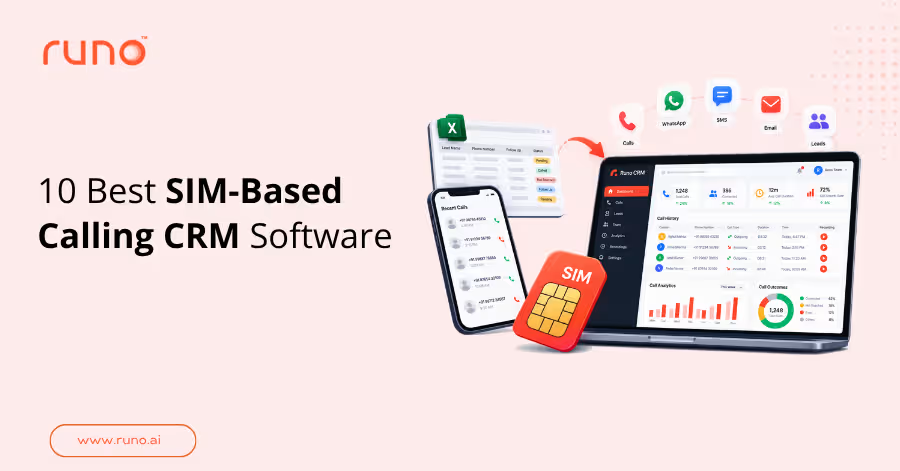
Open any Indian sales manager's laptop, and you will usually find the same two windows open side by side. One is an Excel sheet with lead names and half-filled follow-up dates. The other is a phone, sitting face up on the desk, holding the only real record of what actually got said on each call. When a rep leaves the company, that call history leaves with them. When a manager asks who called a lead last week, the honest answer is often a shrug.
This is the exact gap SIM-based calling CRM software was built to close. Instead of asking reps to switch to a company-issued VoIP line or a fresh SIM just for tracking, these platforms plug into the calls your team already makes from their own mobile numbers and quietly turn scattered phone activity into a searchable, reportable system.
What follows is a look at how SIM-based call tracking actually works under the hood, followed by the ten platforms worth considering if you are ready to stop reconstructing your team's calling day from memory.
What to Check Before Choosing SIM-Based Calling CRM Software
The best SIM-based calling CRM software should do more than connect calls. It should make calling, lead management, follow-ups, and reporting part of the same workflow. Before choosing a platform, check how well it handles these areas:
- Automatic call logging and recording: Calls should log and record automatically so sales reps don't have to update every interaction manually.
- SIM-based calling support: Check whether the platform lets your team make calls through SIM networks while keeping call activity, recordings, and customer details connected to the CRM.
- Flexible calling options: If your team may expand or work across different locations, look for software that also supports cloud or virtual calling alongside SIM-based calling.
- Instant lead assignment: New leads should reach the right salesperson immediately, not sit in a shared queue. Check whether leads can be assigned automatically based on your chosen rules.
- Built-in follow-up management: Look for follow-up reminders, tasks, and notifications that help reps act on leads after every call. A CRM that only records conversations will not do much to prevent missed opportunities.
- Scalable pricing: Compare whether you are charged per user, phone number, calling minutes, or organisation. A pricing model that works for a five-person team may become expensive once you have 20 or more callers.
Quick Comparison of SIM-Based Calling CRM Software
When comparing SIM-based calling CRM software, the biggest differences aren't just pricing. Some platforms focus on higher connect rates, while others focus on lead management, lower calling costs, auto-dialling, or industry-specific workflows.
The table below gives you a quick overview of the 10 platforms covered in this guide
| Platform | Key advantage | Best suited for | Starting price |
| Runo | SIM and cloud calling in one app with local number caller ID | Mobile-first outbound teams | Free trial, paid plans on request |
| TeleCRM | SIM call tracking combined with lead management | Teams wanting CRM and calling together | Custom pricing |
| Diallogs | On-device recording and quick call outcome tagging | EdTech, NBFC and field sales teams | Custom pricing |
| Calliyo | SIM calling positioned as a lower-cost alternative to VoIP | Cost-conscious Indian SMEs | Custom pricing |
| CallingPro | Android auto-dialler using existing carrier plans | Teams focused on increasing call volume | Custom pricing |
| Callyzer | Predictable per-number pricing | Small teams and solo callers | From around ₹161/number/month |
| Godial | Desktop SIM-based auto dialler | Large office-based outbound teams | Custom pricing |
| Linkarise | Indian-focused routing and calling workflows | Teams operating across Indian regions | Custom pricing |
| ZNICRM | Calling, WhatsApp and lead management in one platform | Small sales and field teams | Custom pricing |
| Closecall | Simple centralised calling dashboard | Teams starting with call tracking | Custom pricing |
Let us now look at each platform in more detail, including its key features, main differentiator, and the type of team it is best suited for.
1. Runo
Runo takes a different approach to SIM-based calling CRM software by bringing SIM calling and cloud telephony into the same platform. This gives sales teams the flexibility to use mobile SIM calling while still getting CRM features, call tracking, recordings, and team visibility in one place.
What you get with Runo
- SIM and cloud calling: Reps can make calls through their SIM or Runo's virtual number without managing separate calling systems. See how Runo combines these options through its cloud telephony and SIM calling features.
- Automatic call logging: Calls are automatically logged with details such as duration, recording, and timestamp, reducing the need for manual updates.
- Automatic lead assignment: Leads from sources such as Facebook, IndiaMART, website forms, and spreadsheet uploads can be assigned to reps automatically through its lead management system.
- Live team monitoring: Managers can see which agents are currently on calls and track team activity through its call centre monitoring software.
- AI call summaries: AI-generated summaries give managers the key points from a conversation without requiring them to listen to the complete recording.
- DNC and DND checks: Built-in checks can help teams manage outbound calling compliance.
- WhatsApp CRM: Its WhatsApp CRM keeps customer conversations alongside call history.
What makes Runo different?
Its main differentiator is the combination of SIM based calling and cloud telephony in one telecaller app. Runo also focuses on improving connect rates by allowing teams to call through SIM networks and use local-looking numbers through its telecaller app. The platform claims that this can help teams get more calls answered without adding another calling system.
For teams that want calling, lead management, monitoring, and follow-ups in one place, Runo is a strong option to consider.
Best for: High-volume outbound sales and telecalling teams that want SIM calling with CRM functionality.
2. TeleCRM
TeleCRM combines SIM-based call tracking with a broader CRM, so teams do not have to manage their calling activity separately from their lead pipeline.
What makes it useful
- Automatic call logging: Call history is linked directly to individual lead records.
- AI call summaries: Recorded conversations can be summarised so managers do not need to review every call manually.
- One-click dialling: Reps can call leads directly from the CRM instead of copying numbers into a separate dialler.
- WhatsApp integration: Manage WhatsApp campaigns and conversations alongside lead activity.
TeleCRM is particularly useful when the priority is keeping calling and lead management within the same CRM workflow, rather than using a separate call-tracking application.
Best for: Sales teams that want CRM, SIM calling, follow-ups, and WhatsApp management in one platform.
3. Diallogs
Diallogs focuses more heavily on specific telecalling use cases, including EdTech admissions, NBFC collections, and field sales. Its approach suits teams that need calling workflows adapted to a particular industry.
Key features include:
- On-device call recording linked to individual leads
- One-tap call outcome tagging
- Custom lead stages for different sales processes
- Offline support for field teams
Its biggest advantage is the focus on vertical-specific workflows rather than trying to provide a generic CRM for every type of sales team.
Best for: EdTech, collections, and field sales teams with specialised calling workflows.
4. Calliyo
Calliyo takes a cost-focused approach to SIM-based calling. Instead of relying entirely on VoIP, it positions SIM calling as a way for businesses to reduce their calling expenses.
Key features include:
- SIM-based calling that can work without constant internet connectivity
- Automatic call logging
- AI-powered follow-up reminders and live team activity dashboards
- A claimed 60-80% reduction in calling costs compared with VoIP providers
For Indian SMEs where calling costs represent a significant part of the sales budget, this cost advantage can make Calliyo worth considering.
Best for: Cost-conscious Indian SMEs with multiple outbound callers.
5. CallingPro
CallingPro centres on a simple Android auto dialler that uses an existing mobile carrier plan. Its main goal is to help reps move through their calling lists faster without requiring complex infrastructure.
Key features include:
- Android auto dialler for faster outbound calling
- Lead assignment and status tracking
- Automated WhatsApp, SMS, and email follow-ups
- Integrations with Zoho, Salesforce, and Google Sheets
The platform makes more sense for teams where calls per agent and outbound activity are the primary performance metrics.
Best for: Outbound teams that want to increase daily call volume without replacing their existing CRM.
6. Callyzer
Callyzer stands out for its per-number pricing model, which can make costs easier to predict as a small team grows.
Key features include:
- Pricing from around ₹161 per phone number per month
- Real-time call logs and agent monitoring
- Basic IVR and call routing
- CSV and Excel lead imports
It is a relatively straightforward option for teams that need basic calling visibility without investing in a larger CRM platform.
Best for: Solo callers and very small teams looking for simple call tracking.
7. Godial
Godial takes a desktop-first approach to SIM-based calling. Instead of focusing primarily on a mobile application, it is designed for teams running outbound campaigns from a fixed office environment.
Key features include:
- SIM-based auto dialling
- Offline calling capability
- Desktop CRM synchronisation
- Call recording and quality monitoring
This setup can work well for larger office-based teams where managers want a centralised desktop calling environment.
Best for: Office-based teams running large outbound calling campaigns.
8. Linkarise
Linkarise focuses on Indian outbound calling requirements, including regional lead routing and local-language support.
Key features include:
- Lead routing based on regional shift timings
- Auto dialling and call recording
- Agent productivity reporting
- Hindi and English onboarding support
The platform is aimed at businesses that want calling workflows suited to Indian sales operations without having to configure those requirements from scratch.
Best for: Indian sales teams managing callers across different regions and shifts.
9. ZNICRM
ZNICRM brings calling, lead management, and WhatsApp follow-ups into one interface. This can reduce the need for reps to switch between separate tools during their daily workflow.
Key features include:
- Call disposition and pipeline updates
- WhatsApp messages from lead records
- Mobile app with geolocation and attendance features
- Built-in invoicing
It is particularly useful for smaller teams that want several sales operations functions under one platform rather than investing in separate systems.
Best for: Small sales and field teams that need calling, WhatsApp, and basic CRM functionality together.
10. Closecall
Closecall keeps things relatively simple, focusing on a central dashboard where teams can monitor calling activity without dealing with a complex implementation.
Key features include:
- Centralised incoming and outgoing call reporting
- Missed call and SMS tracking
- Manager access to call recordings
- Basic reporting for call activity
For teams moving from spreadsheets or basic phone-based tracking to a more structured system, this simplicity can be an advantage.
Best for: Small teams adopting structured call tracking for the first time.
SIM Calling vs Cloud Telephony: What Is the Difference?
Before choosing SIM based calling CRM software, understand how it differs from cloud telephony. SIM calling uses a mobile network, while cloud telephony relies on the internet.
| Factor | SIM Calling | Cloud Telephony |
| Network | Mobile network | Internet |
| Caller ID | Mobile/local number | Virtual number |
| Internet dependency | Not required | Required |
| Best for | Mobile and field teams | Internet-connected teams |
| Key requirement | Automatic call tracking | Built-in call management |
For SIM calling, the CRM must reliably capture call logs, recordings, duration, and outcomes in the background. That tracking layer is what makes a SIM-based CRM useful for sales teams.
Summing Up
The right SIM-based calling CRM software can help sales teams connect calls, track conversations, manage leads, and follow up without relying entirely on cloud telephony. The best choice depends on your team size, calling volume, CRM requirements, and connectivity needs. If you want SIM and cloud calling combined with lead management, call tracking, and team monitoring, Runo is a strong option.
Frequently Asked Questions
What is the difference between SIM-based calling and cloud telephony?
SIM-based calling uses a mobile network and the rep's SIM, while cloud telephony uses an internet connection and a virtual number.
Does SIM-based calling work without an internet connection?
Yes, the call itself works through the mobile network, although features such as call syncing and AI summaries may require internet access.
Is SIM-based calling CRM software suitable for small teams?
Yes, tools such as Callyzer and CallingPro offer options for small teams and solo telecallers that need automatic call tracking.
Can SIM-based calling improve call connect rates?
It can help because customers may be more likely to answer a familiar local number than an unfamiliar virtual or toll-free number.