

A sales manager can usually tell when a new rep is struggling. The harder part is catching the problem before it's too late to fix.
A rep may hesitate when a prospect raises an objection, miss an important buying signal, or lose control of a conversation. Traditional coaching catches these problems later, usually after a manager has listened to the recording. By then, the useful coaching moment has already passed.
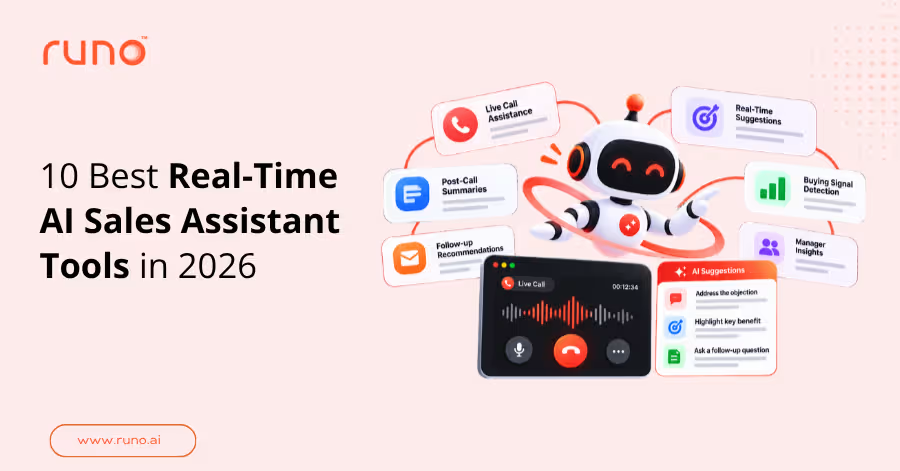
Real-time AI sales assistants are designed to move that feedback closer to the conversation itself. Depending on the platform, they can surface prompts during a call, analyse what is happening, alert managers to important moments, or provide immediate post-call insights.
But the category is broader than it first appears. Some tools genuinely assist during live calls. Others focus on post-call intelligence, prospecting, email outreach, or even handling calls without a human agent.
So the right choice depends on where in the sales process you actually need AI assistance.
What Counts as a Real-Time AI Sales Assistant?
Not every AI sales tool provides assistance during a live conversation. Before comparing platforms, it helps to separate the main categories:
- Live call assistants: Listen to conversations and provide prompts, alerts, or coaching during the call.
- Post-call intelligence tools: Analyse completed conversations and highlight coaching opportunities, trends, and performance issues.
- Sales outreach assistants: Help with prospecting, email writing, lead research, and outreach sequences before the call.
- AI voice assistants: Handle conversations themselves rather than supporting a human sales representative.
This list focuses primarily on tools that assist sales teams during or immediately around a live conversation, while also including a few adjacent platforms commonly compared with them.
The 10 Best Real-Time AI Sales Assistant Tools
Here are the 10 real-time AI sales assistant tools worth considering in 2026, each suited to a different sales workflow.
1. Runo
Runo takes a different approach to real-time sales assistance. It is not built around a sales rep sitting in a scheduled video meeting waiting for AI prompts. Instead, it is designed for outbound telecalling teams making large numbers of SIM-based and virtual-number calls throughout the day.
For these teams, the biggest real-time problem is often not a lack of scripted suggestions. It is not knowing what is happening across the calling floor right now.
What Runo does in real time
- Live team visibility: Runo's call centre monitoring software shows which reps are on calls, who has finished a call, and who is currently idle.
- Immediate call insights: An AI call summary is generated after a conversation, allowing managers to identify difficult calls while the context is still fresh.
- Sentiment and talk-ratio analysis: The platform can highlight conversations where a rep talks over the customer or the tone becomes negative.
- Automatic lead assignment: New leads can be assigned through Runo's lead management system, so reps can move directly to the next opportunity.
- Real-time follow-ups: Follow-up reminders can be triggered based on call outcomes instead of relying on managers to manually maintain the queue.
- Call transcription: Runo's call transcription makes past conversations searchable when a manager needs to investigate what was actually said.
- Sales workflow management: Its sales management software connects calling activity with the wider lead and follow-up process.
The important distinction is that Runo does not try to whisper a script into a rep's ear in the middle of every sentence. Its real-time advantage is broader team visibility across mobile and outbound calling operations.
That makes it particularly relevant for teams where managers need to know who is calling, what happened on recent calls, which conversations need attention, and what should happen next.
Best for: Outbound telecalling teams using SIM or mobile-based calling that need real-time team visibility and faster manager intervention.
2. Dialpad
Dialpad is one of the closer matches to the traditional idea of a real-time AI sales assistant. Its AI can listen to a live conversation and surface relevant prompts while the rep is still speaking.
Key capabilities
- Real-time assist cards triggered by conversation topics
- Live sentiment analysis
- AI Playbooks for sales conversations
- Post-call transcripts and recaps
- Automated QA and call scoring
The platform is most useful when sales representatives work in a VoIP-based calling environment and need live prompts during the conversation, not just post-call analysis.
Best for: Inside sales teams that want AI-powered prompts and coaching during live calls.
3. Avoma
Avoma sits slightly further toward conversation intelligence than live call assistance. Its strength is turning completed conversations into structured coaching information that sales managers can use during reviews.
What stands out
- AI-generated performance scorecards
- Topic and keyword detection
- Conversation bookmarks
- Sales-focused call analysis
- CRM integrations
Avoma makes sense when the main goal is understanding how representatives perform across calls, rather than providing constant prompts while they are speaking.
Best for: Sales teams focused on structured call reviews, coaching, and conversation intelligence.
4. Regie.ai
Regie.ai works earlier in the sales process. Rather than sitting inside the live conversation, it helps representatives prepare for and automate the outreach that leads to that conversation.
Where it helps
- AI-generated sales messaging
- Automated email sequences
- Call script creation
- Lead-warming workflows
- Outreach campaign automation
It is therefore better viewed as an AI sales outreach assistant than a true live call copilot.
Best for: Sales teams that need AI support for prospecting, outreach, and call preparation.
5. My AI Front Desk
My AI Front Desk takes a completely different approach. Instead of helping a human sales representative handle a call, the AI can handle the conversation itself.
Key capabilities
- Answers incoming calls automatically
- Holds conversations with callers
- Handles common questions
- Can schedule appointments
- Provides after-hours or overflow coverage
This makes it useful for businesses that want to automate basic call handling, but it should not be confused with a tool that coaches a human rep during a sales conversation.
Best for: Businesses that want an AI receptionist for inbound and after-hours calls.
6. Postaga
Postaga operates before the live call. It uses AI to help businesses identify prospects, build outreach campaigns, and create personalised email sequences.
What it can do
- Analyse a website to identify potential outreach opportunities
- Find relevant contacts
- Build email campaigns
- Generate personalised outreach copy
- Automate parts of the prospecting process
It is useful for creating the pipeline that eventually feeds sales calls, but it is not a live call assistant.
Best for: Teams looking to automate prospecting and outbound outreach before the calling stage.
7. Clay
Clay focuses on the data behind sales outreach rather than the live conversation itself. It helps teams research, enrich, and organise prospect information before a representative makes contact.
Key strengths
- Lead enrichment from multiple data sources
- AI-assisted prospect research
- Contact discovery
- Personalised outreach support
- Waterfall enrichment workflows
For sales teams, the value is in giving representatives better information before they pick up the phone.
Best for: Sales and growth teams that need deeper prospect research and lead enrichment.
8. Lavender.ai
Lavender brings real-time AI assistance into email rather than phone conversations. It analyses messages before they are sent and helps representatives improve clarity, tone, and personalisation.
What it offers
- Email quality scoring
- Writing and rewriting assistance
- Personalisation suggestions
- AI-generated email drafts
- Performance insights
It is not a substitute for a live call assistant, but it can complement one by improving the communication that happens before or after the call.
Best for: Sales teams that want AI coaching for outbound email communication.
9. ZoomInfo SalesOS
ZoomInfo SalesOS focuses on sales intelligence and prospect information. Its role is primarily to help representatives decide who to contact and why, rather than coaching them during the conversation.
Key capabilities
- B2B contact and company data
- Buyer intent signals
- Lead prioritisation
- Prospect research
- Conversation intelligence options
It can be valuable when the biggest sales challenge is identifying the right prospects before the call begins.
Best for: B2B sales organisations that need prospect intelligence and lead prioritisation.
10. Crystal
Crystal takes a more specialised approach by using personality insights to help representatives adapt their communication style.
Where it fits
- Prospect personality analysis
- Communication style recommendations
- Pre-call preparation
- Guidance on adapting messaging to different prospects
Crystal is therefore more of a sales preparation assistant than a conventional live AI sales assistant.
Best for: Sales reps who want prospect-specific communication guidance before making a call.
Quick Overview of the 10 Real-Time AI Sales Assistant Tools
Now that we have looked at what each platform actually does, the table below makes the differences easier to compare at a glance.
| Tool | Main strength | Best for | Real-time call assistance |
| Runo | Live team visibility and immediate call insights | SIM and mobile-first outbound teams | Team-level assistance |
| Dialpad | Live AI prompts and sentiment | VoIP-based sales teams | Yes |
| Avoma | Conversation intelligence and coaching | Structured sales teams | Mostly post-call |
| Regie.ai | AI outreach and sales preparation | Outbound prospecting | No |
| My AI Front Desk | Autonomous voice conversations | Inbound and overflow calls | AI handles the call |
| Postaga | Automated prospecting | Outreach teams | No |
| Clay | Lead enrichment and research | B2B prospecting | No |
| Lavender.ai | Email coaching | Sales email teams | No |
| ZoomInfo SalesOS | Sales intelligence and buyer data | B2B sales organisations | Limited |
| Crystal | Personality-based sales guidance | Personalised outreach | Pre-call |
Which Type of AI Sales Assistant Do You Actually Need?
The right tool depends on the point where your sales process needs help.
If representatives need live prompts while speaking, Dialpad is the more direct fit. If managers need structured coaching and conversation analysis after calls, Avoma aligns better with that need.
For teams that need help before the call, tools such as Clay, ZoomInfo SalesOS, Regie.ai, Postaga, and Crystal solve different parts of the prospecting and preparation process.
Runo addresses a different operational problem. For outbound teams making dozens of calls through SIM cards or mobile numbers, managers may need live visibility across the entire team rather than a prompt for one representative. Runo's telecaller app is designed around that mobile-first calling environment, with live activity, automatic call insights, lead assignment, and follow-up workflows.
The important thing is not to choose the tool with the most AI features. Choose the one that solves the specific moment in your sales process where your team is losing time, leads, or coaching opportunities.
Bottom Line
A real-time AI sales assistant is only useful when its capabilities match the way your team actually sells. Some tools coach representatives during live VoIP calls, others analyse completed conversations, while others help with prospecting and preparation.
For mobile-first and outbound telecalling teams, the challenge can be different. Managers need to see what is happening across the calling floor, identify conversations that need attention, and move quickly on follow-ups. Runo approaches this through live team visibility, automatic call insights, lead management, and call monitoring built around SIM and virtual-number calling.
The best choice, therefore, is not necessarily the tool with the most AI. It is the one that fits the actual calling environment and coaching problem your sales team needs to solve.
Frequently Asked Questions
What does a real-time AI sales assistant do?
A real-time AI sales assistant can provide live prompts, analyse conversations, alert managers, or surface relevant information while or immediately after a sales call.
Is a real-time AI sales assistant the same as an AI receptionist?
No. A sales assistant supports a human representative during the sales process, while an AI receptionist handles the conversation itself without a human representative on the call.
Do real-time AI sales assistants work with SIM-based calling?
It depends on the platform. Many live coaching tools are designed around VoIP calling, while mobile-first platforms such as Runo focus on live team visibility and immediate call insights for SIM-based outbound teams.
Can AI sales assistants replace sales managers?
No. They can reduce manual monitoring and highlight calls that need attention, but managers are still needed for coaching, relationship context, and deal-specific decisions.
Can these tools work with different languages and accents?
Some support multiple languages, but accuracy varies by platform, language, accent, and call quality. Teams should test the software using real customer calls before deploying it across a large sales operation.
How much does a real-time AI sales assistant cost?
Pricing varies considerably depending on whether the platform provides live coaching, conversation intelligence, prospecting, or a broader sales suite. Compare the total cost per representative and the features included at each plan rather than looking only at the headline price.