

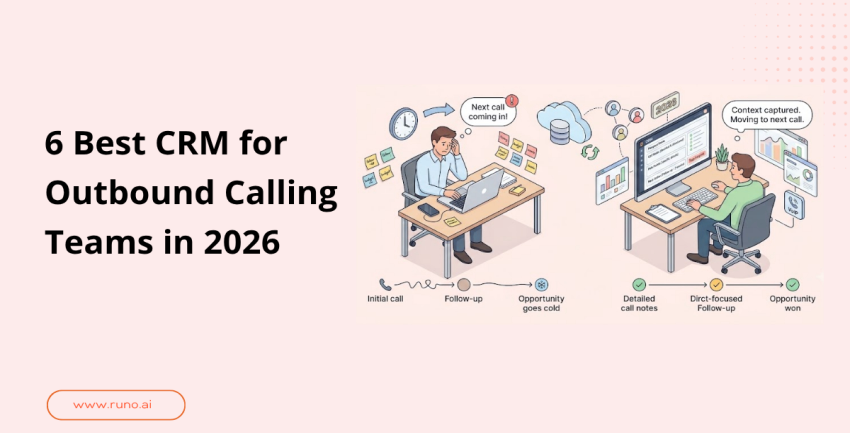
A rep finishes a good sales call. The prospect is interested, asks for a follow-up in two weeks, and shares a specific pain point. But before the rep can properly update the CRM, the next call comes in. They quickly type a few notes and move on. Two weeks later, nobody remembers the context of the conversation, the follow-up lacks direction, and the opportunity goes cold.
Many businesses searching for the best outbound calling software are actually looking for a solution that combines CRM, dialer, call tracking, AI insights, and follow-up management. Instead of using separate tools for calling and customer management, modern outbound sales teams increasingly prefer platforms that integrate everything into a single workflow.
This is a common problem with generic CRMs that were never designed for outbound calling teams. That is exactly why we created this guide: to help you understand what a CRM built for outbound sales should actually include and which platforms are worth considering in 2026.
What is an Outbound Sales CRM?
An outbound sales CRM is a customer relationship management platform designed specifically for teams that initiate contact with prospects through calls, emails, and messages rather than waiting for inbound leads. Unlike traditional CRMs built to manage existing relationships, outbound CRMs prioritize features like built-in dialers, automatic call logging, multi-step sequences, and rep activity dashboards that support high-volume prospecting workflows.
The key difference: traditional CRMs assume a lead came to you (form fill, website visit, referral). Outbound CRMs assume your reps are creating the relationship from scratch, which requires fundamentally different tools list management, power dialers, reply detection, and leading-indicator metrics like calls-per-day and connect rates.
Why This Matters
Most CRMs were built to manage relationships that already exist, not to help reps create new ones over the phone. The gap between what generic CRMs offer and what calling teams actually need is real, and it costs businesses money every single day. Here is the data that puts it in perspective:
- Sales reps spend only 28% of their week actually selling , with the rest going to manual data entry, admin tasks, and internal coordination.
- Teams using a CRM with a built-in dialer see 37% higher outbound response rates compared to teams bolting a separate calling tool onto a generic CRM, because workflow friction kills follow-through.
- The average outbound rep makes 40 to 80 calls per day . Without automatic call logging, that is 40 to 80 manual entries every single day, which adds up to nearly 3 hours of admin work per rep per week.
- AI adoption in sales increased from 24% in 2023 to 43% in 2024 , as more sales teams use AI-powered tools to personalise outreach and close deals faster.
The problem is simple: if your CRM doesn’t align with how your team actually makes calls, reps stop updating it properly. Important details get missed, follow-ups slip through, managers lose visibility, and pipeline reports become inaccurate.
Most buyers searching for outbound calling tools land on two categories without realising it: standalone dialers/call tracking software (built to make and log calls) and CRMs with built-in calling (built to manage the full customer relationship, with calling as one workflow within it). If your team's biggest pain point is disorganised follow-ups, lost context between calls, and pipeline visibility, not just dialling speed, a CRM-first tool like Runo or Close will serve you better than a pure dialer like PhoneBurner or Kixie stacked awkwardly on top of your existing CRM.
Here are the top 6 CRMs that are actually built for outbound calling teams.
1. Runo
Runo is not just another CRM with a calling feature. It is built specifically for teams where calling is the main part of sales, such as outbound sales teams, telecallers, and account managers. Runo users report 22% higher call connect rates compared to VoIP-based dialers, thanks to its SIM-based system that displays real Indian mobile numbers instead of internet-based caller IDs that often trigger spam filters.
What makes Runo different is its SIM-based calling system . Unlike typical VoIP tools, calls appear from regular Indian mobile numbers, helping teams get more answered calls and avoid spam labels in apps like Truecaller.
Here’s why many sales teams prefer Runo:
- SIM-based auto dialer helps improve call connect rates
- Automatic call recording, transcription, and AI summaries
- AI quality score for every call to track agent performance
- WhatsApp, call history, notes, and follow-ups in one place
- Real-time dashboards for managers to monitor team activity easily
Best For: Outbound sales teams, telecalling businesses, and customer account managers in India who handle high daily call volumes and want calling + CRM together in one platform.
2. Close CRM
Close is primarily designed for outbound sales teams, which sets it apart from many traditional CRMs. Everything from calls to email follow-ups is in one dashboard, so reps do not need to jump between multiple tools during the day.
In one outbound campaign test, Close delivered one of the highest reply rates among CRM platforms , thanks to its built-in dialer and automation features. It works especially well for fast-moving SDR teams handling daily outbound outreach.
Why teams like Close:
- Built-in power dialer with automatic call logging
- Email and SMS follow-ups from the same platform
- Smart lead views based on activity and engagement
- Calling support in 190+ countries
- Clean reporting for outbound and inbound sales tracking
Best For: SMB and mid-sized outbound sales teams that want calling, email outreach, and pipeline management together in one place.
3. HubSpot Sales Hub
HubSpot is one of the most popular CRMs because it combines calling, emails, pipelines, reporting, and automation inside a single platform. For growing sales teams, this makes daily work much easier, as everything stays connected in a single system.
The calling feature is simple to use and automatically saves call activity inside the contact profile. While heavy calling teams may eventually hit usage limits, HubSpot works well for companies that want an all-in-one CRM with minimal setup complexity.
Main benefits of HubSpot:
- Calling, email, sequences, and pipeline tools in one platform
- Automatic call logging and recording
- AI tools for lead scoring and email assistance
- Free CRM plan available for small teams
- 1,500+ integrations with popular business tools
Best For: Growing B2B sales teams looking for a complete CRM solution for both inbound and outbound workflows.
4. Freshsales
Freshsales is a good option for businesses that want calling features inside a CRM without spending too much . It includes built-in calling, call recording, and basic automation tools at a lower price than enterprise CRMs.
Its AI assistant, Zia, helps teams with lead scoring and follow-up suggestions, which is useful for smaller sales teams managing moderate daily call volumes. The interface is also clean and beginner-friendly, so teams can get started quickly with minimal training.
Why businesses choose Freshsales:
- Built-in phone system with click-to-call and recording
- AI-based lead scoring and deal insights
- Simple drag-and-drop sales pipeline
- Free plan for small teams
- Mobile app support for field sales reps
Best For: Small and mid-sized teams that need an affordable CRM with built-in calling and simple sales automation.
5. Zoho CRM
Zoho CRM is popular among Indian businesses because it offers strong customisation at affordable INR pricing. Teams can manage calls, pipelines, automation, and follow-ups while also connecting easily with other Zoho products.
Its AI assistant helps sales teams by suggesting the best times to contact leads and highlighting deals that may need attention. Businesses already using Zoho Books, Zoho Desk, or Zoho Campaigns often prefer Zoho CRM because everything connects smoothly together.
Key advantages of Zoho CRM:
- Click-to-call with automatic call tracking
- AI insights for lead scoring and follow-ups
- Flexible pipeline and workflow customization
- Affordable pricing for SMBs
- Strong integration with the Zoho ecosystem
Best For : Indian SMBs and growing companies that want a customizable CRM with affordable pricing and strong workflow flexibility.
6. Salesforce
Salesforce is built mainly for large organisations that need advanced customisation, reporting, and enterprise-level workflows. It is one of the most powerful CRMs available, but it is also more complex than the other options on this list.
Unlike some CRMs, Salesforce does not place heavy emphasis on built-in calling. Most businesses connect external calling tools to handle sales calls. However, for companies managing large teams, multiple regions, and complex sales operations, Salesforce offers unmatched flexibility.
Why enterprises use Salesforce:
- Highly customizable workflows and reporting
- AI-powered lead and opportunity insights
- Automated activity tracking across teams
- Thousands of third-party integrations available
- Enterprise-level security and compliance controls
Best For: Large enterprises with dedicated sales operations teams that need deep customisation and advanced reporting capabilities.
How We Selected These CRMs
We evaluated outbound-focused CRMs used by sales teams, then shortlisted the top 6 based on five criteria:
- Built-in calling capability: Native dialer or seamless integration, not a clunky third-party bolt-on
- Automatic activity logging: Calls, notes, and follow-ups captured without manual data entry
- Outbound workflow design: List management, sequences, and rep dashboards built for proactive prospecting, not just inbound lead routing
- AI and automation: Call transcription, summaries, scoring, and intelligent follow-up suggestions
- Value for money: Pricing that makes sense for small to mid-sized outbound teams (under 50 reps)
We prioritized platforms where calling is a first-class feature, not an afterthought, and where reps can complete an entire outbound workflow-dial, log, schedule follow-up without switching tools.
Key Metrics to Track Once You Switch
Once your CRM is in place, these are the numbers that tell you whether it's actually working:
- Connect rate: percentage of dials that turn into a live conversation
- Follow-up completion rate: percentage of calls where the promised next step actually gets logged and done
- Average time between call and first follow-up action
- Call disposition breakdown: how many calls end in interested, not now, no answer, etc.
Track these for 30 days after switching to see the real impact of moving from a generic CRM to one built for calling.
Quick Comparison of the Best Calling CRMs
If you are still confused about which CRM fits your team, this quick comparison table will make things easier. We have compared the tools based on calling features, AI capabilities, pricing, and the type of teams they work best for.
| Tool | Best For | Built-in Dialer | AI Features | Pricing |
| Runo | High-volume outbound sales and telecalling teams | Yes, SIM-based | AI call scoring, summaries, sentiment tracking | Free trial available , paid plans start at ₹199/user/month |
| Close CRM | SMB and mid-size outbound sales teams | Yes, power dialer | Basic call recording and automation | Starts at $59/user/month |
| HubSpot Sales Hub | Growing teams wanting an all-in-one CRM | Yes, via add-on | AI email writing and pipeline insights | Free plan available |
| Freshsales | Budget-friendly teams needing built-in calling | Yes | Basic AI insights and lead scoring | Free plan available |
| Zoho CRM | Businesses needing deep customisation | Yes, click-to-call | Zia AI assistant | Starts at around Rs. 800/user/month |
| Salesforce | Large enterprises with complex workflows | Via integrations | Einstein AI insights | Custom pricing |
So, Which CRM Actually Makes Sense for Your Team?
At the end of the day, the best CRM depends on how your sales team actually works. If your reps mostly handle emails and light follow-ups, platforms like HubSpot or Zoho can do the job well. But if your business runs heavily on outbound calls, telecalling, demos, and constant follow-ups, then your CRM needs to support that workflow properly, not just “add” calling as another feature.
That is where tools like Runo stand out. Instead of forcing teams to manage separate dialers, notes, recordings, and follow-up sheets, it keeps everything connected inside one system. Reps can see the full contact history, the last call summary, and pending action items before they even dial, which makes every conversation more relevant. On top of that, features like AI call summaries mean reps never have to choose between staying focused on the call and remembering to log what was discussed.
And honestly, when reps spend less time updating CRM fields manually, they spend more time actually selling. That is usually the difference between a CRM teams ignore and one they genuinely use every day.
Common Mistakes When Choosing an Outbound CRM
Avoid these pitfalls when evaluating CRMs for your outbound team:
1. Choosing based on brand name instead of workflow fit
Salesforce and HubSpot are powerful, but if your team makes 60 calls a day and those platforms require third-party dialer integrations or expensive add-ons, you will lose productivity. Pick the CRM that matches how your reps actually work, not the one with the biggest logo.
2. Ignoring automatic call logging
If your CRM requires reps to manually log every call, they will not do it consistently. Within weeks, your pipeline data becomes unreliable and managers lose visibility. Automatic call logging is non-negotiable for high-volume calling teams.
3. Underestimating the cost of integrations
A CRM that costs requires separate subscriptions for a dialer, email sequences , and call recording is not actually affordable. Calculate total cost of ownership, not just the CRM license fee.
4. Skipping the trial period
Every CRM looks good in a demo. The real test is whether your reps will actually use it daily. Run a 14-day trial with 2-3 reps doing real outbound work making calls, logging notes, scheduling follow-ups before committing to annual contracts.
Frequently Asked Questions
What is the difference between a CRM and calling software?
A CRM manages leads, contacts, pipelines, and follow-ups. Software that handles calls mainly handles outbound or inbound calls. Some modern CRMs combine both.
Can a CRM improve outbound call connect rates?
Yes, but only if the calling system is built properly. SIM-based calling platforms like Runo usually perform better in India because calls appear as real mobile numbers.
What features should a calling CRM have?
Automatic call logging, recordings, follow-up reminders, call analytics, and a built-in dialer are the most important features.
Which CRM is best for telecalling teams in India?
Runo is one of the strongest options for Indian telecalling and outbound sales teams because it combines SIM-based calling, CRM workflows, WhatsApp integration, and AI call tracking in one platform.
Which CRM is best for small businesses on a budget?
Freshsales and Zoho CRM are good budget-friendly options with built-in calling and basic automation features.
Is it legal to record sales calls in India?
Yes. India follows a one-party consent standard, meaning your agent's consent is enough to legally record a call. However, informing the customer at the start of the call is considered best practice and builds trust.
What is the difference between a CRM with calling and a call tracking tool?
A call tracking tool focuses purely on dialling, logging, and call analytics. A CRM with built-in calling, like Runo, combines that with full contact history, pipeline stages, and follow-up management, so reps see the complete relationship, not just the last call.