


Key Takeaways:
- The best days for cold calling are Tuesday, Wednesday, and Thursday, with up to 53.67% higher conversion than the worst days.
- The optimal times to call are 4:00–5:00 PM and 10:00 AM-12:00 PM, yielding up to 88.88% better results than off-peak hours.
- Avoid calling on Mondays and Fridays, and steer clear of early mornings (before 8:30 AM), lunchtime (12:30–1:00 PM), and late evenings (after 6:00 PM).
- Successful cold calling requires research, personalized scripts, active listening, objection handling, and persistent follow-up.
Cold calling is the practice of contacting potential customers by phone who have had no prior interaction with your business, with the goal of generating interest, booking meetings, or closing sales.
Are your cold calls falling flat? You’re not alone but here’s the good news: 82% of buyers are open to meetings with sales reps who proactively reach out via cold calls. The secret to success? Timing. Calling at the right day and time can increase your conversion rate by up to 88.88%. In this guide, we’ll reveal the optimal days and times for cold calling, backed by data from over 25,000 sales calls, plus proven strategies to maximize your results.
With the aid of science and extensive research, we will uncover the optimal day and time for making cold calls to potential customers, setting the stage for maximum effectiveness in your sales outreach.
Cold Calling Techniques That Work
Mastering specific techniques can dramatically improve your cold calling success. Here are five proven tactics used by top-performing sales reps:
1. The Pattern Interrupt
Start your call with something unexpected to break the prospect’s autopilot “no” response. Instead of “Hi, how are you today?” try “Hi [Name], I know you weren’t expecting my call, so I’ll be brief. I’m calling because [specific reason]. Do you have 30 seconds?” This honesty and directness often earns you a few more seconds of attention.
2. The Referral Drop (Even Without a Real Referral)
Mention a mutual connection, industry peer, or similar company early in the call: “I was speaking with [Name] at [Similar Company], and they mentioned that companies like yours often struggle with [pain point]. Is that something you’re experiencing?” This builds instant credibility and relevance.
3. Mirroring and Matching
Subtly match the prospect’s tone, pace, and energy level. If they speak quickly and sound busy, be concise and energetic. If they’re calm and measured, slow down and be more conversational. Mirroring builds rapport subconsciously and makes the prospect feel more comfortable.
4. The Assumptive Close
Instead of asking “Would you be interested in a meeting?” assume the sale and offer two options: “I have availability Tuesday at 2 PM or Thursday at 10 AM which works better for you?” This technique reduces friction and makes it easier for the prospect to say yes.
5. The Takeaway Close
If a prospect is hesitant, use scarcity or exclusivity to create urgency: “I completely understand if this isn’t a priority right now. We’re only working with three new clients this quarter, so if it’s not a fit, no worries.” This reverse psychology often prompts the prospect to reconsider and engage more seriously.
Successful Cold Calling Strategies
Cold calling is most effective when paired with a strategic approach. Here are four proven strategies used by top-performing sales teams:
1. Hyper-Targeted Prospecting (The Rifle Approach)
Instead of calling hundreds of random leads, focus on a narrow list of high-fit prospects that match your ideal customer profile. Research each account deeply, identify key decision-makers, and tailor your messaging to their specific challenges. This approach yields higher conversion rates because every call is highly relevant.
2. Trigger-Event Prospecting
Monitor trigger events such as funding announcements, leadership changes, product launches, or industry shifts and use them as a reason to call. For example: “I saw your company just raised Series B funding. Congrats! Many companies at your stage struggle with [pain point]. I’d love to share how we’ve helped similar companies scale efficiently.” Trigger events give you a timely, relevant hook that increases engagement.
3. Multi-Channel Outreach (Cold Calling + Email + Social)
Don’t rely on cold calling alone. Combine phone calls with email sequences, LinkedIn connection requests, and personalized video messages. For example, send a brief email before calling to warm up the prospect, then follow up with a call referencing the email. This multi-touch approach increases familiarity and response rates.
4. Social Selling Integration
Before calling, engage with your prospect on LinkedIn comment on their posts, share relevant content, or send a connection request with a personalized note. This builds familiarity and makes your cold call feel less “cold.” When you do call, reference your LinkedIn interaction: “Hi [Name], I noticed we connected on LinkedIn last week. I wanted to follow up personally because…”
The Best Days of the Week for Cold Calls
Choosing the right day can make a significant difference. While every day has its unique dynamics, generally the middle of the week serves the best for cold calling in sales.
Tuesday-Wednesday-Thursday is the best day of the week for cold calling. There are two studies to back to prove these 3 days are the best ones to make calls.
Number 1 is from Yesware.com [ 1 ], which has analyzed 25,000 sales calls and has suggested Tuesdays & Thursdays being the best days.
Another study conducted by Salesmate [ 2 ] suggests that Tuesday & Thursday are good, but Wednesday is the most favorable. As the study found out Wednesday in particular achieved the highest number of conversations on the first attempt. To put it in numbers, their study suggests that the difference between call conversion from the worst day and best day for calling is a staggering 53.67%
Based on these two studies it is safe to say that the middle of the week is best for cold calling in sales. And if you think logically it makes sense as well. As decision-makers settle into their workweek, they are often more receptive to new opportunities.
Tuesdays, Wednesdays, and Thursdays also offer promising opportunities, striking a balance between catching prospects early in the week and avoiding end-of-week distractions.
The Best Time of the Day for Cold Calling
Within each day, specific time frames provide optimal conditions for successful cold calls. The best time to cold call is between 4:00 to 5:00 PM, and the timing slot right behind is 11:00 AM to 12:00 PM, according to a study conducted by Callhippo.com [ 3 ]
The study by Salesmate reflects the same data. According to it, 4:00 to 5:00 PM is the best slot, and in the second position it is 10:00 AM to 11:00 AM. Which is slightly off from Callhippo’s study. According to Salesmate the difference in conversion between the best time of the day & the worst time of the day is 88.88%.

But from a broad perspective, it is safe to say that 4:00 PM to 5:00 PM is best, and 10:00 AM to 12:00 PM is the second best time of the day to make cold calls. Usually, the official working times are between 7 AM to 7 PM all across the world.
During the initial part of the day, all the employees plan their entire day and focus on the problem they want to tackle. Between 12:30 to 3:00 PM is lunchtime for the majority of people, where they are taking breaks and are less productive. Hence, interacting with them during these hours will not give you max results.
When making international cold calls to potential customers, remember to be mindful of time zones and adapt your calling schedule accordingly.
Worst Time & Day for Cold Calling in Sales
While it’s crucial to identify the best times for cold calls, it’s equally important to avoid less favorable periods.
By referring to the same data that we used earlier in the blog, we can conclude that the worst times for cold calling are:
Worst Days:
- Monday (prospects are planning their week and less receptive)
- Friday (end-of-week distractions and early weekend mindset)
Worst Times of Day:
- Before 8:30 AM (outside typical work hours)
- 12:30 PM to 1:00 PM (lunchtime)
- After 6:00 PM (late evening, outside work hours)
By steering clear of these less favorable times, you can ensure that your cold calls are more likely to yield positive outcomes.
Cold Calling Best Practices for Success
To optimize your cold calling efforts, follow this proven step-by-step process:
1. Research Your Prospects Before Calling
Before picking up the phone, invest time in understanding your prospect’s business, industry challenges, and recent company news. Review their LinkedIn profile, company website, and any recent press releases. Segment your call list by industry and title to tailor your messaging effectively. For example, if calling a CFO at a SaaS company, research their funding rounds, growth stage, and common financial pain points in that sector.
2. Craft a Compelling Script with Flexibility
Develop a cold calling script that outlines your opening line, value proposition, qualifying questions, and common objections with responses. However, avoid sounding robotic use the script as a guide, not a word-for-word recitation. A strong opening might be: “Hi [Name], this is [Your Name] from [Company]. I noticed [specific trigger event]. I’m calling because we’ve helped companies like [similar client] achieve [specific result]. Do you have 30 seconds for me to explain why I’m calling?”
3. Use a Strong Opening to Earn Permission
The first 10 seconds determine whether the prospect hangs up or listens. Start with a pattern interrupt something unexpected that grabs attention. State your name, company, and reason for calling clearly. Then ask for permission to continue: “Is now a good time for a quick conversation?” This shows respect for their time and increases engagement.
4. Ask Open-Ended Questions and Listen Actively
Shift from pitching to questioning. Ask open-ended questions like “What’s your biggest challenge with [pain point]?” or “How are you currently handling [process]?” Listen more than you talk aim for a 70/30 listening-to-talking ratio. Take notes on their responses to personalize your follow-up and demonstrate genuine interest.
5. Handle Objections with Empathy and Evidence
Expect objections like “I’m not interested,” “Send me an email,” or “We’re happy with our current solution.” Respond with empathy: “I understand most of our best clients said the same thing initially. What they found was [specific benefit]. Can I ask what’s working well with your current approach?” Use social proof and data to address concerns without being pushy.
6. Deliver Value Before Mentioning Your Product
Don’t lead with a product pitch. Instead, share a relevant insight, statistic, or case study that addresses their pain point. For example: “Companies in your industry typically lose 30% of leads due to slow follow-up. We’ve helped clients cut that to under 5%. Would it be worth exploring how?” Position yourself as a consultant, not a vendor.
7. Close with a Clear Next Step
Never end a call without scheduling a specific next action. If the prospect is interested, book a meeting on the spot: “I have availability Tuesday at 2 PM or Thursday at 10 AM which works better for you?” If they need time, set a follow-up call: “Let’s reconnect next Wednesday at 3 PM. I’ll send a calendar invite does that work?” Confirm the next step before hanging up.
8. Record, Review, and Optimize Your Calls
Call recording is essential for continuous improvement. Review your calls to identify what works strong openings, effective objection handling, successful closes and what doesn’t. Use analytics from a Telecaller app to track metrics like call duration, conversion rate, and common objections. Refine your script and approach based on real data, not assumptions.
For example, in the ‘Personalize Your Approach’ subsection, add: ‘Learn more about essential telecaller skills to improve your cold calling effectiveness.’ In the ‘Leverage Analytics’ subsection, add: ‘Discover how sales call tracking can help you identify patterns and optimize your outreach strategy.’
Cold Calling Mistakes to Avoid
Even experienced sales reps can fall into common traps that sabotage cold calling success. Avoid these critical mistakes:
1. Calling Without Research
Dialing a prospect without knowing their role, company, or industry wastes both your time and theirs. Generic pitches get hung up on immediately. Always research before calling.
2. Talking Too Much and Not Listening
Cold calling isn’t a monologue. If you dominate the conversation, you’ll miss valuable insights about the prospect’s needs. Ask questions and listen actively aim for a 70/30 listening-to-talking ratio.
3. Leading with Your Product Instead of Their Problem
Prospects don’t care about your product features they care about solving their problems. Start by identifying their pain points, then position your solution as the answer.
4. Giving Up After One Attempt
Most successful cold calls require multiple touchpoints. Research shows the average salesperson makes only two attempts, but top performers follow up 5-8 times. Persistence is key.
5. Failing to Handle Objections Confidently
Objections like “I’m not interested” or “Send me an email” are not rejections they’re opportunities to dig deeper. Prepare responses in advance and practice handling objections with empathy and evidence.
6. Ending the Call Without a Clear Next Step
Never hang up without scheduling a follow-up meeting, sending a resource, or setting a callback time. Vague promises like “I’ll reach out soon” lead nowhere. Always confirm a specific next action before ending the call.
How to Increase Cold Call Conversion Rate
Improving your cold call conversion rate requires a combination of timing, personalization, and continuous optimization. Here are five proven strategies:
1. Call During Peak Response Windows
As discussed earlier, calling between 4:00–5:00 PM or 10:00 AM-12:00 PM on Tuesday, Wednesday, or Thursday can increase your conversion rate by up to 88.88% compared to off-peak times. Timing is one of the easiest levers to pull for immediate improvement.
2. Personalize Every Call with Trigger Events
Use trigger events such as a prospect’s company announcing funding, launching a new product, or hiring for a specific role as a reason to call. Mentioning a relevant, timely event in your opening line increases engagement and shows you’ve done your homework.
3. Follow Up Persistently (5–8 Touchpoints)
Most cold calls require multiple attempts to connect. Research shows that 80% of sales require five follow-up calls after the initial contact, yet most reps give up after two. Use a multi-channel approach: call, email, LinkedIn message, and call again. Space follow-ups 2-3 days apart.
4. A/B Test Your Scripts and Opening Lines
Don’t rely on one script forever. Test different opening lines, value propositions, and closing questions. Track which versions generate the highest connect rates and meeting bookings. For example, test “I’m calling because [trigger event]” vs. “I’m calling to help you solve [pain point].” Use data to refine your approach.
5. Use Conversation Intelligence to Analyze and Improve
Leverage call recording and conversation intelligence tools to review your calls. Identify patterns in successful calls such as specific phrases, question types, or objection responses and replicate them. Analyze unsuccessful calls to spot mistakes like talking too much, weak openings, or unclear next steps. Continuous improvement based on real call data is the fastest way to boost conversion rates.
How Runo Can Help in Telemarketing
In addition to these strategies, leveraging advanced tools and technologies like Runo, a powerful Call Management app , can streamline your telemarketing process.
Runo manages calls at SIM-Level and offers features such as Sales Call Tracking , live performance reporting, and analytics, Auto Dialer , Call Recording, automatic lead allocation , add interaction pop-up, and integration with lead sources.
These features of the telecalling app enable you to monitor key metrics, personalize interactions, improve training and quality assurance, and ultimately enhance your telemarketing results.
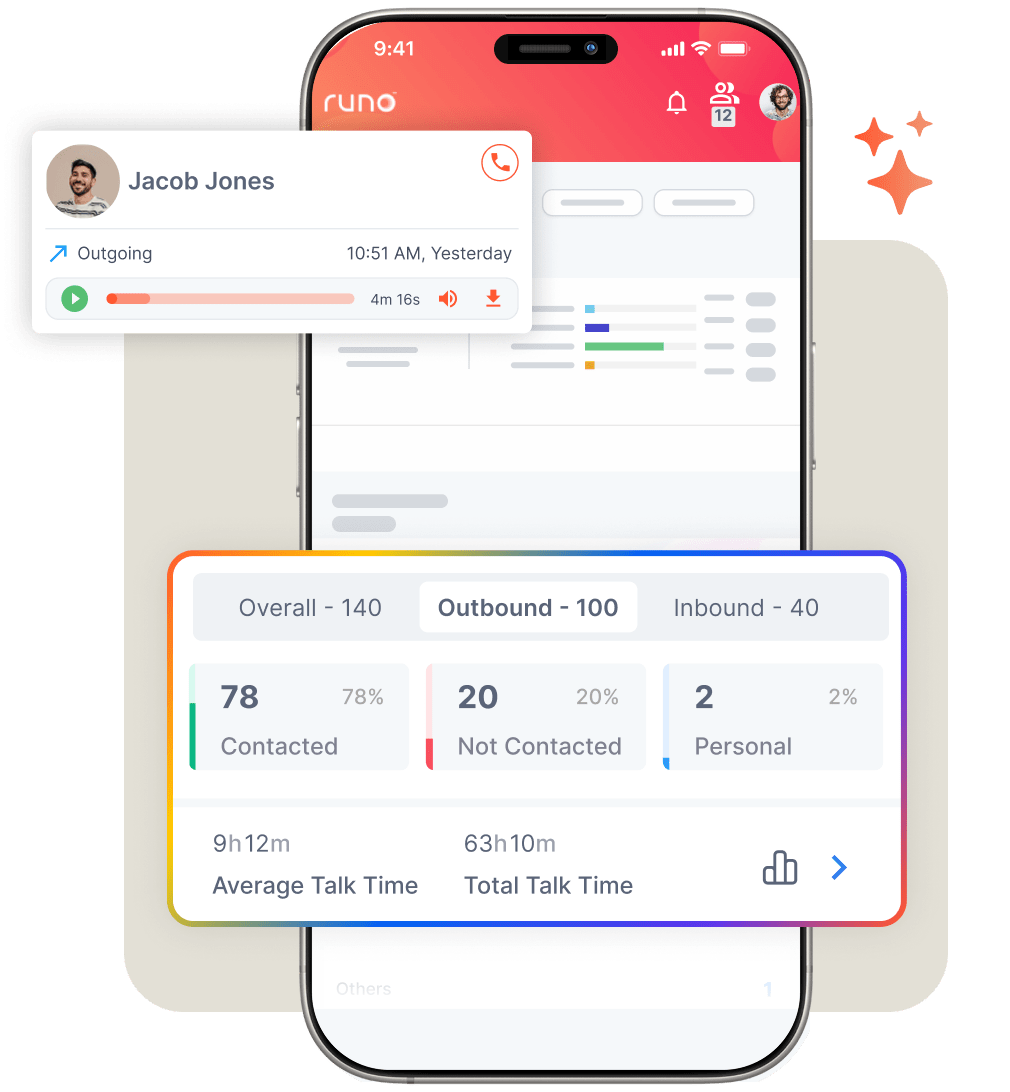
Customers of Runo have doubled their conversion in less than 30 days. Furthermore, customers have also enjoyed more than a 78% contact ratio with potential leads this is thanks to using a SIM number for calling instead of a landline number.
Empower your business with Runo’s comprehensive features and take your telemarketing efforts to new heights.
Conclusion
Mastering the art of timing, implementing effective strategies, and leveraging advanced tools can significantly enhance your telemarketing efforts. By identifying the best days and times for cold calling, utilizing effective techniques, and optimizing your contact ratios, you can boost your overall telemarketing success.
You can try out the Runo CRM app for free.
Frequently Asked Questions
What is a cold call vs. a sales call?
A cold call refers to an unsolicited phone call made to a potential customer who has no prior relationship with the caller. The purpose is to introduce a product or service and generate interest. On the other hand, a sales call is a conversation between a salesperson and a potential customer with the intention of closing a sale or advancing the sales process.
What is the best way to cold call for sales?
The best way to cold call for sales is to prepare adequately beforehand. Research and understand your target audience, customize your pitch to address their specific pain points, and be confident and professional during the call. It’s also important to actively listen, build rapport, and follow up appropriately.
What skills are required for cold calling?
Effective cold calling requires several skills. These include strong communication and interpersonal skills, active listening, empathy, persuasive ability, objection handling, and the ability to think on your feet. It’s also important to have a positive attitude, resilience, and the ability to adapt to different situations.
Why is cold calling a good skill?
Cold calling is considered a valuable skill because it allows salespeople to proactively reach out to potential customers and generate leads. It helps to build a pipeline of opportunities, develop communication and sales techniques, and gain firsthand market insights. Cold calling can also contribute to personal growth, self-motivation, and the ability to handle rejection.