

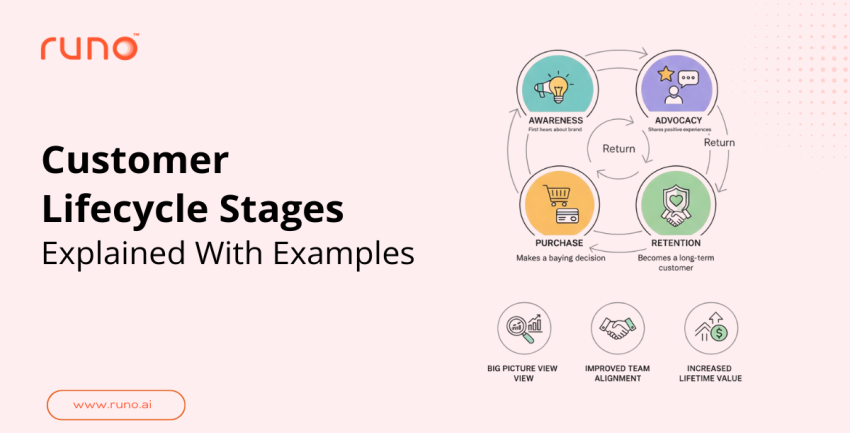
Customer lifecycle stages are the distinct phases a customer moves through in their relationship with your business from initial awareness and acquisition to retention, loyalty, and advocacy enabling teams to deliver the right message at the right time.
The customer lifecycle explains how a person goes from first hearing about your brand to becoming a long-term customer. It shows the full journey: awareness, purchase, stay, and return.
In simple terms, it maps the steps customers take as they move through your sales funnel and experience your brand. This view helps marketing, sales, and support teams see the big picture rather than individual actions.
Why does this matter?
Because when you understand where a customer is in their journey, you can respond better. You can share the right message. At the right time. In the right way.
The impact is measurable: acquiring a new customer costs 5-25 times more than retaining an existing one (Harvard Business Review), and increasing customer retention by just 5% can boost profits by 25% to 95% (Bain & Company). Companies that excel at customer lifecycle management see higher customer lifetime value, lower churn, and stronger word-of-mouth growth.
Most customers follow similar patterns when choosing a product or service. They research. They compare. They decide. They stayor leave.
Instead of leaving this to chance, businesses can guide the journey intentionally. This doesn’t mean pushing people to buy. It means offering useful content, timely follow-ups, and helpful support based on what the customer actually needs at that stage.
When you do this well, customers feel understood, not sold to. Trust builds naturally. So does loyalty.
Understanding the stages of the customer relationship lifecycle helps teams spot gaps, improve experiences, and create long-term value. To understand how tools support different lifecycle stages, read: CRM vs Lead Management : Which One is Right for Your Business?
Overview of Customer Relationship Lifecycle Stages
In simple terms, the customer relationship lifecycle shows how your relationship with a customer begins, grows, and continues over time. It is not a straight line. It is circular. The goal is not just to make a sale, but to build loyalty and long-term relationships.
This lifecycle covers both customer acquisition and retention. Since keeping an existing customer takes far less effort than finding a new one, each stage matters.
Here’s a quick look at the five key stages of the customer relationship lifecycle:
Reach
This is the awareness stage. Prospects discover your brand through ads, search, social media, referrals, or outreach. The goal is simpleget noticed.
Acquisition
Here, prospects engage with you. They share their needs, and you show how your product or service fits. Good service and clear communication help turn interest into a sale.
Nurture
At this stage, customers start using your offering. You build trust by meeting both explicit and implicit needs and delivering a seamless experience.
Retention
This is about keeping customers happy. Regular check-ins, support, feedback, and value updates help customers stay longer and grow with your business.
Advocacy
Satisfied customers become promoters. They recommend your brand to others, helping you grow through trust and word of mouth.
How AI and Automation Transform Customer Lifecycle Management
Artificial intelligence and marketing automation are redefining how businesses manage the customer lifecycle. Instead of manual segmentation and one-size-fits-all campaigns, AI enables real-time personalization, predictive analytics, and autonomous decision-making at scale.
Predictive Lead Scoring
AI analyzes historical data to predict which leads are most likely to convert, allowing sales teams to prioritize high-value prospects.
Example: A B2B SaaS company uses machine learning to score leads based on firmographics, website behavior, and engagement history, increasing sales team efficiency by 35%.
Personalized Content Recommendations
AI-driven platforms deliver tailored content (blog posts, case studies, product demos) based on a prospect’s industry, role, and stage in the lifecycle.
Example: An e-commerce platform uses AI to recommend relevant product guides and tutorials to new users, boosting activation rates by 20%.
Automated Retention Campaigns
Marketing automation triggers personalized email sequences, in-app messages, and SMS based on customer behavior (e.g., low product usage, approaching renewal date).
Example: A subscription software company automatically sends re-engagement emails to users who haven’t logged in for 14 days, reducing churn by 15%.
Chatbots and Conversational AI
AI-powered chatbots provide instant support, answer FAQs, and guide prospects through the buyer’s journey 24/7.
Example: A financial services firm deploys a chatbot that qualifies leads, books demos, and answers product questions, handling 60% of initial inquiries without human intervention.
Sentiment Analysis and Customer Health Monitoring
AI analyzes customer interactions (support tickets, emails, social media) to detect dissatisfaction early and trigger proactive outreach.
Example: A cloud telephony provider uses sentiment analysis to identify at-risk accounts and assigns a customer success manager before churn occurs.
By integrating AI and automation into your customer lifecycle strategy, you can deliver hyper-personalized experiences, reduce manual workload, and improve retention and revenue at every stage.
B2B Customer Lifecycle Stages Explained (With Examples)
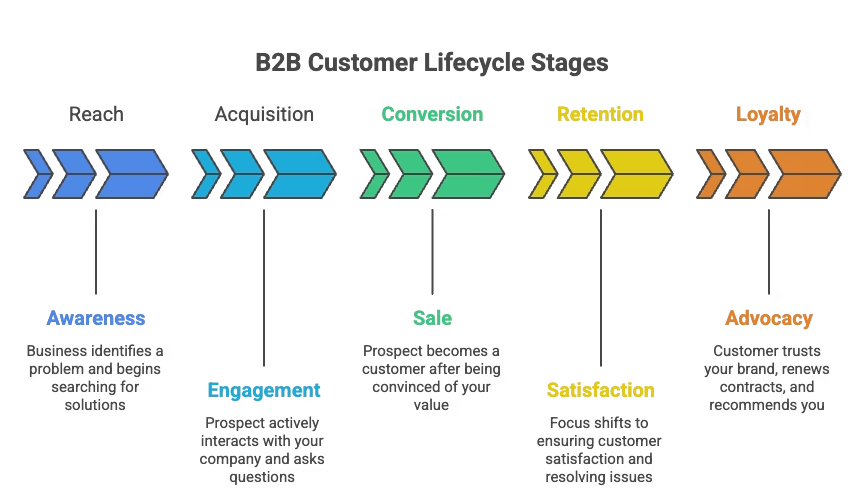
In B2B, customers move through clear stages before becoming long-term partners. Each stage needs a different approach. Here’s a simple breakdown with examples.
Stage 1: Reach
This is the awareness stage. A business realises it has a problem and begins seeking solutions. They search on Google, read blogs, compare vendors, or see LinkedIn ads.
To explore tools that help you attract and engage new leads, see 10 Best Lead Generation Tools for Business Growth .
Example: A finance company searches for a cloud telephony solution and finds your blog through SEO or an ad.
Success at this stage means the prospect shows interest by visiting your site or requesting more information.
Stage 2: Acquisition
Now the prospect actively engages with you. They visit your website, fill out a form, or call your sales team. They ask questions about pricing, features, or use cases.
Example: The same finance company books a demo or calls your sales team to understand how your product works. Clear answers, fast responses, and helpful content matter here.
Stage 3: Conversion
This is when the prospect becomes a customer. They are convinced by the value, pricing, and experience you provide. The deal is closed, and onboarding begins.
Example: The finance company signs up for your software after a successful demo and proposal.
Stage 4: Retention
After the sale, the focus shifts to ensuring customer satisfaction. You check in regularly, resolve issues, and help them get more value from the product.
Example: Your team follows up to ensure the finance company is using the software effectively and resolves support queries quickly.
Stage 5: Loyalty
At this stage, customers trust your brand. They renew contracts, upgrade plans, and recommend you to others. To learn more about strategies to build loyalty, see our guide on customer retention best practices.
Example: The finance company upgrades to a higher plan and refers another business to you.
Mapping the Customer Lifecycle to Sales and Marketing Teams
Every customer moves through clear stages before they buy, stay, or recommend a brand. Mapping these stages helps sales and marketing teams know who does whatand when. The goal is a smooth, consistent experience from first touch to long-term loyalty.
Here’s how teams should align at each stage.
Awareness: Discovering the Brand
This is the first touchpoint. The customer sees your brand through ads, search, social media, or referrals. They are not ready to buy yet.
Marketing leads here.
- Create helpful, easy-to-find content
- Run ads and SEO to increase visibility
- Use social proof to build trust
Sales supported by:
- Sharing market insights
- Identifying channels that bring quality leads
Consideration: Researching Options
Now the customer compares solutions. They read reviews, check pricing, and explore competitors.
Marketing focuses on:
- Case studies, FAQs, testimonials
- Clear value propositions
- Consistent messaging across channels
Sales steps in by:
- Answering questions
- Clarifying use cases
- Personalizing conversations
Decision: Making the Purchase
The customer is close to buying. Small issues can cause drop-offs.
Sales takes ownership.
- Keep pricing transparent
- Respond fast to last-minute doubts
- Simplify the buying process
Marketing helps by:
- Reinforcing trust with proof points
- Supporting with comparison content
Retention: Keeping Customers Engaged
The sale is done, but the journey continues.
Sales and customer success collaborate to:
- Check in regularly
- Resolve issues quickly
- Share updates and best practices
Marketing supports with:
- Educational content
- Product updates
- Engagement campaigns
Advocacy: Turning customers into promoters
Happy customers bring growth.
Sales encouragement:
- Renewals and upgrades
- Referrals and testimonials
Marketing amplifies:
- Customer stories
- Reviews and referrals
- Community engagement
When sales and marketing align across these stages, the customer experience improvesand so do conversions, retention, and growth.
For deeper insight into how analytics can improve team performance across different customer lifecycle stages, explore the types of call centre analytics used in modern contact centres.
The Role of CRM in Managing the Customer Life Cycle
A customer life cycle in CRM (Customer Relationship Management) system provides the data foundation and automation needed to execute lifecycle strategies at scale. Modern CRM platforms track every customer interaction – emails, calls, meetings, purchases and segment customers by lifecycle stage automatically.
Key CRM capabilities for lifecycle management:
- Centralized Customer Data: Unify contact information, engagement history, and transaction data in one place.
- Automated Segmentation: Tag customers by lifecycle stage (lead, active customer, at-risk, advocate) based on behavior.
- Triggered Workflows: Send personalized emails, assign tasks to sales reps, or alert customer success teams when a customer enters a new stage.
- Reporting & Analytics: Track conversion rates, churn, and CLV by stage to identify bottlenecks.
Example: A B2B software company uses its CRM to automatically assign new leads to sales reps, trigger onboarding email sequences after purchase, and flag accounts with low product usage for proactive outreach ensuring no customer falls through the cracks.
By integrating your customer life cycle in CRM, you ensure that every team marketing, sales, and customer success has real-time visibility into where each customer stands and what action to take next.
Common Mistakes Businesses Make Across the Customer Lifecycle
Many businesses invest time in mapping the customer lifecycle, but small mistakes can reduce its impact. Here are some common errorsand why they matter.
No Clear Goal for the Customer Journey
A customer journey without a goal has no direction.
Many teams start mapping without deciding what success looks like. Is the goal more leads? Better retention? Higher conversions?
Setting a clear, measurable goal helps guide every step. It also makes it easier to track progress and improve over time.
Not Defining the Audience Clearly
Trying to speak to everyone often means connecting with no one. Customers want personalised experiences, not generic messages. Different audiences have different needs, behaviours, and channel preferences.
If you don’t define who you’re targetingand where they are in the customer lifecycleyour messaging will miss the mark.
Missing Important Data Points
Limited data leads to weak personalisation. Relying solely on basic details like email addresses isn’t sufficient. Information such as location, past purchases, or engagement history adds context.
Without these insights, customer interactions feel disconnected and impersonal.
No Clear Content Strategy
Content plays a key role at every lifecycle stage. Many businesses lack the right content for the right moment. Some content educates. Some build trust. Some drives action.
Without a content plan, messages feel random and fail to move customers forward.
Using the Wrong Communication Channels
Customers should be reached where they already are. Email may work for some. Others respond better to calls, SMS, or in-app messages. Many customers switch channels mid-journey.
Ignoring channel preferences breaks the experience and slows conversions. Avoiding these mistakes helps create a smoother customer lifecycleone that builds trust, drives action, and supports long-term relationships.
How Runo Supports Every Stage of the Customer Lifecycle
Runo helps sales teams stay effective at every stage of the customer lifecyclefrom first contact to long-term relationships. It focuses on what matters most: conversations, follow-ups, and visibility.
Reach & Engagement: Higher Call Connections
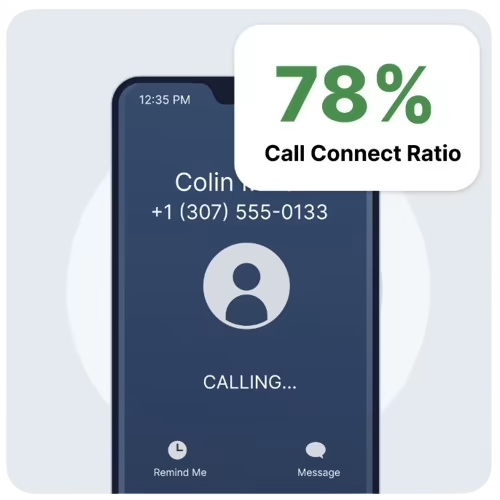
Runo delivers a 78% call connect rate using SIM-based calls over real mobile networks. Calls come from genuine mobile numbers, so prospects are more likely to answer. This leads to more real conversations and stronger first impressions.
Acquisition & Conversion: Smarter Calls, Better Outcomes
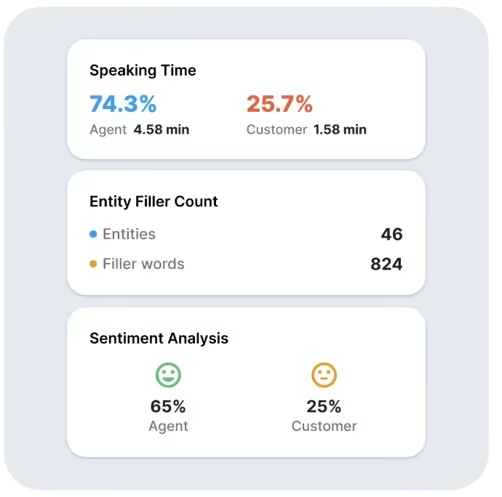
Runo’s AI call scoring reviews every call automatically. It analyses tone, intent, and outcomes, helping managers coach their reps more effectively. Sales teams quickly learn what works and close deals faster.
Engagement & Retention: Never Miss a Follow-up
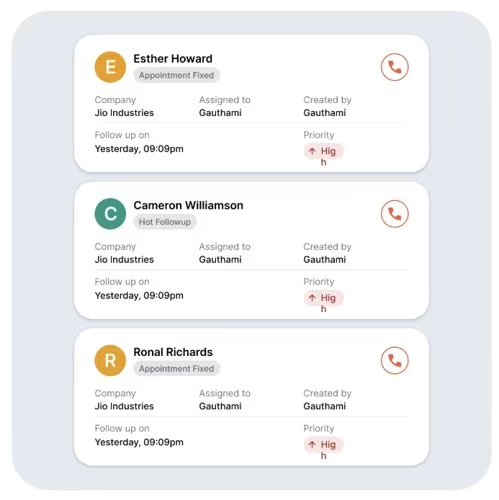
Runo’s smart follow-up reminders alert reps exactly when to reconnect. No leads are forgotten. Conversations stay warm. Pipelines stay active.
Retention & Expansion: Full Visibility, Real-Time
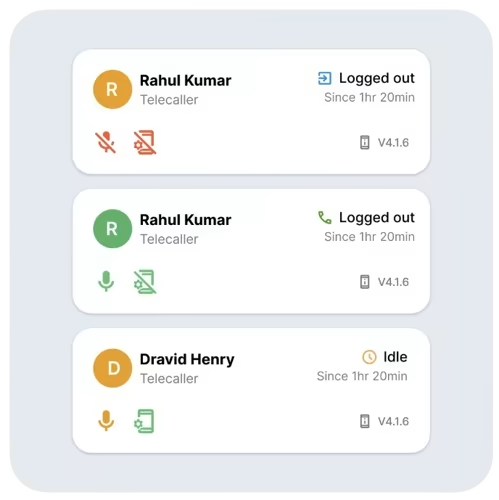
With live tracking, managers can see call activity and response times in real time. They can step in early, support reps, and keep performance on track.
Across all Stages, CRM Teams Actually Use
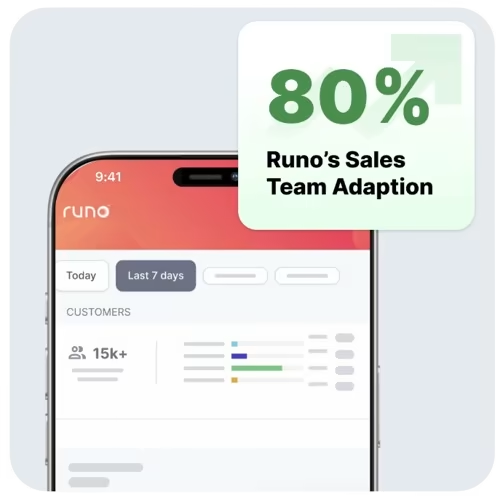
Runo combines calling and CRM in one simple tool. Reps log activity naturally, data stays up to date, and the customer lifecycle stays organisedwithout extra effort.
FAQs
What is the customer lifecycle?
The customer lifecycle describes the stages a customer goes throughfrom discovering a brand to becoming a loyal advocate.
Are customer lifecycle stages the same for B2B and B2C?
The stages are similar, but B2B cycles are usually longer and involve multiple decision-makers.
Why are customer lifecycle stages important?
They help teams deliver the right message at the right time, improving conversions and retention.
How is a customer lifecycle different from a sales funnel?
A sales funnel focuses on conversion, while the customer lifecycle includes post-sale retention and loyalty.
Can tools like Runo support the customer lifecycle?
Yes. Tools like Runo help manage calls, follow-ups, and visibility across all lifecycle stages.