

Customer sentiment analysis is the process of understanding how customers feel about your brand. It analyses the words customers use and determines whether their experience is positive, negative, or neutral.
In simple terms, it answers one question: What are customers really feeling right now?
Businesses use automation and AI to scan large volumes of customer feedback. This includes survey responses, social media comments, emails, chat messages, and even phone conversations. The system reads the language customers use and tags it as positive, negative, or neutral.
What is customer sentiment analysis used for?
In customer support, sentiment analysis helps route tickets to the right agents. An angry or frustrated customer can be flagged immediately, enabling faster issue resolution. Over time, teams can also identify patterns, what problems recur most often and which interactions lead to dissatisfaction.
At its core, customer sentiment is a key metric. It shows how customers think and feel about your brand. Even though it seems simple, it directly impacts retention and revenue.
There’s also a human side to this. Poor experiences don’t just hurt business metrics. According to studies, many customers say a bad interaction can ruin their entire day. That’s why customer feedback analysis and real-time sentiment analysis are not just tools for growth, but tools for better, more responsible customer experiences.
What Is the Fundamental Purpose of Sentiment Analysis?
The main purpose of sentiment analysis is simple. It helps businesses understand how customers feel.
When you understand what customers think and feel, you gain a clearer view of customer satisfaction. You can see what’s working well and where things need to improve.
Sentiment analysis also helps teams act in the moment. For example, if a chatbot conversation starts to turn negative, sentiment analysis can flag it immediately. The conversation can then be transferred to a trained support agent who can de-escalate the situation.
Beyond quick fixes, customer sentiment analysis supports long-term improvements. It helps businesses:
- Reduce customer churn by identifying dissatisfaction early
- Spot drops in satisfaction after support calls or chats
- Retrain teams when interactions aren’t meeting expectations
- Improve products and services using real customer feedback
Understanding the different roles of tools can enhance your sentiment strategy. Check out CRM vs. Lead Management : Which One Is Right for Your Business? to choose the right stack.
How Customer Sentiment Analysis Works
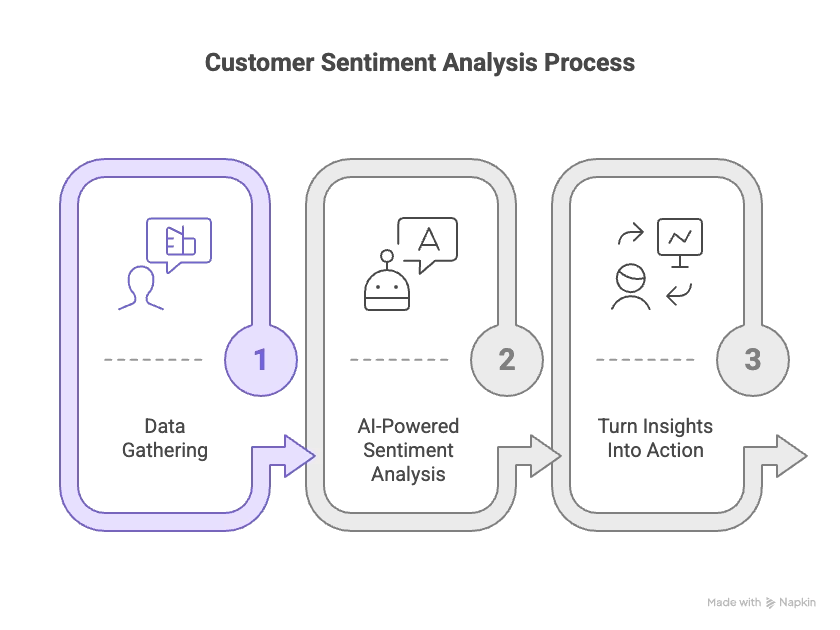
Now that we understand why customer sentiment matters, let’s look at how customer sentiment analysis actually works. The process is simple and typically follows three clear steps.
Data Gathering
Everything starts with customer feedback.
Businesses collect feedback from multiple places, such as:
- Social media comments
- Online reviews
- Emails and chat conversations
- Support tickets and call notes
The goal is to gather feedback across multiple channels to get a complete picture. The more varied the sources, the better your customer feedback analysis will be.
AI-Powered Sentiment Analysis
Once the data is collected, AI tools step in.
These tools use machine learning and language models to read large volumes of text. They scan words, phrases, and tone to identify whether the sentiment is positive, negative, or neutral. This is the core of customer sentiment analysis.
The system also groups feedback into themes. For example, delivery issues, pricing concerns, or support experience. Sentiment is then measured for each theme, so teams know exactly what customers feel about specific areas.
Turn Insights Into Action
Insights matter only when you act on them.
After analysing sentiment, businesses use the findings to:
- Improve products or features
- Fix recurring support issues
- Train teams based on customer reactions
- Adjust messaging or processes
Types of Customer Sentiment Analysis
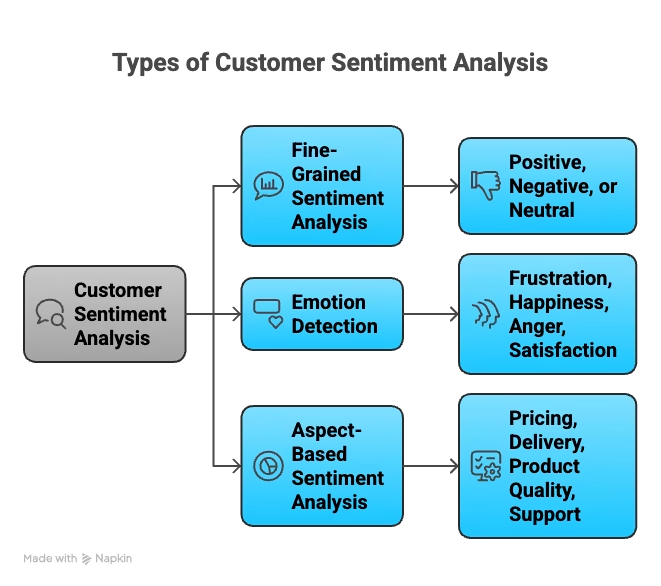
Fine-Grained Sentiment Analysis
This is the most common approach.
Fine-grained analysis checks the polarity of customer feedback. It tells you whether a comment, message, or review is positive, negative, or neutral. It’s useful when you want a quick, high-level view of how customers feel.
Emotion Detection
Emotion detection goes a step further.
Instead of simply tagging feedback as positive or negative, it identifies the underlying emotion. This could be frustration, happiness, anger, or satisfaction. Machine learning models analyse tone and language to understand how intense the feeling is.
This is especially helpful in customer support conversations where emotions can change quickly.
Aspect-Based Sentiment Analysis
Aspect sentiment analysis analyses specific aspects of customer feedback.
It breaks text into topics or aspects, such as pricing, delivery, product quality, or support. Sentiment is then measured for each aspect separately.
For a deeper look at other insights you can unlock beyond sentiment, read Types of Call Centre Analytics Used in Modern Contact Centres to expand your analytics strategy.
Benefits of Customer Sentiment Analysis
Simplifies Customer Needs and Expectations
Understanding customer needs can feel confusing. Sentiment analysis makes it clearer.
By analysing feedback, reviews, and support conversations, sentiment tools identify patterns in customer sentiment. These patterns reveal what customers care about most. Instead of guessing, businesses get clear signals about expectations and priorities.
This helps teams align products and services with real customer needs-and even go beyond them.
Helps Support Teams Perform Better
Every customer interaction carries emotion.
Customer sentiment analysis gives support teams context. They can see whether a customer is frustrated, satisfied, or neutral before responding. This helps agents choose the right tone and approach.
With real-time sentiment analysis, managers can also spot recurring issues or skill gaps early.
Pairing sentiment insights with the right toolstack can yield even better conversions. Explore our Best CRM for Lead Management to increase conversions.
Guides Improvements for Products and Services
Customers constantly share what works and what doesn’t-often without saying it directly.
Sentiment analysis highlights these signals. If customers show frustration around a feature or process, teams can act on it. For example, repeated negative sentiment about a checkout flow indicates where to focus improvements.
Customer Sentiment Analysis Examples (Sales & Support)
Sales Examples
Identifying win or loss Reasons
Sales teams analyse call recordings and transcripts to spot patterns. Positive phrases like “loved the demo” or “great value” often appear in closed deals. Negative phrases such as “too expensive” or “competitor seems better” often appear in lost opportunities. This helps teams understand why deals move forward-or don’t.
Improving Product-Market fit
By reviewing sentiment from sales calls, teams can identify which features prospects respond to positively and where frustration arises. Repeated comments about pricing or missing features help refine sales messaging and guide product decisions.
Sales Enablement and Training
Positive call snippets are used to train new reps on what works. Calls with negative sentiment highlight gaps in objection handling or pitching. This makes coaching more practical and focused.
Support Examples
Real-Time Escalation
When real-time sentiment analysis detects strong frustration in a chat or call, the system alerts a supervisor. This allows quick intervention before the situation escalates or leads to churn.
Issue Prioritization
If a large percentage of negative sentiment points to one recurring issue, support teams can prioritise fixing it. They can also inform affected customers early, reducing complaints.
Smarter Chatbot Responses
When a chatbot detects frustration, it can switch from automated replies to offering a live agent or responding with empathy. This improves the support experience.
Churn Prediction
Ongoing negative sentiment around billing or unresolved issues can flag customers at risk of leaving. Customer success teams can step in early to retain them.
How Runo Enables Real-Time Customer Sentiment Analysis
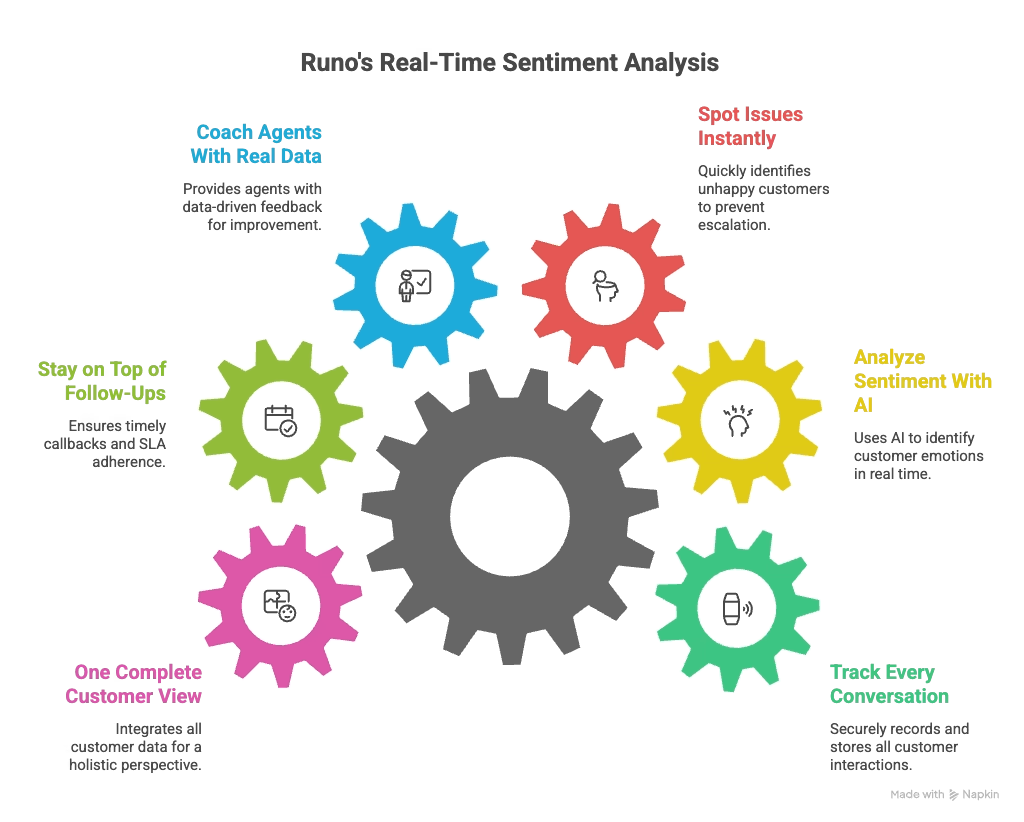
Runo makes real-time customer sentiment analysis practical and actionable. It helps teams understand customer emotions in real time, not days later.
Track Every Conversation
Runo monitors live calls and automatically records all inbound and outbound conversations. Every interaction is stored securely, making it easy to review calls and stay compliant.
Analyse Sentiment With AI
Runo uses AI to analyse calls in real time. It identifies tone, intent, and emotional cues to detect whether a customer is calm, satisfied, or frustrated. This turns raw conversations into clear sentiment insights-without manual effort.
Spot Issues Instantly
With built-in AI sentiment analysis, supervisors can quickly spot unhappy customers. If frustration rises during a call, teams can step in early and prevent escalation or churn.
Coach Agents With Real Data
Managers can replay calls, view AI-generated summaries, and use sentiment scores to coach agents. This helps fix gaps, improve communication skills, and boost conversions.
Stay on Top of Follow-Ups
Smart follow-up reminders ensure no callback or SLA is missed. Customers feel heard, and conversations continue smoothly.
One Complete Customer View
Runo’s interaction timeline brings together calls, notes, and CRM data in one place. Real-time dashboards show agent activity, performance, and sentiment trends
FAQs
Can small businesses use customer sentiment analysis effectively?
Yes. Even small teams can use sentiment insights to improve conversations, prioritise issues, and deliver better customer experiences without large resources.
Is customer sentiment analysis only useful for support teams?
No. Sales, marketing, and customer success teams also use sentiment analysis to improve pitches, messaging, and retention efforts.
How often should sentiment data be reviewed?
Sentiment should be reviewed regularly, especially during high-volume interactions, to catch issues early and track changes over time.
Does sentiment analysis work for multiple languages?
Many modern sentiment tools support multiple languages, though accuracy may vary depending on data quality and training.
Can customer sentiment analysis be automated completely?
Automation handles most of the work, but human review is still important for context, judgment, and complex situations.