

Sales teams are the foot soldiers of any company’s revenue generation efforts. And calls are one of the main tools that teams use to sell products and services. A sim based call management crm combines mobile calling with customer relationship management, giving sales teams a powerful advantage. This makes telecalling apps critical to sales teams’ operational strategy, including lead management through enhanced calling solutions.
A sales team armed with advanced telecalling CRMs and equipped with robust call management solutions. They possess the tools to streamline operations, optimize customer interactions, and propel revenue growth. As we embark on this journey, we will unlock the transformative benefits of these technologies. Empowering you to take your sales strategies to new heights.
Why is outbound calling important?
Outbound calls mean the proactive action of businesses or sales representatives. Initiating direct communication with prospects or customers. By making phone calls to promote products, and services, or engage in sales-related conversations.
Outbound call holds importance for businesses as it facilitates direct and personalized communication with prospects and customers. By engaging in one-on-one conversations, companies can tailor their approach, address specific needs, and build trust and rapport.
Immediate feedback received through outbound calling allows for prompt objection handling and clarifying doubts. Research shows that personalized sales conversations increase conversion rates by up to 20% compared to automated or impersonal outreach. Increasing the chances of converting leads into customers. Moreover, regular outbound calls help in nurturing relationships, fostering customer loyalty, and driving repeat sales and referrals.
The human touch of outbound calling establishes a personal connection, leading to higher conversion rates and long-term customer relationships. For more on optimizing your calling strategy, see our guide on top AI features every call CRM needs.
Why do companies make outbound calls?
Firstly, outbound calls allow companies to take a proactive approach to sales. By reaching out directly to potential customers, companies can actively promote their products or services. Also, communicate their unique value proposition, and generate new leads. Outbound calls provide an opportunity to engage in real-time conversations, build rapport, and establish a personal connection.
Secondly, outbound calls are a powerful tool for lead generation and conversion. Companies can initiate conversations with prospects, qualify leads, and gather valuable information about their needs and preferences. Firstly by addressing queries and providing relevant information, outbound calls help in nurturing leads. And secondly, guiding them through the sales funnel, ultimately increasing the chances of conversion.
Furthermore, outbound calls play a crucial role in customer retention and upselling. By reaching out to existing customers, companies can strengthen relationships, address concerns, and offer additional products or services that align with their needs. This personalized approach enhances customer loyalty and presents opportunities for upselling and cross-selling.
Outbound Calling Benefits for Sales Teams
Higher Conversion Rates
Outbound calling has been shown to have higher conversion rates compared to other marketing channels. The direct interaction with prospects allows for immediate engagement, personalized communication, and the ability to address objections or concerns in real time. This personal touch significantly increases the chances of converting leads into customers.
Targeted Reach
Outbound call enables businesses to target specific demographics or segments of their target market. By strategically selecting the contacts to reach out to, businesses can focus their efforts on the most promising leads, maximizing their chances of success.
Real-Time Lead Qualification
Through outbound calls, businesses can quickly qualify leads and assess their potential. By engaging in conversations, gathering information, and asking qualifying questions, companies can determine the level of interest, identify decision-makers, and prioritize their follow-up efforts accordingly.
Immediate Feedback and Market Insights
Sales representatives can gather information about customer preferences, pain points, and competitor activities. This real-time feedback helps businesses tailor their offerings, marketing messages, and overall sales strategies to better meet customer needs. Outbound calling provides businesses with immediate feedback and valuable market insights.
Enhanced Customer Engagement
By reaching out to customers directly, businesses can show genuine interest, provide personalized assistance, and nurture long-term relationships. This level of engagement fosters customer loyalty, repeat business, and positive word-of-mouth referrals.
What are Telemarketing CRMs or Call management solutions?
A sim based call management system is a software solution that uses mobile SIM cards to make, track, and manage business calls while integrating customer data into a CRM without requiring internet connectivity or cloud telephony infrastructure.
Call management refers to the systems and processes enterprises implement to manage inbound calls.Call management routes calls through phones by implementing a set of preset parameters, and the rules used vary based on the routing type used to direct a given call.
Most enterprises receive a higher volume of calls, making it infeasible to have a call agent review and log the call data. This is where the call management solution steps in to analyze and consolidate raw data such as the phone number and the caller’s location. Other data such as which sales agent closed the sale can also be logged depending on the features of the call management solution.

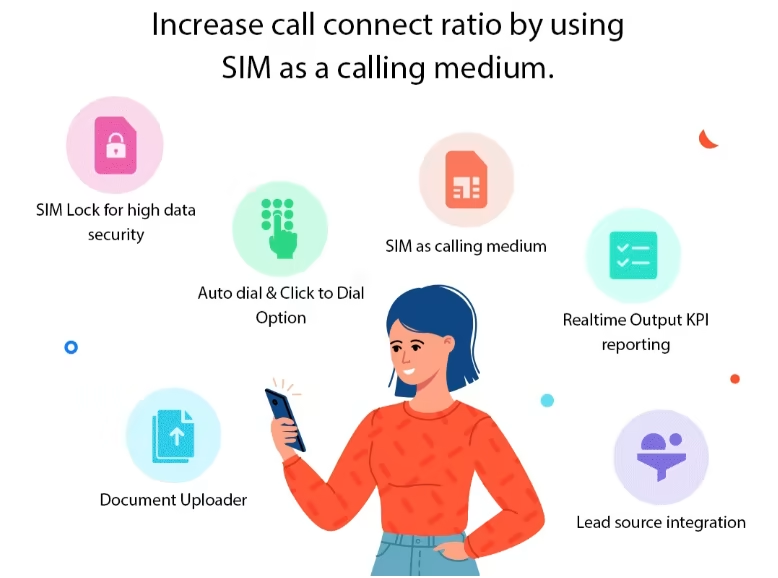
An essential feature of call management solutions is the auto dialer function that automatically dials phone numbers.
Types of SIM-Based Call Management Systems
SIM-based call management systems come in several configurations to suit different business needs:
Mobile-First CRM : Designed exclusively for SIM-based calling through smartphones. These systems prioritize simplicity, fast setup, and mobility. Ideal for small sales teams, field agents, and startups that need immediate deployment without IT infrastructure.
Hybrid Systems : Combine SIM-based mobile calling with optional cloud telephony features. Sales teams can switch between mobile SIM calls and VoIP depending on connectivity and use case. Best for mid-sized businesses that need flexibility across office and remote environments.
Enterprise SIM-Based Platforms : Integrate SIM-based calling with advanced workforce management, analytics, and multi-channel communication (email, SMS, WhatsApp). These systems support large telesales teams with hundreds of agents and require robust reporting, compliance tracking, and CRM integration.
How to Choose the Right SIM-Based Call Management CRM
Selecting the best sim based call management system for your sales team requires evaluating several key factors:
Team Size and Scalability : Small teams (1-10 agents) benefit from lightweight mobile apps with quick setup. Larger teams (50+ agents) need enterprise features like role-based permissions, team hierarchies, and advanced analytics.
Budget and Cost Structure : SIM-based systems eliminate VoIP infrastructure costs, but evaluate per-user pricing, call recording storage fees, and integration costs. Many providers offer tiered plans based on features and agent count.
CRM Integration Needs : Ensure the system integrates seamlessly with your existing CRM (Salesforce, HubSpot, Zoho, Pipedrive). Native integrations reduce manual data entry and ensure call logs, recordings, and customer data sync automatically.
Mobility and Internet Reliability : If your sales team works in areas with unreliable internet (rural territories, developing markets, field sales), SIM-based calling is essential. Evaluate whether the system works fully offline and syncs data when connectivity returns.
Compliance and Call Recording : For regulated industries (finance, healthcare, insurance), verify that the system supports call recording, consent management, and compliance with local telemarketing laws (TCPA in the US, GDPR in Europe).
Reporting and Analytics : Look for real-time dashboards showing call volume, connect rates, call duration, agent performance, and conversion metrics. AI-powered features like call summaries and sentiment analysis add significant value.
Real-World Use Cases for SIM-Based Call Management CRM
Field Sales Teams : A pharmaceutical sales company equipped 120 field reps with a SIM-based CRM app. Reps made calls during hospital visits and client meetings without needing Wi-Fi. Call logs synced automatically to the central CRM, and managers tracked daily call activity in real time. The company saw a 34% increase in daily call volume and a 22% improvement in contact ratio.
Insurance Agents : An insurance brokerage with 50 remote agents switched from a cloud-based dialer to a SIM-based system. Agents experienced frequent call drops and poor audio quality with VoIP. After moving to SIM-based calling, connect rates improved from 52% to 76%, and customer complaints about call quality dropped by 68%.
Real Estate Telesales : A real estate firm running outbound campaigns to promote new properties used a SIM-based auto dialer. The system displayed local mobile numbers, which prospects were more likely to answer than the firm’s previous toll-free numbers. The team’s appointment booking rate increased by 41% within two months.
How call management solutions can help?
A call management solution for an enterprise has various advantages, ranging from telemarketing to customer management with CRM. Here we will cover the most important benefits that can change the way a business operates.
Better customer service: By managing customer concerns and answering their inbound queries, the company will get a better reputation for customer service.
Optimize staffing levels efficiently: Call management solutions are great at collecting critical statistics to identify highs and lows in call volumes. This data can be used to forecast call volumes throughout a given period to ensure optimal staffing requirements throughout the year.
Track lost and abandoned calls: The call management solutions analyze the data collected to mitigate the impact of missing, lost, or abandoned calls by tracking the calls and connecting back with the customers. You can also ensure this by effective call routing.
Enhance performance management: When it comes to assessing employee performance of sales employees or call agents, recording and monitoring calls is an effective method to measure performance. This will help managers identify potential problems, address training requirements, and ensure that agents who perform well are rewarded.
Minimise overheads: With the enhancement of productivity and efficiency, business costs will inevitably go down. This is an advantage of adopting an efficient telemarketing system by reducing downtime for employees and boosting the productivity of the same sales and call agents during their uptime.
How SIM-Based Call Management CRM Can Boost Your Sales
Higher Contact Ratio
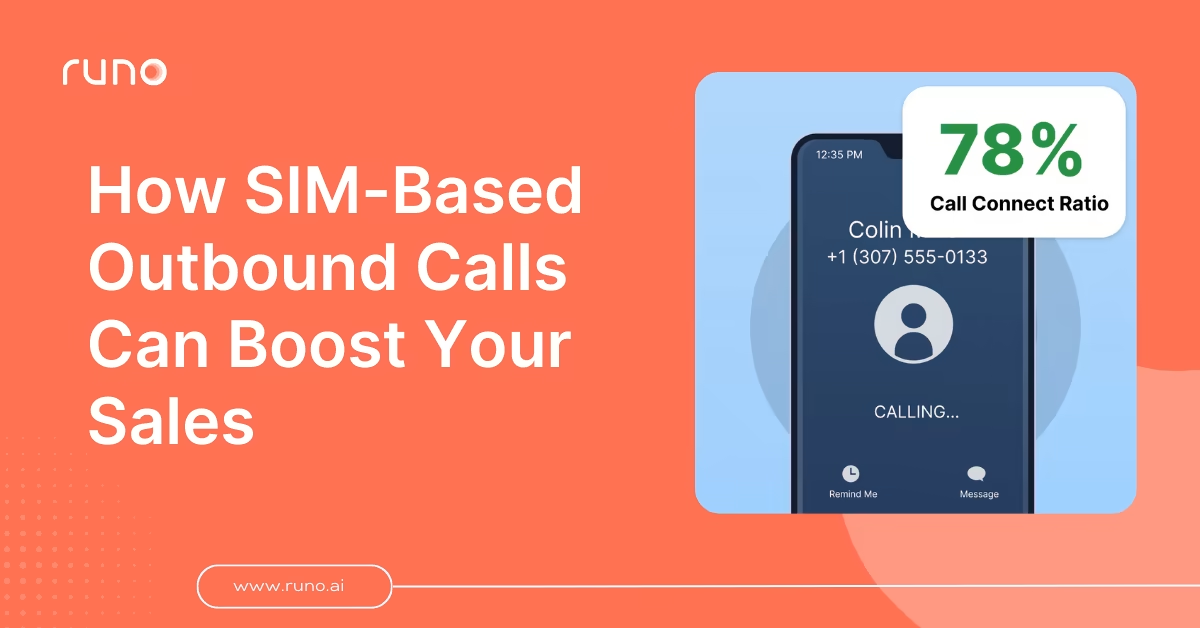
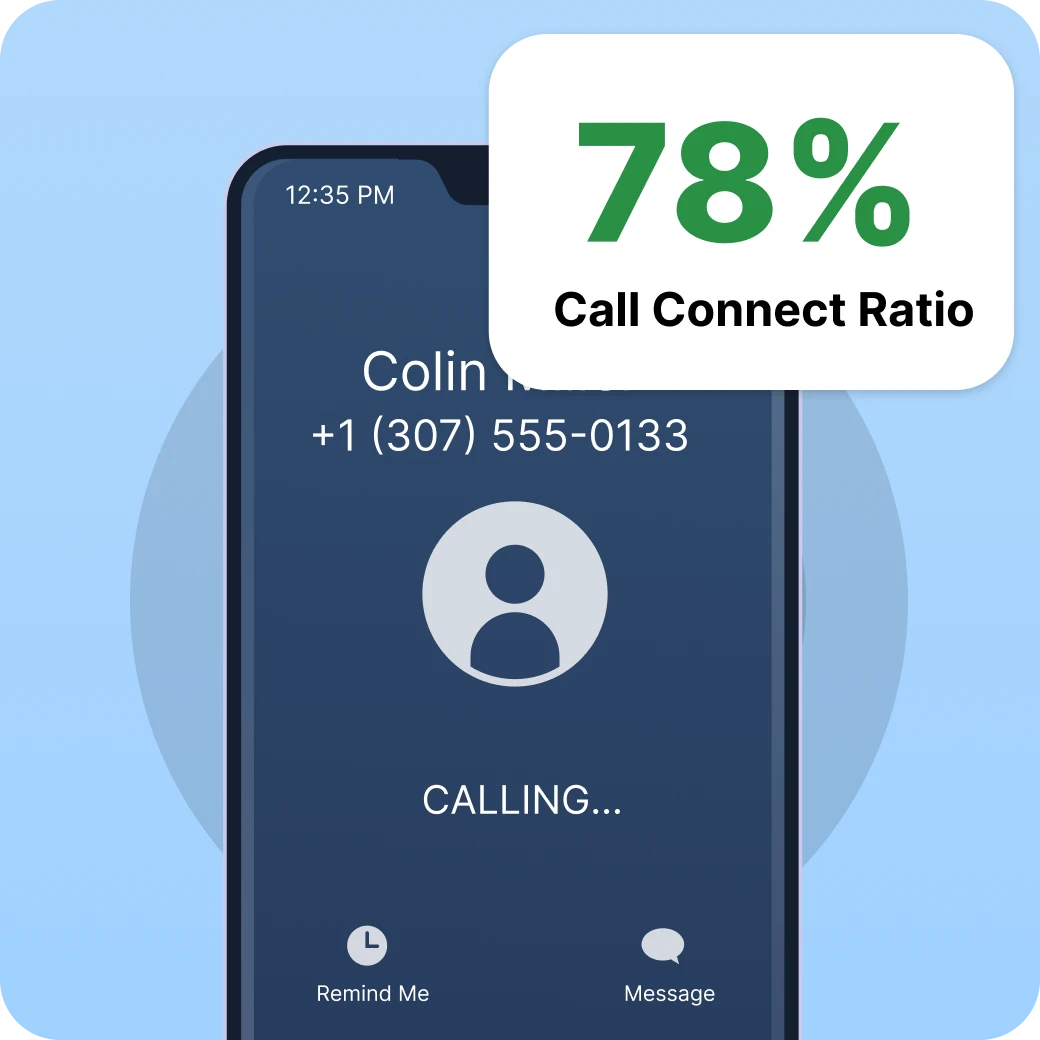
Compared to cloud calling, SIM-based outbound calling offers a distinct advantage in achieving a higher contact ratio up to 78% according to industry benchmarks for mobile-first calling systems. This is primarily due to the use of a regular mobile number for outbound calls. Unlike cloud calling, which often relies on landline numbers that people may ignore or disconnect, using a normal GSM SIM number helps establish an instant connection.
Prospects are more likely to answer calls from mobile numbers, increasing the chances of successful engagement and meaningful conversations. This higher contact ratio gives your sales team a competitive edge in reaching prospects and maximizing sales opportunities.
Easy Setup
Implementing a SIM-based outbound calling solution is typically straightforward and hassle-free. Since it relies on mobile devices and SIM cards, the setup process is often as simple as inserting the SIM card and configuring the necessary settings.
One just has to download a call management CRM app like Runo onto their phone and start making calls to potential customers. This ease of setup enables your sales team to quickly adopt the solution and start making calls without significant delays or complex technical requirements.
No Learning Curve
There is often little to no learning curve for your sales team, with a SIM-based outbound calling solution. Since they are already familiar with using mobile devices for calls, adapting to this technology requires minimal training.
This seamless transition allows your sales team to focus on what they do best: engaging with prospects, building relationships, and closing sales, without the need for extensive training on new call center software or platforms.
Cost-Effectiveness
SIM-based outbound calling solutions can offer cost-effective advantages compared to traditional telephony systems. By utilizing existing mobile devices and SIM cards, you can minimize additional hardware or infrastructure costs. Furthermore, depending on your mobile plan, SIM-based calling can often provide competitive calling rates, helping you manage and control communication expenses.
Flexibility and Mobility
With a SIM-based Call center solution, your sales team can enjoy enhanced flexibility and mobility. They can make calls from anywhere using their mobile devices, allowing them to stay connected and productive while on the go. This flexibility enables them to engage with prospects in a timely manner and seize sales opportunities without being tied down to a specific location.
Inbuilt CRM
SIM based call management apps also come with in-built CRM. This integrated CRM functionality streamlines your sales process by allowing your team to efficiently manage and track customer interactions, store contact details, and log call notes all within the same platform.
With the inbuilt CRM, your sales team can provide personalized experiences, track customer preferences, and effectively nurture relationships, leading to improved sales outcomes and enhanced customer satisfaction. Having an integrated CRM eliminates the need for separate software, improves productivity, and ensures that your team has access to vital customer information during outbound calls.
Runo Call Management Solution for SIM Based outbound calls.
When it comes to SIM-based call management solutions, Runo is the best call management solution. Runo has revolutionized how businesses handle calling, sales, collection, and telecalling through a cost-efficient application.
Runo’s sim based call management crm includes these key features to propel your business:
- Advanced Caller ID : An overlay window displays summarized customer details including integration disposition and notes before the call begins, giving agents a critical information advantage.
- Live Team Status : Managers can monitor real-time agent status (on-call, idle, login/logout) to provide immediate support and optimize team deployment.
- Call Recording : Listen to team call recordings made through mobile SIM, ensuring high call quality and enabling managers to provide timely, targeted feedback.
- Real-Time Performance Analytics : View workable input/output KPI reporting in real time to identify bottlenecks and drive higher calling efficiencies.
- Follow-Up/Callback Notifications : Automated reminders ensure sales teams never miss a follow-up, keeping every customer engagement on track.
- Interaction History at a Glance : Review a unified timeline of all calls, emails, and WhatsApp messages in one place, helping build a high contact ratio (calls made vs. calls answered).
- Easy Integration with Productivity Applications : Smart API integration connects email providers, Google Calendar, WhatsApp, and more, streamlining workflows.
- AI Call Summary : AI-generated summaries deliver key call takeaways instantly after each conversation, eliminating the need to replay recordings.
- Auto Lead Allocation : New leads are instantly routed to the right rep, reducing response time and preventing lead leakage.
Conclusion
A SIM-based outbound calling solution offers numerous advantages that can significantly boost sales efforts. With higher contact ratios, easy setup, reliable connectivity, and integrated CRM functionality, businesses can engage with prospects in a direct and personalized manner.
This leads to improved conversion rates, increased customer satisfaction, and enhanced relationship building. Additionally, cost-effectiveness, flexibility, and the ability to tap into upselling opportunities further enhance the value of this solution.
By embracing SIM-based outbound calling, businesses can unlock new sales opportunities, foster customer relationships, and drive business growth. You can try out Runo the best SIM Based Outbound Calling solution for free.
Frequently Asked Questions
How do you deal with outbound calls?
Dealing with outbound calls involves following a systematic approach. It includes identifying target audiences, preparing call scripts, training sales representatives, managing call lists, managing sales , making the calls, handling objections, and recording relevant information for future reference.
What is outbound vs outgoing calls?
Outbound calls and outgoing calls are often used interchangeably. They refer to calls made by a person or organization to external parties, such as prospects or customers. Outbound or outgoing calls are initiated by the caller, with the purpose of engaging in communication or conducting business.
What is the outbound process in a call center?
The outbound process in a call center involves making calls to potential or existing customers as part of sales, lead generation, or customer service activities. It includes activities like prospecting, making offers or promotions, conducting surveys, scheduling appointments, and following up on leads. The outbound process aims to proactively reach out to customers to achieve specific business goals.
Why should I use SIM-based outbound calls instead of cloud telephony?
Cloud telephony usually relies on PRI/SIP trunks and internet stability, which can lead to poor connection rates (often below 20%) and higher costs (around ₹2,000 per user/month). It also requires heavy capital investment and depends on external CRMs.
With SIM-based outbound calls, your team connects directly through mobile networks - giving more reliable reach, better caller IDs (real mobile numbers instead of random landline series), and higher productivity (contact ratios up to 78%). Plus, it’s far more cost-efficient at about ₹599 per user/month, with zero capital investment and built-in CRM capabilities.
Will SIM-based outbound calling improve my team’s sales conversions?
Yes, because higher call connect rates mean more real conversations. And more conversations usually translate to better chances of closing deals.