

Understanding why customers leave is the first step to preventing churn. Research shows that 89% of customers switch to a competitor after a poor customer experience. Additionally, 68% of customers leave because they believe a company doesn't care about them (source: Accenture Global Consumer Pulse Research) . Here are the most common reasons customers churn:
Customer churn is one of the biggest silent growth killers for any business. You work hard to acquire customers, but if they leave quickly, growth stalls. Understanding what drives churn and learning how to reduce customer churn can change everything. It helps you protect revenue, build stronger relationships, and grow sustainably. The good news is that churn is not random. It follows patterns you can track and fix. In this blog, we break down what customer churn really means, how to reduce customer churn rate, and which strategies actually work in real-world businesses.
What You'll Learn in This Guide
- What customer churn is and why it matters for business growth
- How to calculate customer churn rate using a simple formula
- The most common reasons customers leave (and how to fix them)
- 8+ proven strategies to reduce customer churn and improve retention
- How tools like Runo help businesses track, predict, and prevent churn
What Is Customer Churn?
Customer churn is the number of customers who stop doing business with a company over a given period. It is also known as attrition. In simple terms, it shows how many customers you lose.
So, what is customer churn really telling you? It reflects how satisfied your customers are. It also shows how loyal they feel toward your brand. When churn is high, it often means something is not working well.
Customer churn is measured as a rate. It is calculated by dividing the number of customers lost by the total number of customers at the start of a period. The result is shown as a percentage. This is called the churn rate.
Types of Customer Churn
Not all churn is the same. Understanding the different types helps you address each with the right strategy.
Voluntary Churn
Voluntary churn occurs when customers actively decide to cancel or stop using your product. Common causes include:
- Dissatisfaction with product features or performance
- Better pricing or features from a competitor
- Poor customer service or support
- Product no longer meets their needs
Voluntary churn is often preventable through better onboarding, proactive support, and regular engagement.
Involuntary Churn
Involuntary churn happens without the customer’s intent to leave. The most common causes are:
- Failed credit card payments
- Expired payment methods
- Billing errors or technical issues
Involuntary churn is easier to recover because the customer still wants your product. Automated dunning workflows and payment retry systems can reduce involuntary churn by 20-30%.
Revenue Churn vs. Customer Churn
Revenue churn measures the dollar value lost, while customer churn counts the number of customers lost. A business can have low customer churn but high revenue churn if high-value customers leave. Track both metrics for a complete picture.
Understanding churn is important for every business. High churn slows growth. It also increases costs, since getting new customers is more expensive than keeping existing ones.
How to Calculate Customer Churn Rate
To calculate customer churn rate, divide the number of customers lost during a period by the total customers at the start, then multiply by 100 to get a percentage.
To reduce customer churn, you first need to measure it. This is where the customer churn rate comes in. It tells you how many customers you lost over a specific period.
The basic idea is simple. You compare the number of customers who left with the number you had at the start. The result is shown as a percentage.
A lower churn rate usually means better customer loyalty. A higher rate is a warning sign. It shows that customers are leaving faster than expected.
Customer Churn Rate Formula
Customer Churn Rate (%) = (Customers Lost during the Period / Customers at the Start of the Period) x 100
How to Calculate Customer Churn Rate Step by Step
- First, choose a time period. This can be monthly, quarterly, or yearly.
- Next, count how many customers you had at the start of that period.
- Then, count how many of those customers stopped using your product or service during that time.
- Finally, divide the lost customers by the starting number and multiply by 100.
Example of Customer Churn Rate Calculation
Let’s say you start the month with 1,000 customers. During the month, 50 customers leave.
The calculation would be:
(50 / 1,000) x 100 = 5 percent monthly churn rate.
What Is a Good Customer Churn Rate?
A good churn rate depends on your industry and business model. Here are average benchmarks:
- SaaS (B2B): 5-7% annual churn (or ~0.5% monthly)
- SaaS (B2C): 5-10% monthly churn
- Ecommerce subscriptions: 5-15% monthly churn
- Telecom/Utilities: 1-2% monthly churn
- Media/Streaming: 5-7% monthly churn
- Professional services: 10-15% annual churn
(Source: Recurly Research )
If your churn rate is significantly higher than your industry average, it’s a signal to investigate and act quickly.
How to Predict Customer Churn Before It Happens
The best way to reduce churn is to catch it early. Predictive churn analysis helps you identify at-risk customers before they cancel.
Behavioral Signals That Predict Churn
Watch for these warning signs:
- Declining engagement: Login frequency drops by 50% or more
- Low feature adoption: Customer uses only basic features after 30+ days
- Support ticket spikes: Multiple unresolved issues in a short period
- Payment issues: Failed payments or repeated billing errors
- Negative sentiment: Complaints in support chats, emails, or surveys
These signals often appear 30-60 days before a customer churns.
Use Predictive Analytics and AI
Modern CRM and analytics tools use machine learning to score churn risk. They analyze:
- Usage patterns over time
- Support interaction history
- Payment behavior
- Engagement with emails and campaigns
AI-driven churn prediction can identify at-risk customers with 70-85% accuracy, giving your team time to intervene.
Create a Churn Risk Score
Assign each customer a churn risk score (low, medium, high) based on behavioral data. Prioritize outreach to high-risk accounts with personalized offers, check-ins, or dedicated support.
Common Reasons Why Customers Leave
Poor Customer Service
Poor customer service is one of the biggest reasons customers leave. Even a good product cannot make up for bad support. When a company does not deliver what it promises, trust breaks quickly.
Customers today expect fast responses. They also want to feel heard. They want real help, not scripted replies. A calm, human response makes a big difference.
When customers feel ignored, they do not just leave quietly. They often share negative reviews. This can stop new customers from choosing your brand. Improving service is one of the simplest ways to reduce customer churn rate.
Product or Service Does Not Meet Expectations
Customers leave when a product does not do what they expected. If it fails to solve their problem, they look for better options.
This often happens when expectations are set too high. Overpromising leads to disappointment. Honest communication matters here.
Businesses should clearly explain what their product can and cannot do. Real value builds trust. Regular feedback helps improve the product and keeps expectations realistic. This plays a big role in learning how to reduce customer churn.
Business Inconsistency
Consistency builds confidence. Inconsistency pushes customers away.
Customers get frustrated when rules change. This can happen with pricing, refunds, support, or delivery. When policies feel unfair or unclear, customers lose trust.
Even one bad experience can make a customer leave. In many cases, inconsistency is the reason.
Clear processes help avoid this. Teams should follow the same rules every time. Well-trained employees create a smooth, reliable experience. This is key to reducing customer churn in the long term.
Slow Response Time
Speed matters more than ever. Customers expect quick replies to their questions.
Slow responses create frustration. They also make customers feel unimportant. In many cases, customers leave before getting an answer.
Fast and accurate replies improve satisfaction. They also help customers make better decisions. Reducing wait times is a simple yet powerful strategy to reduce customer churn and keep customers engaged.
Strategies to Reduce Customer Churn
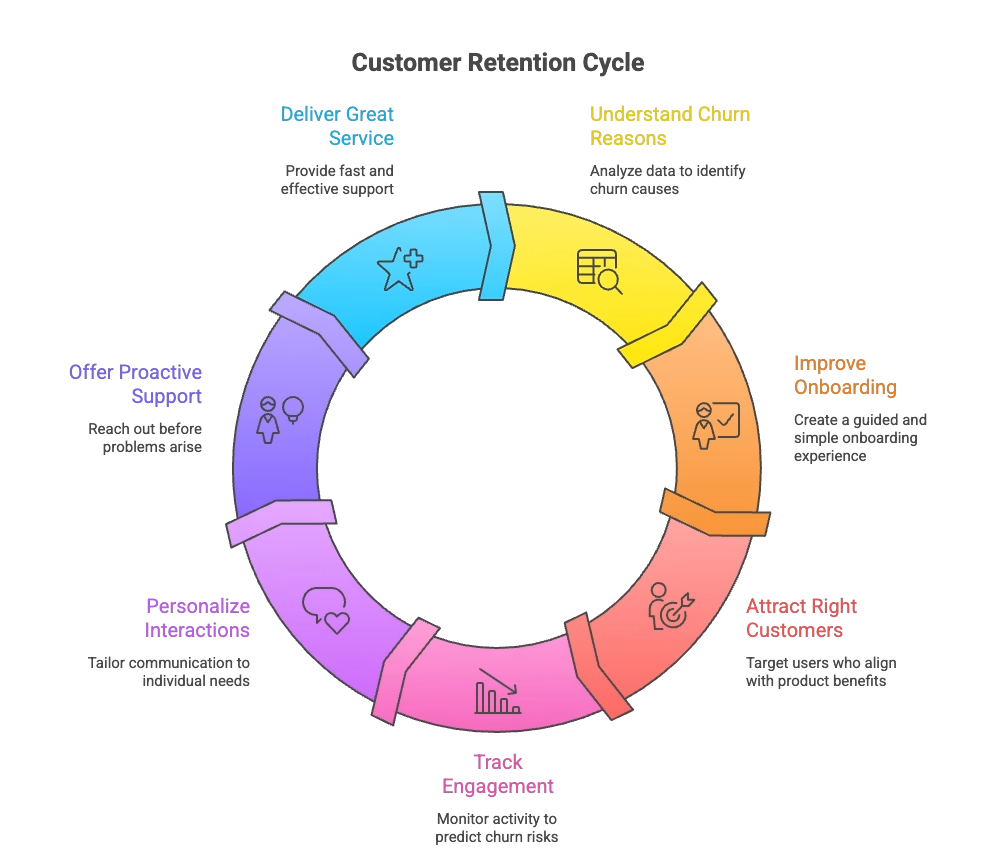
Start by Understanding Why Customers Leave
Before fixing churn, you need clarity. Look closely at when and why customers leave.
Study usage patterns. Review support tickets. Read customer feedback carefully. These signals help uncover the real reasons behind churn. Once you know the cause, it becomes easier to act. This step is the foundation for all strategies to reduce customer churn.
Make Onboarding Simple and Guided
The first experience matters the most. Poor onboarding leads to early exits.
Create a clear onboarding journey. Guide customers step by step. Show them how to get value quickly. Combine automation with human support where needed.
When users see results early, they are more likely to stay. Strong onboarding plays a major role in reducing customer churn rate.
Attract the Right Customers From the Start
Not every customer is a good fit. When expectations do not match reality, churn increases.
Be clear about who your product is for. Communicate benefits honestly. This helps attract users who truly need your solution.
Targeting the right audience reduces frustration and lowers churn over time.
Track Engagement and Spot Risks Early
Churn rarely happens overnight. There are warning signs.
Monitor customer activity regularly. Look for drops in usage or long periods of inactivity. Data and AI tools can help predict churn before it happens.
You can explore how this works in detail through different types of call centre analytics that help managers spot performance gaps and customer issues early.
Early action gives you time to respond. This is one of the smartest ways to proactively reduce customer churn.
Personalise Every Interaction
Customers want to feel recognised. Generic messages often get ignored.
Use customer data to personalise communication. Tailor messages, offers, and support based on behaviour and needs.
Personal experiences build trust. They also strengthen relationships, which helps reduce customer churn meaningfully.
Offer Proactive Support, Not Just Reactive Help
Do not wait for complaints. Reach out before problems grow.
Share helpful tips. Offer tutorials. Send reminders and updates at the right time.
Proactive support shows that you care. It reassures customers and keeps them engaged. Learn more about proactive customer service strategies to stay ahead of issues.
Deliver Consistently Great Customer Service
Fast and effective support builds confidence.
Focus on solving issues in the first interaction whenever possible. Be polite, patient, and clear.
Understanding key call patterns and performance metrics is crucial here, and this call centre analytics software can help teams improve first-call resolution.
Great service turns frustration into loyalty. It is one of the most reliable strategies to reduce customer churn.
How Runo Helps Businesses Reduce Customer Churn
Runo helps businesses stay connected, respond faster, and build trust at every customer touchpoint.
Here is how Runo supports your efforts to reduce customer churn.
SIM-Based Calling That Builds Trust
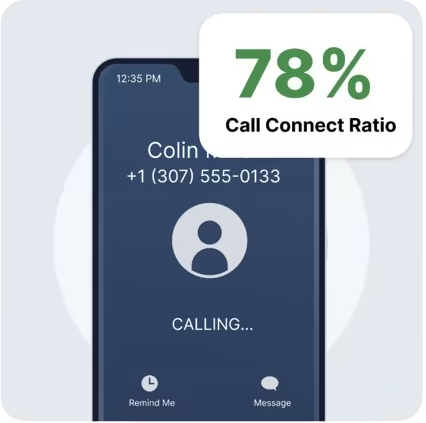
Most cloud calling systems struggle with call drops. This frustrates customers and breaks conversations.
Runo uses SIM-based calling. Calls go through regular mobile networks. This means fewer drops and better call quality.
Customers are more likely to answer calls from real mobile numbers. Conversations feel natural and trustworthy. Better connections lead to better conversations. This helps teams solve issues faster and keep customers engaged.
Stronger conversations play a direct role in reducing customer churn rate.
AI Call Scoring That Improves Conversations
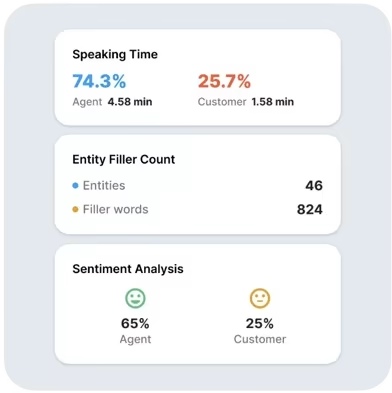
Every customer call tells a story. Runo’s AI listens to those stories for you.
AI call scoring reviews tone, words, and outcomes. It shows what works and what does not. Managers get clear insights without having to listen to every call.
Sales and support teams receive focused coaching. They improve faster. Better conversations lead to happier customers. This makes it easier to reduce customer churn over time.
Smart Follow-Ups That Never Slip
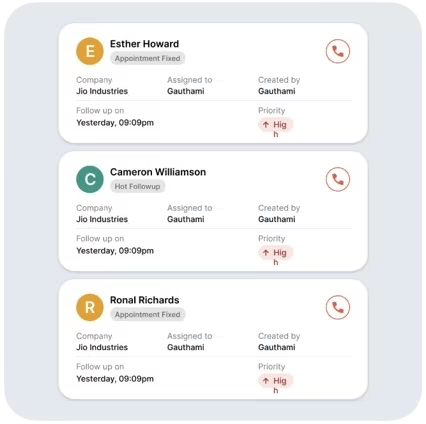
Missed follow-ups often lead to lost customers.
Runo sends smart reminders based on past interactions. Your team knows exactly when to reconnect. No guessing. No delays.
Timely follow-ups show customers that you care. They feel valued and remembered. Consistent engagement is a simple yet powerful way to reduce customer churn meaningfully.
Live Tracking for Faster Action
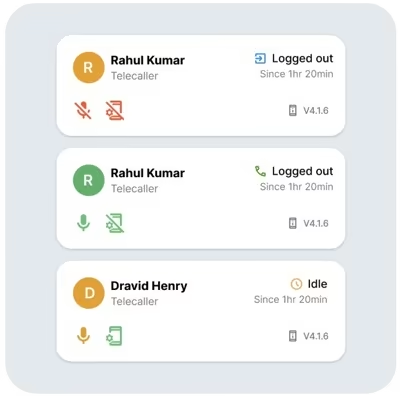
Customer issues need quick attention. Waiting for reports can cost you trust.
Runo offers live tracking of calls, response times, and team activity. Managers see what is happening in real time.
This visibility allows quick intervention. Problems are solved before they grow. Fast action improves the customer experience and helps reduce customer churn.
A CRM Your Team Actually Uses
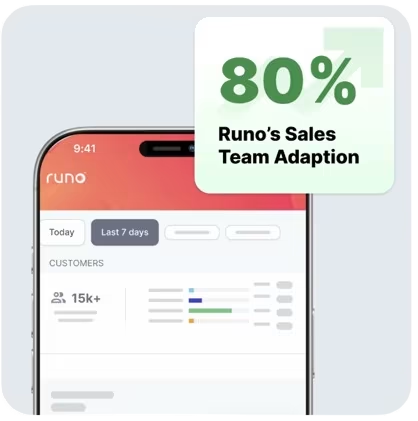
Many CRMs fail because teams avoid them.
Runo combines calling and CRM in one place. Everything happens in a single app. Calls, notes, and follow-ups are automatically updated. Here’s why it is the best CRM for telemarketing to boost sales .
Since the system is easy to use, teams naturally adopt it. Better data leads to better decisions. This supports long-term strategies to reduce customer churn.
Quick Setup With Zero Hassle
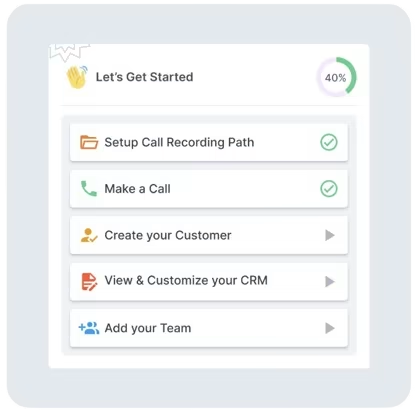
Complex setups slow teams down.
Runo can be set up in about 30 minutes. No extra hardware. No technical headaches.
Teams start calling customers quickly. Faster onboarding means faster results. When teams focus on conversations instead of tools, customer relationships improve.
FAQs
What is a healthy customer churn rate?
A healthy churn rate varies by industry. For many SaaS businesses, anything under 5 per cent monthly is considered reasonable.
Can customer churn ever be zero?
No business has zero churn. Some customers will always leave due to changing needs or circumstances.
Does reducing churn also reduce marketing costs?
Yes. When churn is low, you rely less on paid acquisition to replace lost customers.
Is churn more important for small businesses or large companies?
Churn impacts both, but small businesses feel it faster because every customer affects revenue more.
How often should businesses review churn data?
Churn should be reviewed monthly to spot trends early and act quickly.