

Your rep just lost the deal. Real-time AI sales coaching surfaces the exact moment a conversation starts to slip, before the prospect has already made up their mind. You pull the recording two days later, spot where the pitch collapsed, and send feedback by morning. The rep reads it, agrees, and repeats the same move on the next call. Every conversation your team has already holds this data, and AI sentiment analysis for sales calls reads it the moment the call ends.
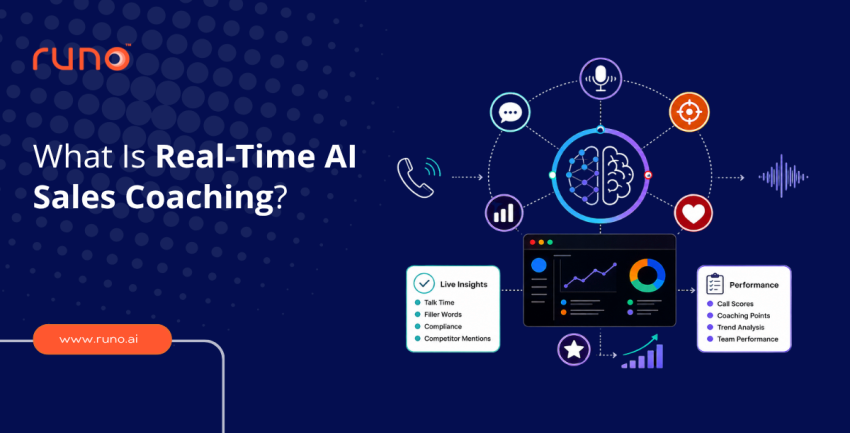
Real-time AI sales coaching is software that analyzes a live sales call and surfaces instant prompts on the rep’s screen for objection handling, talk time, and competitor mentions, with no audio interruption for the customer. It delivers guidance at the exact moment a decision is being made, scored through call quality metrics that update after every conversation.
Key Takeaways
- Real-time AI sales coaching analyzes a live call using NLP, surfaces on-screen prompts for objection handling and sentiment shifts, and delivers all of this while the customer hears a completely normal conversation
- Most sales call coaching software built on a VoIP infrastructure loses its AI signal when a SIM-based mobile call drops audio, a gap that goes undisclosed in most feature comparisons but directly affects high-volume telecalling teams in India
- Gartner research cited in industry analysis (2025) shows sales teams using AI tools are 3.7 times more likely to hit quota than those without, which shifts the ROI calculation for AI sales coaching from a cost question to a performance question
- A real-time sales assistant AI scores talk time, filler word rate, and compliance checkpoints across every call, not just the calls that get pulled for manual quality review
- AI sales training software handles the gap between calls through role-play simulations and recorded coaching; the live call itself needs a different system running in parallel
What Does Real-Time AI Sales Coaching Do During a Live Call?
Real-time AI sales coaching software monitors an active sales call via NLP-based audio analysis, identifies triggers such as competitor names, pricing objections, and compliance checkpoints, and surfaces relevant prompts on the rep’s screen without interrupting the customer’s audio. Platforms like Clari Copilot and Runo deliver these as live battlecards updated the moment a trigger fires. The AI call analytics engine underneath tracks conversation intelligence signals on separate channels for the rep and the prospect.
A telecaller at a Pune-based insurance firm is three minutes into a discovery call. The prospect mentions they have already spoken with another provider. The AI flags the competitor mention, pulls the relevant battlecard, and the rep sees a two-line response guide on screen. The customer hears the rep continue naturally.
How It Compares to Post-Call Analysis
The core difference between real-time AI sales coaching and post-call analysis is when the coaching signal arrives relative to the decision the rep is about to make.
| Feature | Real-Time AI Sales Coaching | Post-Call Analysis |
| When coaching happens | During the live call | After the call ends |
| How guidance is delivered | On-screen battlecards, silent to the customer | Written feedback on the recording |
| Talk time tracked | Live, by rep and prospect separately per call stage | Retrospective from full-call transcript |
| Objection handling | Prompt surfaces at the moment of the trigger | Feedback note in a coaching session |
| Sentiment analysis | Tracked continuously across the call arc | Reviewed after the call from the transcript |
| CRM data logged | Auto-synced the moment the call ends | Requires rep input or manual entry |
AI adoption in sales teams has risen from 39% to 81% in two years, according to Gartner research cited by Kixie (2025) .
How Is Real-Time AI Sales Coaching Different From Recording and Review?
Real-time AI sales coaching puts the coaching signal inside the call itself, not 48 hours after it ends. Recording and review tell a manager what went wrong. The prospect has already moved on. The rep is handling the next call, still without a counter to the objection that just cost you the deal. According to Allego’s 2025 AI in Revenue Enablement Research, 43% of revenue enablement leaders now combine AI-powered role play with live coaching . The coaching calendar is catching up to the coaching moment.
Your team had 15 recordings to review last Friday. You flagged the same objection handling gap across six reps. By Monday’s session, each of those reps had made another 35 calls with the same pattern in place.
What Recording and Review Misses
Post-call transcripts capture the conversation. They don’t capture the coaching moment, which is the specific sentence where a live prompt would have changed what the rep said next.
- Whether the rep confirmed budget, authority, and timeline during discovery, or moved straight to product pitch before the prospect had shared their situation
- Open-ended question ratio in the first five minutes; post-call transcripts don’t automatically flag whether the rep’s questions were discovery-led or closed yes/no
- Competitor mentions that came and went without a counter-message, because the rep had nothing ready for that specific provider at that moment
- Compliance language gaps on BFSI and insurance calls that stayed undetected until a QA audit several days later
- Filler word rate specifically during objection moments, not averaged across the full call, which is where stalling rather than handling shows up most clearly
What Should Sales Call Coaching Software Actually Track?
Sales call coaching software tracks dozens of metrics across every call. Most of them arrive after the rep has already moved to the next call. A real-time sales assistant AI surfaces the six that matter while the rep still has time to respond. The weekly review session gets the same data three days later.
Metrics That Drive In-Call Decisions
These six metrics appear consistently in top-performing real-time AI sales coaching deployments. Each one maps to a moment in the call where the rep’s next sentence is still undecided.
- Talk-to-listen ratio by call stage, not as a single number across the full conversation; the ratio in the first three minutes of a discovery call tells you whether the rep is listening or pitching before the prospect has shared their situation
- Customer sentiment arc by stage: a shift from neutral to negative during the pricing discussion is more actionable than an end-call sentiment score
- Competitor name detection: which competitors came up, at which call stage, and whether the rep followed with a counter-message or moved past without addressing it
- Compliance trigger coverage: whether required disclosure language appeared on BFSI and insurance calls before the conversation closed
- Filler word rate during objection moments, specifically, is tracked as a coaching signal rather than a general speech quality score
- Speaker loudness measured in decibels across the full call, classified as Normal, Loud, or Quiet; reps who consistently speak outside the acceptable range show a pattern that talk-time data alone never surfaces
Why Infrastructure Determines AI Coverage
Most AI sales training software is designed for VoIP and web meetings. SIM-based mobile calls use a different audio path. The VoIP audio pipeline receives no signal for those calls. The rep finishes the conversation. The coaching data for that call is blank. AI voice analytics platforms built for mobile telecalling handle the routing at the SIM level. A real-time sales assistant AI running on SIM-based infrastructure produces coaching records for calls that VoIP-dependent systems never captured.
How Runo Delivers Real-Time AI Sales Coaching for Mobile Sales Teams
Runo’s AI sales coaching runs on SIM-based mobile infrastructure, keeping the coaching pipeline active on calls that drop audio signal on VoIP-dependent platforms. Insurance and real estate teams using Runo report 2.3x higher call connect ratios than cloud telephony deployments, which means more calls with complete coaching data rather than blank records. Every call is automatically scored for sentiment, talk time, and quality, with results visible in the manager dashboard before the next call starts. Runo won the Global Indian MSME of the Year Award in the Sales Tech category and serves 3,500+ businesses across real estate, BFSI, and edtech. Request a demo to see the difference in your first week.
Conclusion
Real-time AI sales coaching acts when a rep needs it, not two days later. Quota numbers, ramp time, and call quality scores follow from that timing gap more than most coaching programs account for. The question worth asking is whether your current system reaches the rep while the deal is still open. Explore AI tools for sales call analysis to see what your current call data is missing.
Ready to Coach Your Sales Team in Real Time?
Runo’s sales call coaching software gives your reps live prompts and your managers automatic call scores from day one of the trial. The setup takes under 30 minutes, and your team starts every call with an AI system that tracks sentiment, flags objections, and logs every conversation to your CRM without manual input. Start your 10-day free trial with no credit card required.
Frequently Asked Questions
How does real-time AI sales coaching work during a live call without interrupting the customer?
Real-time AI sales coaching software analyzes the audio feed using NLP, detects triggers such as competitor mentions or pricing objections, and pushes relevant prompts to the rep’s screen while the customer hears a normal conversation throughout. Platforms, including Runo, update these prompts within seconds of the trigger firing, with no manual input required from the rep.
What is the difference between AI sales coaching and traditional post-call feedback?
Sales managers who rely on post-call reviews typically assess less than 5% of the total call volume, leaving most reps without specific, data-backed feedback for weeks at a time. AI sales coaching scores every call against the same criteria, removing the selection bias that tends to skew manual review toward reps who already perform well.
How long does it take for real-time AI sales coaching software to improve rep performance?
AI sales training software consistently shows measurable improvement in talk-to-listen ratio and objection handling within four to six weeks of consistent deployment. The rate is faster for new hires because the AI scores every call from day one, rather than only the calls a manager happened to select for manual review.
Can AI sales coaching software work on mobile SIM-based calls, not just VoIP?
Most sales call coaching software is designed for VoIP and web meetings, so SIM-based mobile calls generate no AI coaching data in those systems. Runo is built for SIM-based infrastructure and performs full call analysis on every mobile call, without cloud telephony, covering telecalling teams that handle 80-plus outbound calls per rep daily.
What metrics does AI sales training software use to score a sales call?
AI sales training software scores calls across dimensions, including filler-word rate, agent speaking time, agent loudness, agent sentiment, customer sentiment, and customer satisfaction, as well as compliance checkpoints covering objection handling, empathy, call opening, and call closure. Platforms like Runo surface these as a single call quality score the moment the call ends, without any manual input.